The first phase of the “Remembrance Garden” at Taipa Sa Kong Municipal Cemetery comes into use today, providing more than 5,000 columbaria for public application, according to a statement by the Municipal Affairs Bureau (IAM) on Friday.
The statement said that the bureau has expanded the columbarium* facility at the graveyard in phases to meet community needs and improve public burial facilities.
Located between the cemetery’s columbarium and Buddhist cemetery, officially called United Chinese Cemetery, the Remembrance Garden has its entrance and exit on Estrada da Ponta da Cabrita in Taipa, the statement noted, adding that the facility provides a quiet resting place and includes joss paper-burning furnaces, toilets and other ancillary facilities.
According to the statement, the first phase covers the first to seventh floors of the columbarium. The initial right of use for a columbarium niche is 25 years, after which it can be renewed for 10 years each time, the statement added.
Class A columbarium niches cost 2,500 patacas, while Class B niches cost 1,500 patacas, the statement underlined. Applicants moving ashes from outside a public cemetery must also apply for a licence to move remains, bone remains or ashes to a cemetery, which costs 100 patacas, the statement said, adding that stamp duty is charged at 10 percent of the application fee.
Applications and related formalities are available through the bureau’s cemetery services (https://www.iam.gov.mo/e/scope-grave/scope), while members of the public can also visit the bureau’s Integrated Services Centres, Public Services Centres or the Service Office at the Our Lady Mercy Cemetery for assistance, the statement noted, adding that enquiries can be made by calling 2833 7676.
*A columbarium is a structure for the respectful storage of urns containing cremated remains, typically featuring rows of small niches in a wall or building. The word comes directly from the Latin columbarium, meaning “dovecote”. which is derived from columba, meaning “dove” or “pigeon”. The term was applied to Roman burial structures because the small arched niches that held funeral urns closely resembled the small compartments built for doves in a dovecot. – DeepSeek
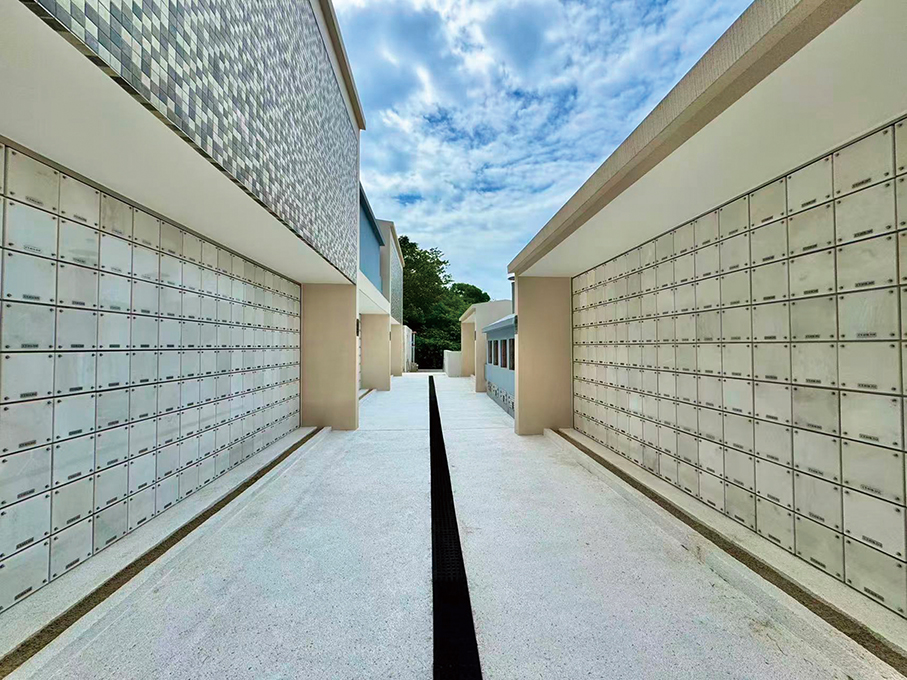
This undated handout photo provided by the Municipal Affairs Bureau (IAM) on Friday shows the columbaria at “Remembrance Garden” in Taipa.