The Municipal Affairs Bureau (IAM) announced in a statement yesterday that the Listeria bacteria has been detected in roast duck samples.
The statement said that through a routine food sampling, a roast duck sample taken from a Cantonese restaurant identified as “Lan Heong Kuok” on Rua da Madeira (新埗頭街), was found to contain Listeria monocytogenes at a level classified as “unsatisfactory.”
The bureau has ordered the eatery to cease selling the problematic duck, rectify its production and handling procedures, and thoroughly clean and disinfect all equipment and utensils, the statement said, adding that the sale of the product may only be resumed after passing a follow-up inspection and re-testing.
The statement also said that the person in charge has also been required to arrange for the restaurant’s employees to attend the bureau’s “Food Hygiene Supervision Course” to strengthen their awareness of hygiene practices.
According to Hong Kong’s Centre for Health Protection (CHP), listeriosis is caused by the bacteria Listeria monocytogenes which is commonly found in the natural environment. The bacteria may be found in contaminated raw foods, such as vegetables and uncooked meats as well as unpasteurised milk.
A person with listeriosis usually comes down with fever, headache, and sometimes gastrointestinal symptoms such as nausea, vomiting and diarrhoea. Some patients may develop severe complications such as meningoencephalitis or septicaemia (blood poisoning). Pregnant women, newborns/infants, the elderly and persons with chronic diseases or weakened immunity are at higher risk of being infected. Although pregnant women with listeriosis are mostly asymptomatic or only develop mild symptoms, they may transmit the infection to their foetuses or newborns, resulting in miscarriage, stillbirth, preterm birth and septicaemia or meningitis in newborns.
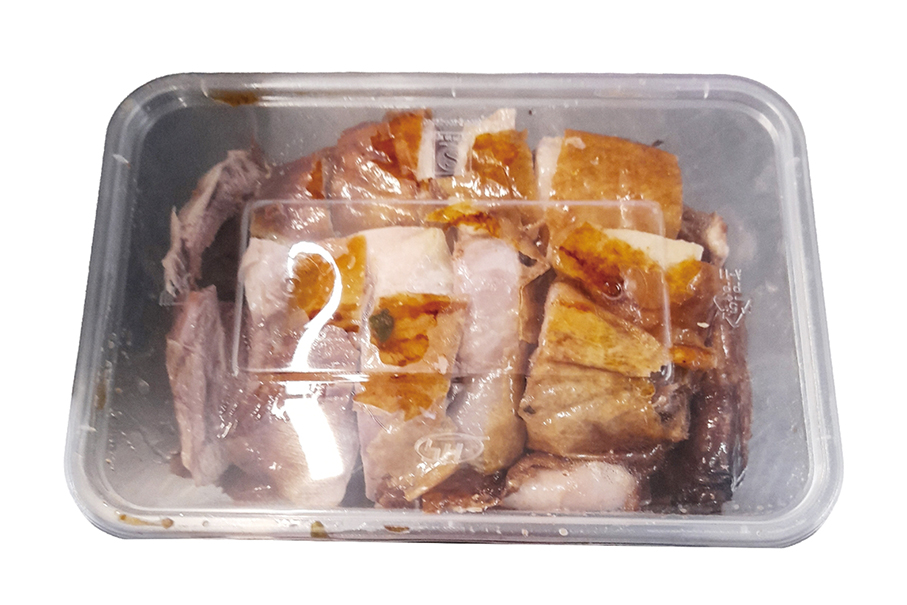
This undated handout provided by the Municipal Affairs Bureau (IAM) yesterday shows a roast duck sample found to contain Listeria.