An exhibition at the University of Macau (UM) Library provides a look into the city’s wildlife. Running until August 28, “Rediscovering Macau’s Wild: 135 New Insect Records” showcases around 1,400 insect specimens.
The collection represents the work of the late entomologist Emmett R. Easton, who systematically catalogued Macau’s urban and rural insect fauna during the 1990s before passing away in 2025 at the age of 87.
Jointly organised by the UM Centre for Macau Studies, the UM Alumni and Development Office, and the University of East Asia Open College Students’ Association, the exhibition highlights a biodiversity spanning 11 orders and 104 families, revealing an ecosystem thriving alongside urban areas.
Speaking at the event, UM Vice Rector Rui Martins said that the exhibition aims to reveal the diversity and intrinsic value of Macau’s ecosystem and to enhance public awareness of environmental conservation and scientific exploration in the long term. He added that the exhibition pays tribute to Easton’s academic achievements and seeks to raise awareness of Macau’s ecological resources.
According to the exhibition notes and the “Macao Gazetteer Series: Book of Geography”*, Macau’s insect population distribution differs from global trends. Worldwide, beetles form the largest order, vastly outnumbering all other groups. In Macau, however, butterflies and moths (Lepidoptera) are most numerous with over 577 recorded species, outnumbering beetles more than two-to-one. Researchers attribute this footprint to Macau’s compact size and high urbanisation, which creates habitats favouring flying insects over ground-dwelling beetles.
Insects named after Macau**
Four distinct insect species are named after the city, two of which are endemic and found nowhere else on Earth. The Macau Giant Mosquito (Toxorhynchites macaensis) does not bite humans, as adults live entirely on nectar. Its larvae feed on the larvae of disease-carrying mosquitoes, acting as a natural control against dengue fever. The Macau Tiny Ant (Leptanilla macauensis), discovered on Ilha Verde hill in 2018, lives underground. Because it is blind and the queen lacks wings, its migration ability is limited, and researchers have not recorded a single specimen since 2020. The other two named species are the Macau Longhorn Beetle, which has appeared on local postage stamps, and the Macau Acrobat Ant, which also inhabits mainland provinces.
Ornamental & fragile species
Macau hosts various ornamental insects, primarily concentrated among butterflies, beetles, dragonflies, and stick insects. The local skies contain the Paris Peacock butterfly and the Black Rhyothemis, a dragonfly known for its broad wings and a flight pattern that resembles a butterfly. Macau’s wetlands shelter the Mortonagrion hirosei damselfly, a species listed as Near Threatened globally due to its specific habitat requirements where fresh and saltwater mix. Additionally, a single species of local firefly (Pyrocoelia analis) is recorded in the region, alongside the island’s only stick insect species, Sipyloidea sipylus.
Natural Pharmacy in the Undergrowth
Insects also serve as medicinal resources regulated by the Chinese Pharmacopoeia. The exhibition highlights local species like the Black Cicada (Cryptotympana atrata), whose shed skin is common along the edges of woodland areas and used in traditional medicine to clear heat. It also features the Southern Blister Beetle (Mylabris phalerata), a source of the anti-tumour compound cantharidin. While unrecorded in the wild in Macau for years, its historic local presence was confirmed via Easton’s collection from Hawaii, linking biodiversity to pharmaceutical research.
The six-legged invaders
Globalisation has introduced at least nine invasive insect species to Macau, presenting ecological and infrastructure challenges. The Red Imported Fire Ant, which arrived around 2004, is aggressive and venomous, causing painful welts in humans and damaging crops. The African Big-Headed Ant nests inside walls and uses its jaws to chew through telephone lines and electrical cables. The Yellow Crazy Ant moves rapidly, spreads via timber shipments, and sprays formic acid that can cause temporary blindness upon contact with eyes.
The exhibition is located in the Exhibition Hall of the UM Library and is open daily from 10:00 a.m. to 7:00 p.m. (including public holidays) until August 28. Admission is free.
* The Macao Gazetteer Series: Book of Geography, launched in October 2024, is a 1.3-million-word publication documenting the region’s territorial, environmental, and urban development.
**The following section was translated from Chinese and edited into English with the assistance of Gemini AI. The Post cannot independently verify the accuracy of the translated entomological terminology.
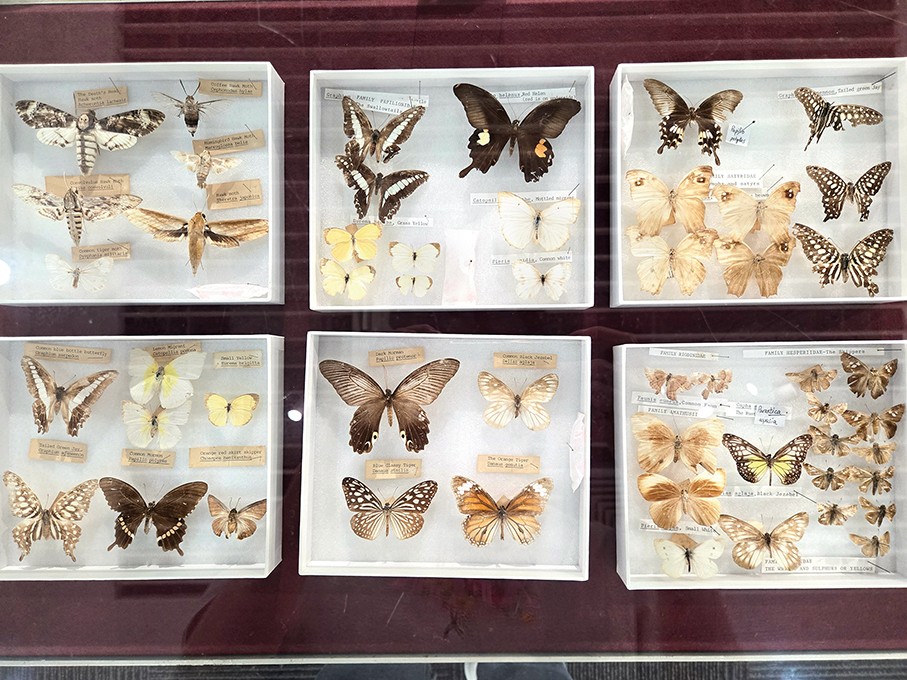
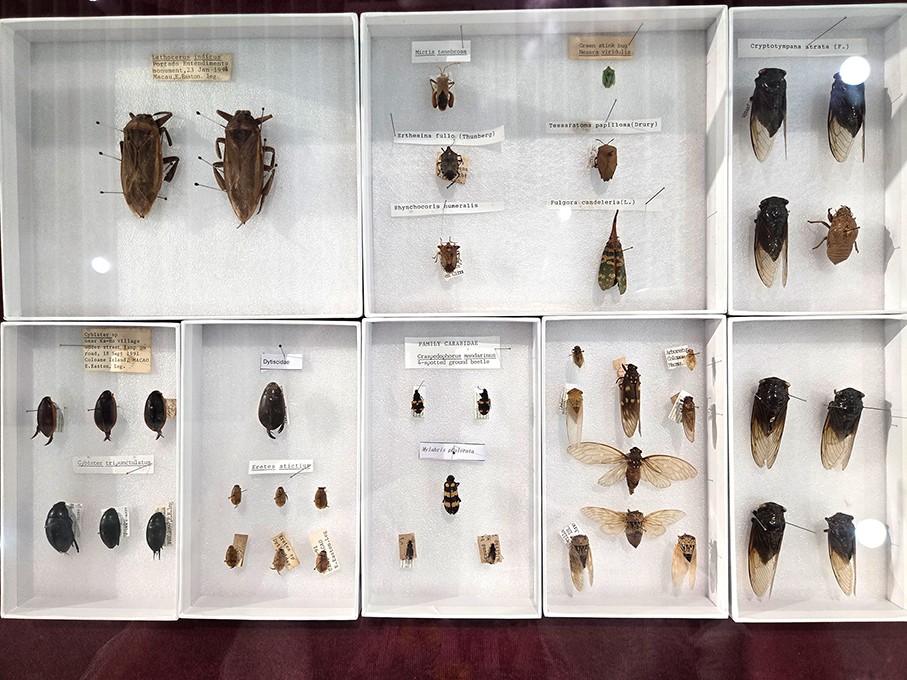
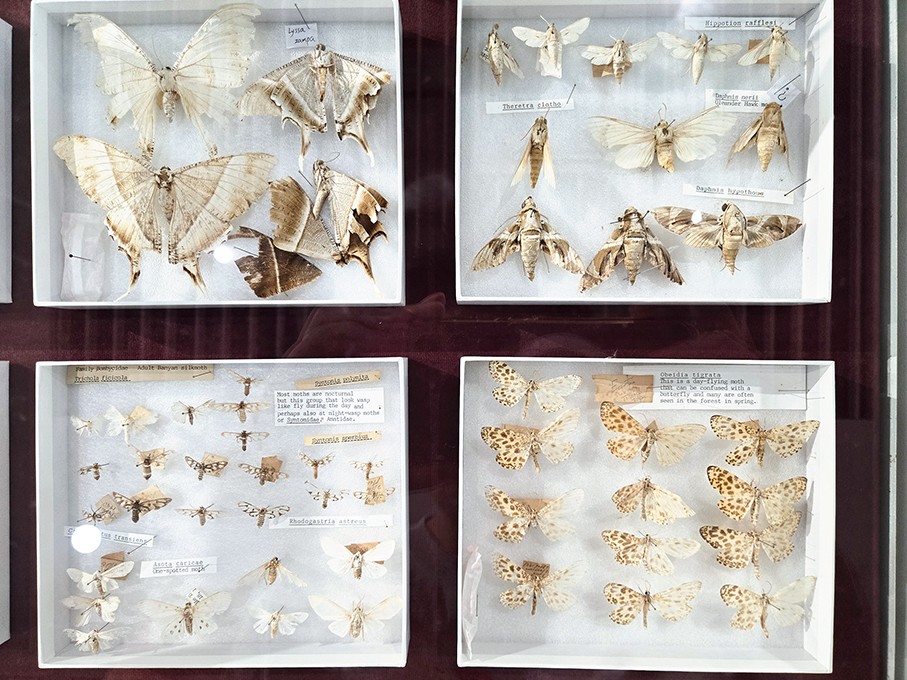
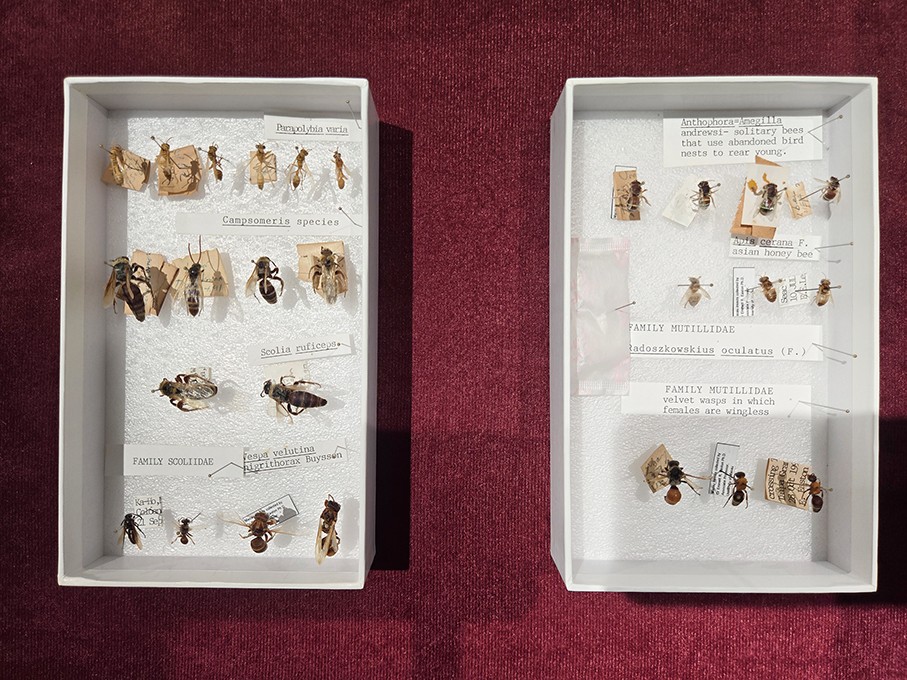
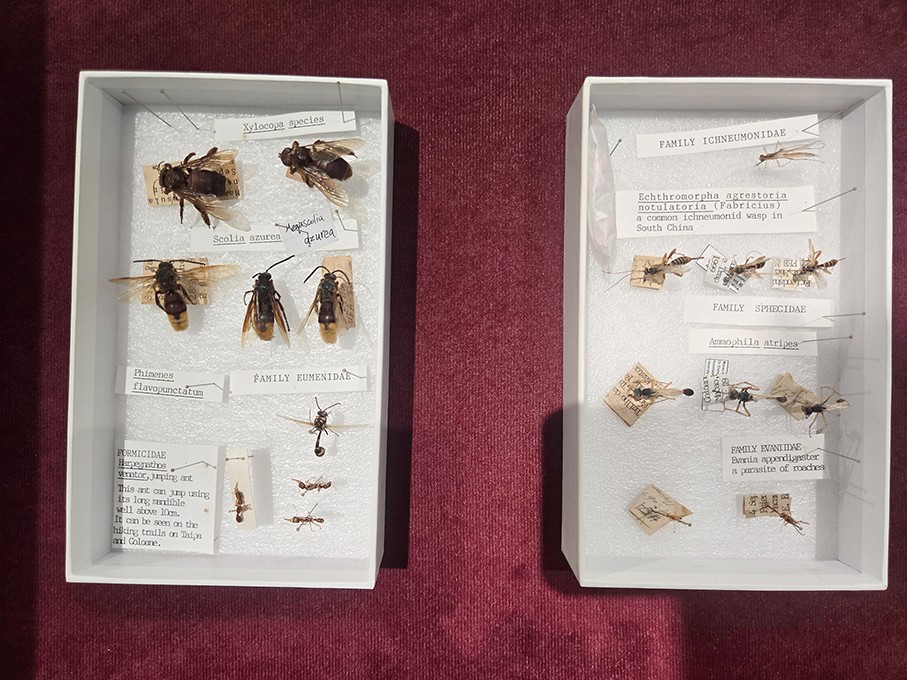


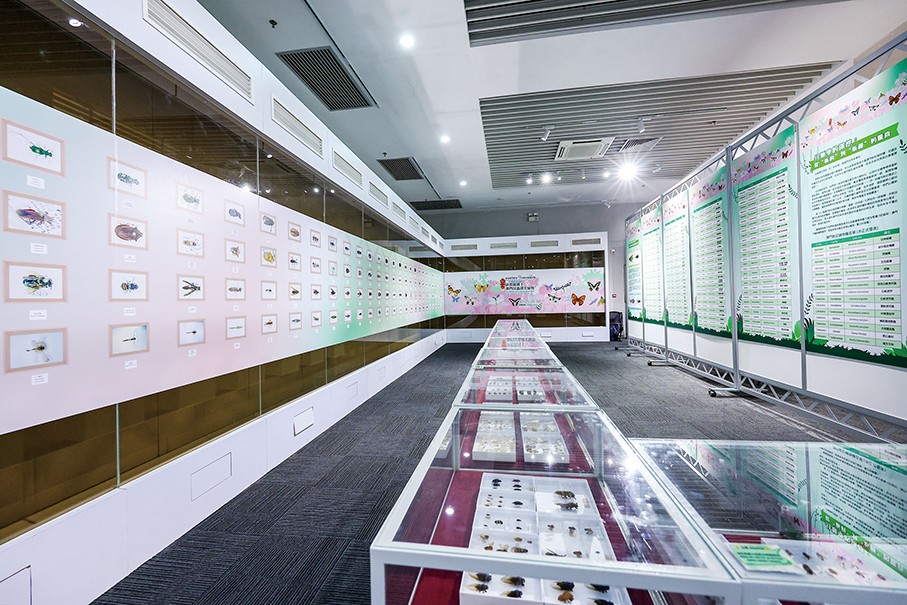
Students and guests view the exhibition during Friday’s opening ceremony. – All photos taken by Alex Kot, William Chan