Interview by Armindo Neves
As the second and final phase of cleaning up an ancient well in Chi Lam Vai (Pátio do Espinho) village near the UNESCO World Heritage-listed St Paul’s Ruins and one of Macau’s two Na Tcha temples concluded last Tuesday, the Post yesterday interviewed the convener of a concern group, Leong Heng Teng, about ideas of how to revitalise the once-walled neighbourhood.
Leong, 79, is a former Executive Council spokesman and lawmaker, whose wife was born in the village. He continues to be one of Macau’s most respected community leaders. He heads the San Kio District Residents Mutual Aid Association, which is a part of the influential Macau General Union of Neighbourhood Associations (UGAMM), widely known as Kai Fong, its short name in Cantonese. Leong is one of the honorary chairmen of Kai Fong, which is represented by three members in the Legislative Assembly (AL).
Leong expressed the hope that the government will expedite the overall planning and positioning of the area to preserve its ancient trees, well and remnants of the wall as they constitute an important aspect of Macau’s “urban memory”*. By integrating private investment, the aim was to develop the village into a distinctive community tourism site, he said, urging the government to help revitalise Chi Lam Vai.
Leong, who talked with the Post in San Kio Garden yesterday afternoon, pointed out that Chi Lam Wai, as one of the larger preserved areas, still partly walled villages on the peninsula, has in recent years attracted attention from academia, art groups, and tourists.
In the village, ancient trees, well, and remnants of the wall, serve as significant community landmarks, Leong underlined. Among these, an ancient well was previously sealed due to public hygiene concerns, he said. Following advocacy by residents and assistance from the Cultural Affairs Bureau (IC), two phases of archaeological research and cleaning-up of the well have been completed. The well was excavated to a depth of around 16 metres, where huge amounts of construction waste were removed and historical stone materials were discovered and preserved, Leong said.
Pátio do Espinho (“Courtyard of the Thorn”) – Chi Lam Vai (茨林圍) in Cantonese – is a 400-year-old walled village that lies just a street away from the UNESCO World Heritage-protected Na Tcha Temple, one of Macau’s two temples dedicated to the divinity known in Putonghua as Nezha. It is also close to the UNESCO World Heritage-listed Ruins of St Paul’s.
The village features a café and souvenir shop dedicated to Na Tcha, which has become globally famous thanks to two highly successful animation films about his exploits.
President Xi Jinping mentioned Na Tcha in his New Year address, as the Chinese mainland’s animated fantasy adventure film “Nezha 2” became a “global hit” promoting Chinese cultural intellectual property (IP) around the world last year. It turned out to be the world’s highest-grossing film of 2025, and the fourth highest-grossing film of all time, according to Wikipedia.
In the first and second phase of the ancient well’s clean-up, a total of 600 lorryloads of construction waste were removed, which experts estimate to be at least four centuries old.
Leong emphasised that in the village, small-scale eateries and cultural-creative spaces have been spontaneously established by residents, and they have quickly become tourists’ points of interest. However, overall planning remains lacking, with some buildings still in disrepair and basic infrastructure such as tap water and electricity supply as well as drainage requiring further improvements, he said.
Leong said he hoped that under “legal, reasonable, and fair” conditions, the government will support the village’s long-time residents to improve their living conditions while also encouraging investors to participate in community revitalisation. By integrating historical and cultural elements with tourism, the aim was to create a distinctive and vibrant living community, Leong said.
Chi Lam Vai is famous for being featured in one of Bruce Lee’s most successful, Fist of Fury, which was shot there in 1971.
*The “urban memory” concept refers to the collective memories and shared experiences of individuals in an urban environment, focusing on how these memories shape identity, culture, and the perception of a city. The term encompasses various aspects, including historical events, personal experiences, and the relationship between inhabitants and their surroundings. – Poe
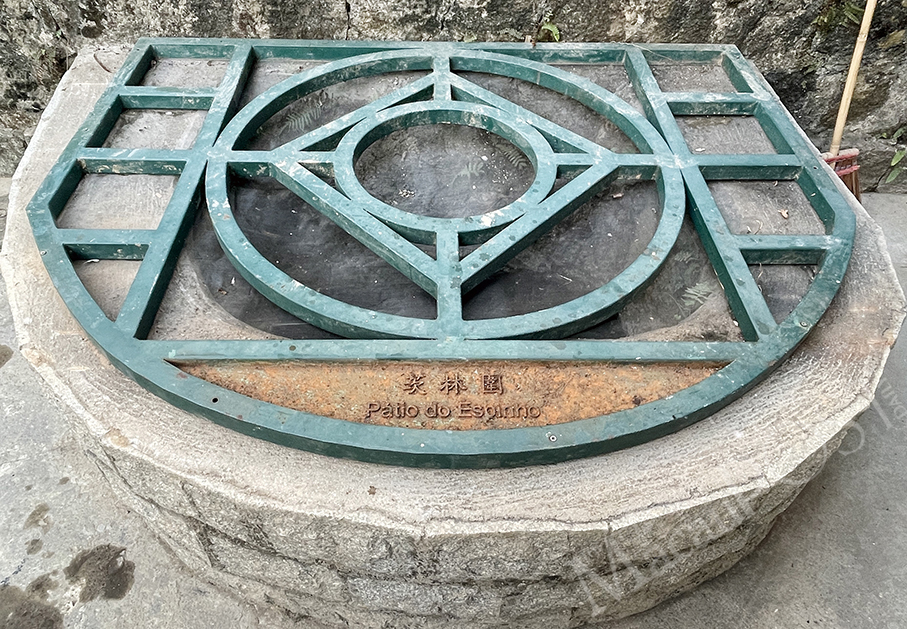
The ancient well in Chi Lam Vai village has been temporarily closed with an iron manhole cover since the recent conclusion of its two-phase clean-up. – Photos: Armindo Neves
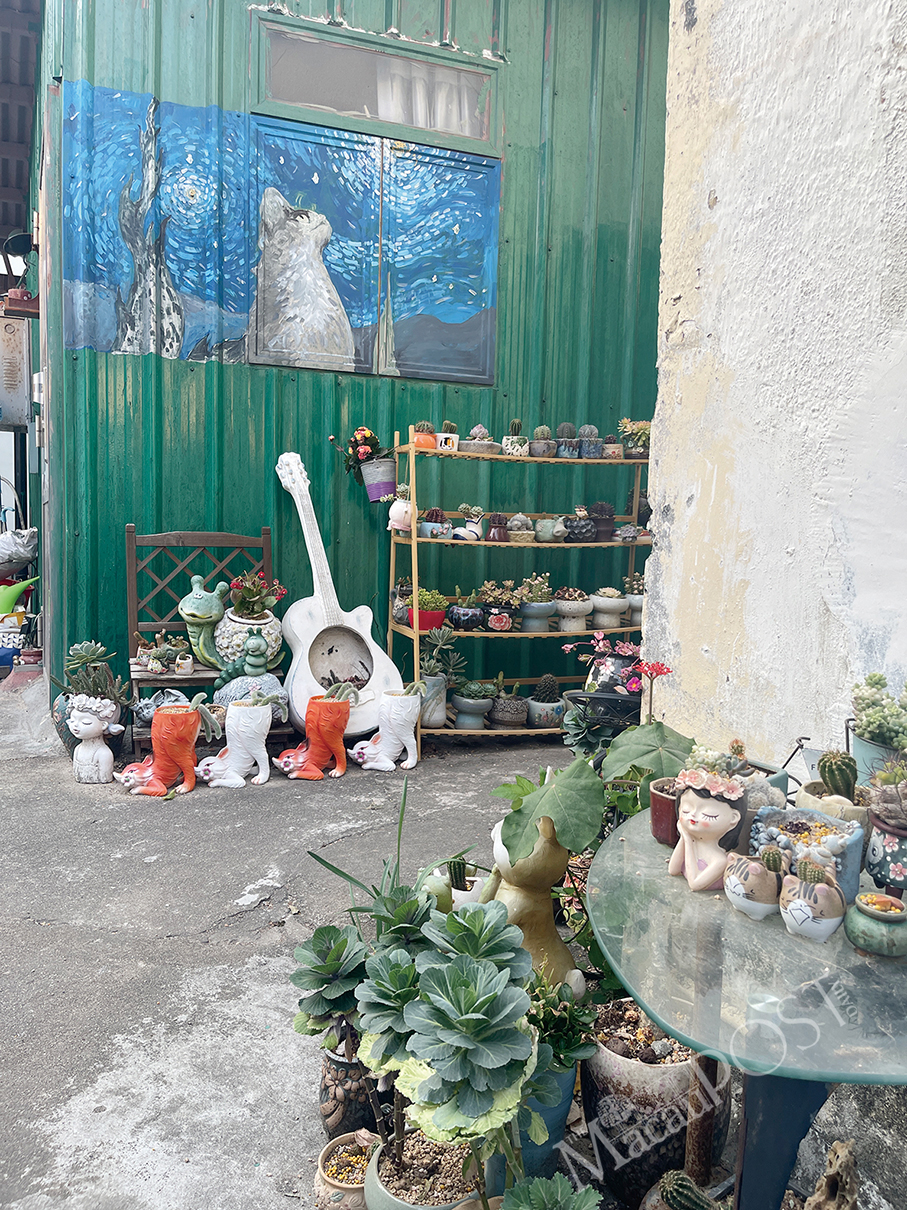
A corner of Chi Lam Vai, a green wall adorned with a mural and various potted plants and decorative figurines neatly arranged by the villagers.