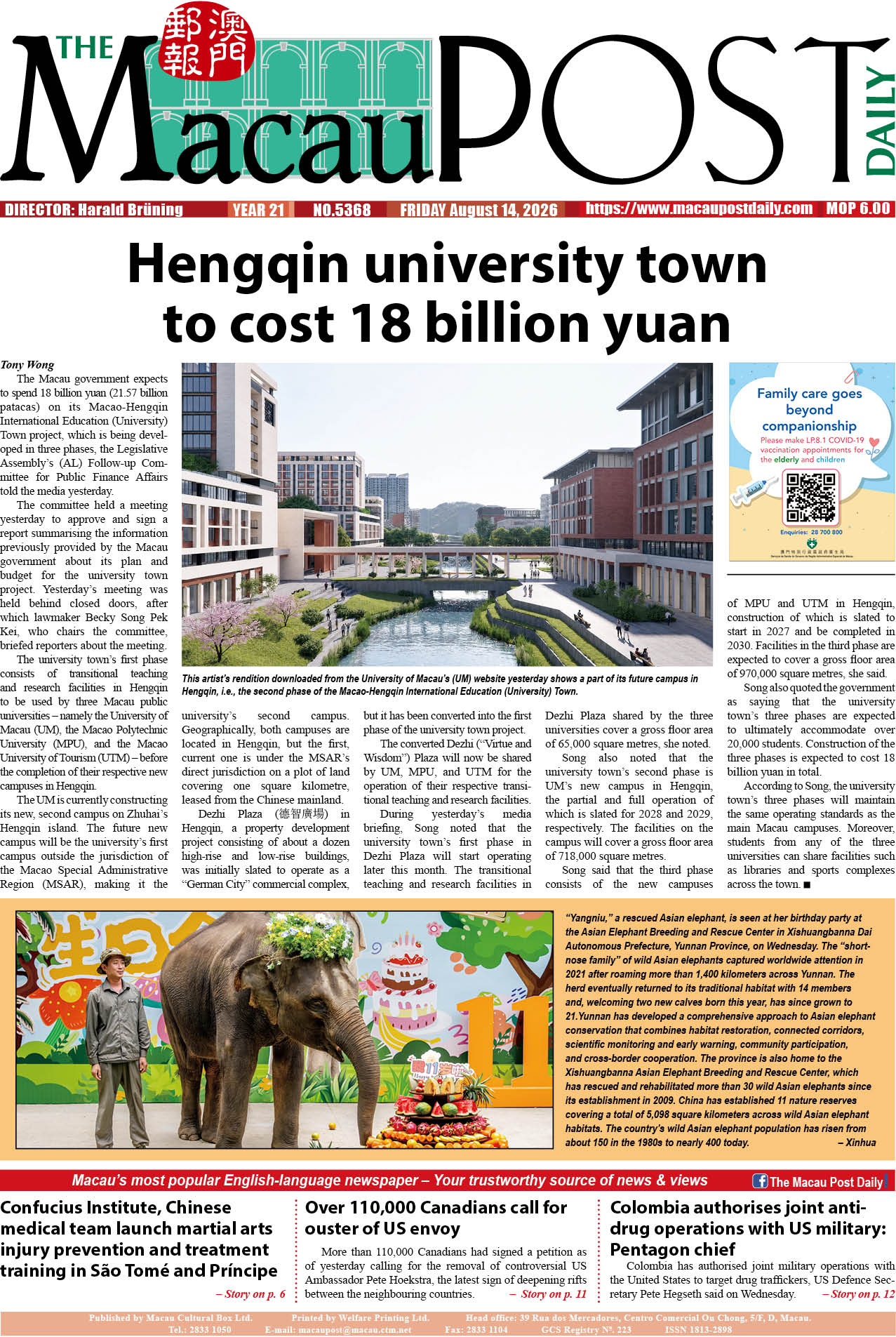
The Cultural Affairs Bureau (IC) announced in a statement on Friday that it launched the “Historic Centre of Macao Route” on its Cultural Heritage of Macao website, aiming to invite residents and tourists to explore the city’s world heritage through a curated cultural walking route.
According to the statement, the new route centres on the Historic Centre of Macao, a UNESCO World Heritage Site, and links 22 historic buildings and eight plazas, including landmarks such as the A-Ma Temple and the Ruins of St. Paul’s.
Designed to follow the area’s undulating terrain and winding alleys, the route allows visitors to experience Macau’s architectural heritage, historical development and distinctive urban landscape, aiming to highlight the city’s long-standing convergence of Chinese and Western cultures, the statement said.
The route is accessible via the thematic website (www.culturalheritage.mo/en/plans), which presents content through text and images, complemented by audio-visual guided tours and interactive maps, the statement said, adding that these features support both online exploration and on-site visits, offering users a more immersive understanding of Macau’s cultural heritage.
In addition to the newly launched route, the website continues to feature the “Macao Maritime Silk Road Historic Sites Route” and the “Route of Historic Buildings with Educational Role in East-West Cultural Exchange”.
The statement concluded that it will continue to explore Macau’s historical resources and roll out additional themed routes in phases, striving to enrich the website’s content and encouraging the public to further engage with the city’s history and culture.
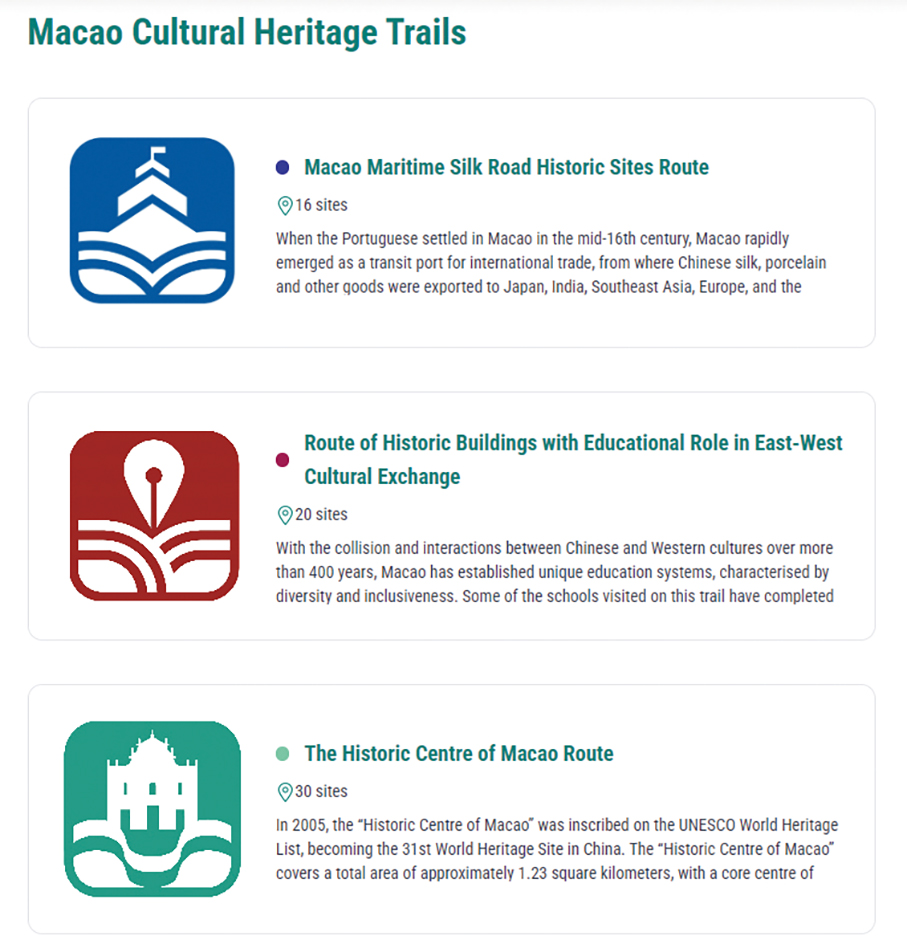
This screenshot downloaded from the local Cultural Heritage website yesterday shows the newly launched “Historic Centre of Macao Route” alongside the “Macao Maritime Silk Road Historic Sites Route” and the “Route of Historic Buildings with Educational Role in East-West Cultural Exchange”.