Global Times editorial
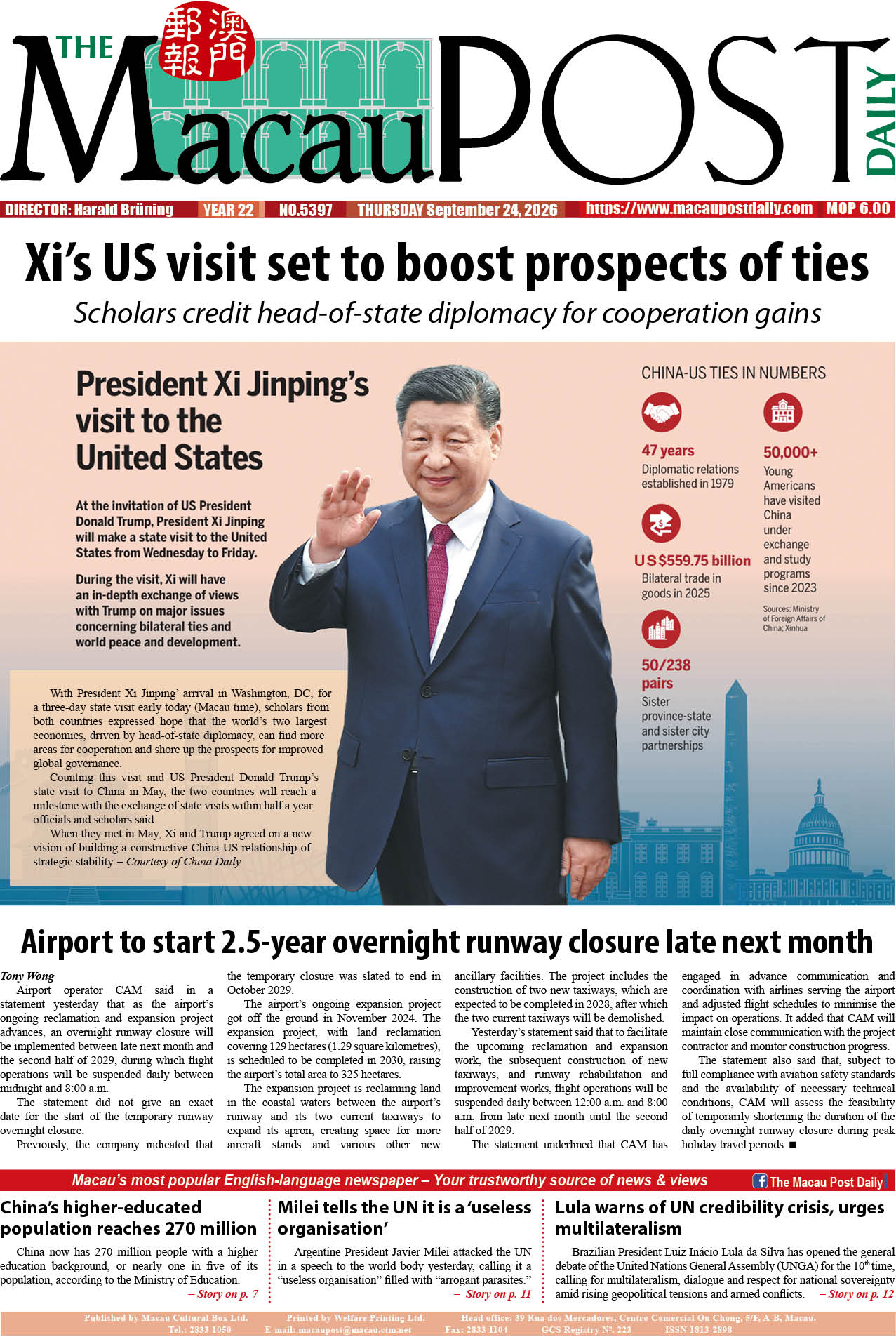
President Xi Jinping has arrived for a state visit to the US at the invitation of US President Donald Trump.
This marks President Xi's first state visit to the US in 11 years and an exchange of state visits between the two leaders within six months, carrying profound significance. The visit has drawn great attention from around the world. Phrases such as "highly anticipated," "historic visit," and "important milestone" have repeatedly appeared in international media coverage. Some analysts have also described the grand welcome ceremony to be hosted by the US side as "unprecedented."
Head‑of‑state diplomacy serves as the "anchor" and "compass" of China-US relations. Since the beginning of the new era, from the first in-depth talks at the Annenberg Retreat to the "autumn meeting at the White House" in Washington, and from the constructive tone set at Mar‑a‑Lago to the new vision charted at Filoli Estate, President Xi's visits to the US have consistently steered the development of China-US relations, guiding the relationship on a steady course forward.
In May, President Xi held historic talks with President Trump, who was in China on a state visit. The two leaders agreed on a new vision of building a constructive China-US relationship of strategic stability, providing strategic guidance for China-US relations over the next three years and beyond, which has been widely welcomed by the peoples of both countries and the international community.
From Beijing to Washington, the two leaders have maintained strategic communication, which helps both sides view each other from a long-term perspective, prevents specific disagreements from disrupting the overall picture of bilateral relations, and provides a clear direction for exchanges at all levels. China-US relations span a wide range of areas and involve deeply intertwined interests. Implementing the leaders' consensus requires strengthened coordination among relevant departments from both sides and sustained follow-up on cooperation across all sectors.
Only by translating the jointly determined direction into specific policies and actions can the two sides reduce suspicion of each other and enhance the stability and predictability of bilateral relations. The key to building a constructive China-US relationship of strategic stability lies in both sides working in the same direction and taking joint actions to put the two leaders' consensus into practice.
Since May, China and the US have strengthened communication and dialogue and advanced a positive agenda along the path set by the two heads of state, achieving preliminary results.
The China-US economic and trade teams have exchanged views on issues such as implementing the consensus reached in previous rounds of consultations and promoting bilateral trade and investment, while maintaining close communication on the specific arrangements for the trade council; the two militaries held a working group meeting under the China-US Military Maritime Consultative Agreement to exchange views on maritime and aerial security situations; the two sides also maintained communication in areas such as drug control and law enforcement, while exchanges at the local, business, and academic levels have continued.
These developments reflect the guiding role of the heads‑of‑state consensus and demonstrate that both sides can accumulate positive elements for bilateral relations through concrete work. Making good use of existing communication channels to advance the implementation of the consensus will help properly address differences and reduce the disruption caused by policy fluctuations to normal China-US exchanges.
China-US relations do not seek to return to the past. But as long as the two sides remain grounded in reality and focus on tangible results, they can build a better future. China approaches the development of China-US relations with sincerity, but also with principle; with vision, but also with bottom lines.
China's sovereignty, security and development interests must not be infringed upon, and the four red lines – the Taiwan question, democracy and human rights, path and system, and its right to development - must not be challenged. The US must abide by the one-China principle and the three China-US joint communiqués and handle the Taiwan question with utmost prudence.
By keeping relations on the right course, expanding consensus, removing disruptions and accelerating progress, China and the US can continue to expand their list of cooperation in areas including economy, trade, and artificial intelligence, which serves the long-term interests of both countries and their peoples.
Against the backdrop of accelerating changes unseen in a century and growing turbulence and transformation in the international landscape, this visit will provide an important opportunity for the two sides to strengthen strategic communication and implement existing consensus. It also carries the expectations of the peoples of both countries and the international community for the stable development of China-US relations.
Influential institutions such as the International Monetary Fund generally regard an easing of China-US tensions as an important prerequisite for global economic recovery. There is also broad recognition in the international community that tackling humanity's shared challenges - from cooling down and stabilizing regional hotspot issues to resolving global governance dilemmas - would be impossible without a stable, sound and sustainable China-US relationship. In this sense, China-US cooperation will help create a more predictable environment for development for the international community.
Can China and the US transcend the "Thucydides Trap" and build a new model of major power relations? Can they work together to address global challenges and bring greater stability to the world? Can they focus on the well-being of their peoples and the future of humanity to jointly create a better future for bilateral relations? President Xi has framed these as "questions vital to history, to the world, and to the people," underscoring the responsibilities that China and the US, as two major countries, shoulder in our times.
Building a constructive China-US relationship of strategic stability means breaking away from the old logic of zero-sum confrontation between major countries and exploring an unprecedented path forward.
It is hoped that the US will take this leaders' meeting as an opportunity to work with China, keep the overall picture in mind, work in the same direction, continue building mutual trust, deepen cooperation and manage differences, jointly chart a path for major countries to get along with each other in the new era, and make greater contributions to global peace and development.
- Courtesy of Global Times
Editor's note: The opening sentence of this editorial has been revised by the Post to reflect President Xi's arrival in the US yesterday afternoon (early today, Macau time)
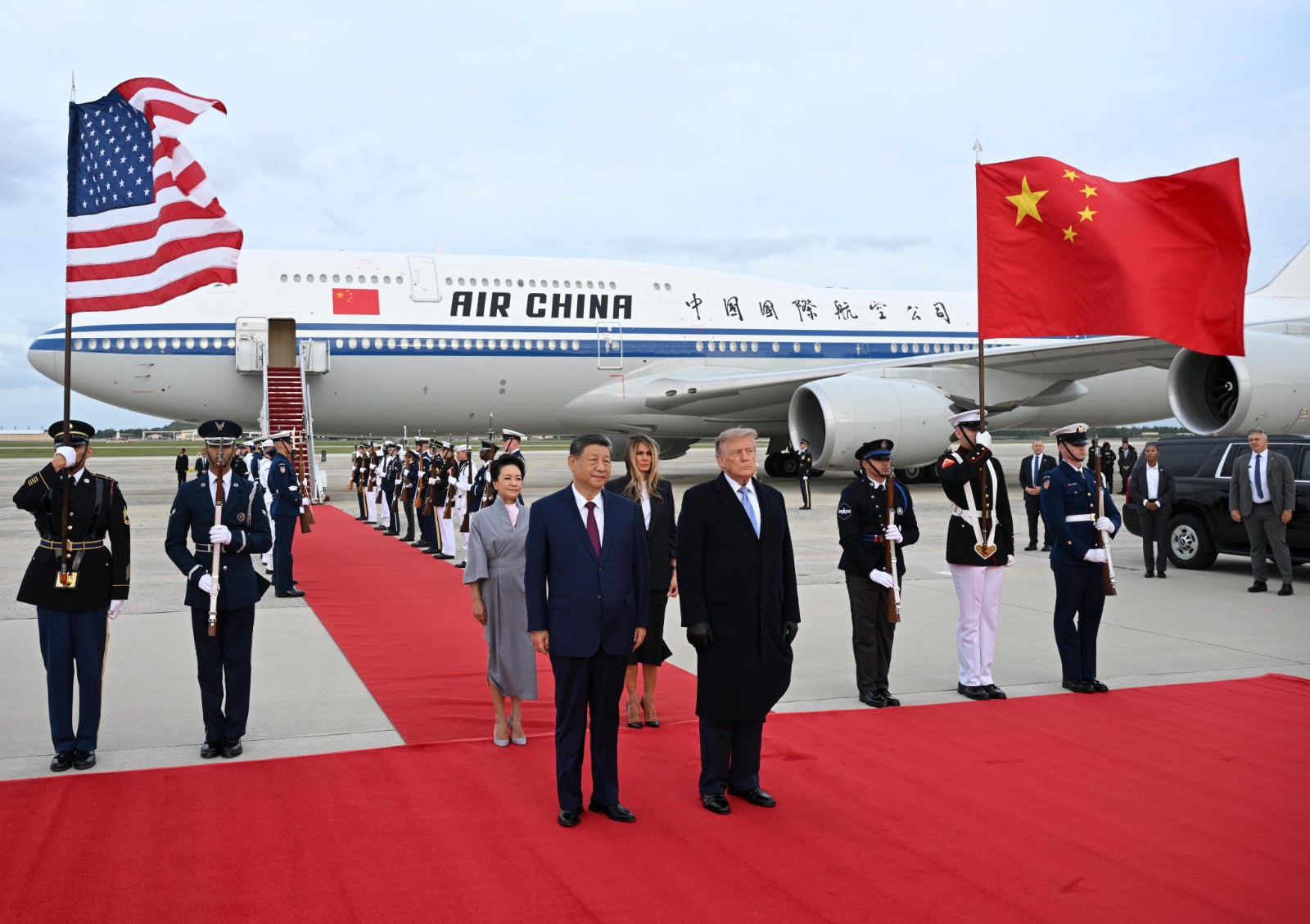
Caption: President Xi Jinping (front,left) arrives at Joint Base Andrews in Maryland yesterday, for a three-day state visit to the United States at the invitation of US President Donald Trump (front, right). Xi and his wife, Peng Liyuan (behind her husband), were warmly greeted by Trump and his wife, Melania Trump (behind her husband), at the airport in a rare planeside welcome. - Xinhua