Commentary by Lok Wai Kin
President of the Union of Macau Scholars
Adjunct Professor, University of Macau
The Law on Safeguarding National Security of the Macao Special Administrative Region plays a vital role in protecting national security and maintaining social stability in Macao; it is an indispensable legal safeguard. Implementing the National Security Law requires not only that every individual fulfil their obligation to uphold the law, but also that criminal acts violating it be penalised. Therefore, the courts trying cases that endanger national security in accordance with the Law on Safeguarding National Security is an inevitable requirement of enforcing the law.
The courts’ independent exercise of their adjudicative functions and rendering of judgments in accordance with the law is a principle established by the Macao Basic Law, as well as the cornerstone of the normal functioning of Macao’s judicial system. The judiciary serves as the ultimate bulwark safeguarding the rule of law in Macao. Were this bulwark to be compromised, Macao’s legal order would ultimately cease to exist, directly undermining social stability and the fundamental interests of its residents. Nevertheless, certain political forces, both domestic and foreign, attempt to apply their habitual double standards—disregarding objective criminal facts and express statutory provisions—to vilify lawful court trials as political persecution. Their aim is to attack Macao’s National Security Law, disparage Macao’s judicial system, and interfere with lawful judicial proceedings. In light of this, Macao residents must heighten their vigilance, distinguish right from wrong, resist all words and deeds intended to smear, attack, or influence lawful judicial trials, and shoulder the responsibility of upholding Macao’s legal and judicial systems.
Adhering to the principle of independent judicial adjudication requires supporting judges in trying cases according to the law, free from unlawful interference. The key to respecting and upholding judicial decisions lies in whether a judge’s trial strictly adheres to the law. When trying offences that endanger national security, the focus must be on whether the proceedings strictly comply with the Law on Safeguarding National Security. Given that the Law on Safeguarding National Security expressly prohibits acts of subverting state power, including attempts to overthrow or undermine the fundamental system established by the Constitution, judges ought to accept indictments and conduct trials regarding acts that endanger national security in accordance with the law. This is both the inherent duty of judges and a fundamental requirement of the rule of law.
The French jurist Montesquieu once observed that liberty is the right to do whatever the laws permit, and if a citizen could do what the laws forbid, they would no longer possess liberty. Therefore, firstly, there is no such thing in the world as unrestrained, arbitrary freedom; there is only freedom under the law. Secondly, the law is both the prerequisite for freedom and its boundary. Once legal prohibitions are breached, order collapses and liberty ceases to exist. Liberty represents rights within the bounds permitted by law; only within that permitted scope can individual rights and freedoms be legally protected—otherwise, they will be subject to legal sanctions. Law and liberty form an organic unity rather than being mutually antagonistic; seeking freedom does not mean dispensing with the law, nor should liberty be understood one-sidedly as exemption from legal restraint. The West not only speaks in this manner, but also acts accordingly. Western theory and practice demonstrate that judgments rendered on the basis of unlawful acts and in accordance with statutory provisions ought to command the respect and support of society; under no circumstances should the orchestration of public pressure outside the courtroom to interfere with judicial proceedings be permitted.
As the ancient Chinese proverb goes, “Do not do unto others what you would not have them do unto you.” We must therefore eliminate all interference, safeguard the rule of law in Macao, uphold the principle of independent trials in accordance with the law, maintain Macao’s judicial authority and credibility, and successfully build a “law-based Macao”.
End
Editor’s Note: The translation of the commentary from Chinese was arranged and edited by the Post. The Chinese original text was previously published in Macao Daily News.

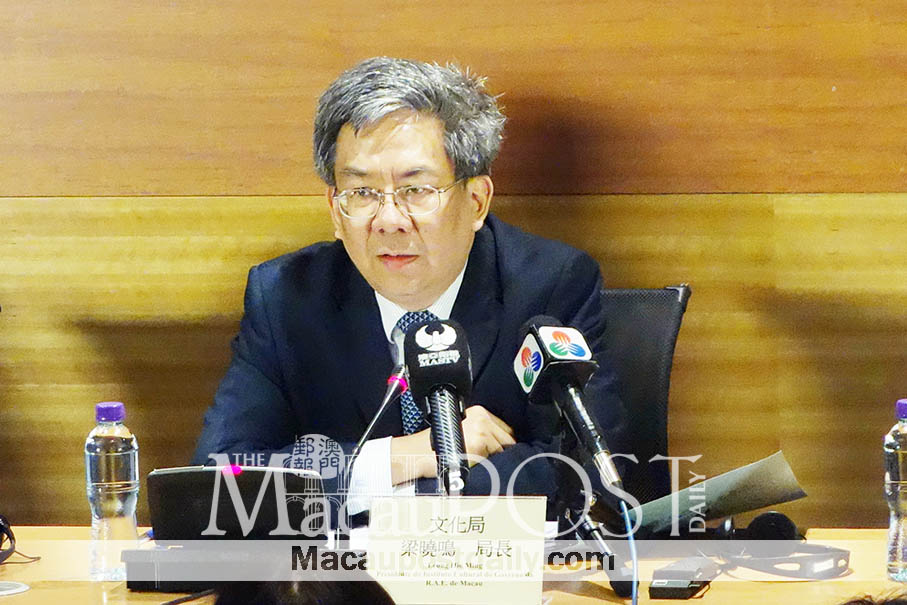
Undated file photo of Lok Wai Kin – Photo courtesy of macaudata.mo