The Health Bureau (SSM) has urged residents to take precautions against dengue fever and chikungunya fever when visiting cemeteries and grave sites during the upcoming Chong Yeong Festival this Sunday.
An SSM statement yesterday noted that with neighbouring regions continuing to record cases of both mosquito-borne diseases, local activity of Aedes albopictus, aka Asian tiger mosquitos, remains high. To reduce the risk of community transmission, residents participating in grave-sweeping and outdoor activities are advised to properly dispose of used containers to prevent stagnant water from becoming mosquito breeding sites.
Although temperatures in Macau have begun to cool, mosquito activity has not declined significantly. The Health Bureau reported that the ovitrap index for September stood at 55.8 per cent. Mosquito activity in Macau typically peaks between April and October.
According to the SSM statement, to mitigate mosquito nuisance and disease risks, the bureau has stepped up inspections and vector control measures across high-risk community sites and major event venues. Up to September this year, SSM officers conducted 11,835 inspections of potential breeding grounds.
The statement also underlined that the bureau has carried out chemical anti-mosquito spraying 2,884 times in the first nine months of the year across roughly 130 hygiene blackspots and areas identified as having a higher risk of disease transmission.
Meanwhile, the Municipal Affairs Bureau (IAM) continues its monthly regular mosquito control operations in public parks, leisure areas, and municipal cemeteries across the city.
In addition, the statement noted that as dengue fever and chikungunya fever are both transmitted by Aedes albopictus mosquitoes, eliminating breeding sites remains the most effective preventive measure. The bureau advised residents to clear away stagnant water and rubbish after completing grave-sweeping rituals, ensuring that containers such as flower vases, lunch boxes, drink cans, plastic bags, and metal incense-burning buckets are not left behind.
Residents are also reminded to take personal anti-mosquito measures outdoors by applying insect repellents containing effective ingredients such as DEET* to exposed skin, wearing light-coloured, long-sleeved tops and trousers, and seeking medical attention promptly if symptoms such as fever or skin rash develop.
Meanwhile, the statement said, the Health Bureau is closely monitoring the epidemiological situation in Macau and neighbouring regions. It urged the public to stay vigilant and observe three main anti-mosquito rules:
Prevent indoor breeding: Regularly clear stagnant water at workplaces and around the home.
Block mosquito entry: Use window screens, mosquito nets, or air conditioning to reduce the risk of bites indoors.
Prevent outdoor bites: Wear light-coloured, long-sleeved clothing and apply insect repellent to exposed skin or clothing during outdoor activities.
For enquiries, residents can call the Health Bureau’s Infectious Disease Hotline on 2870 0800 or visit its communicable disease website at https://www.ssm.gov.mo/csr.
*DEET (Diethyltoluamide) is the most common active ingredient in insect repellents. Developed by the US Army in 1946 for military use in insect-infested areas, it was registered for public use in 1957. DEET doesn’t kill insects - it blocks their ability to detect human sweat and breath, making it harder for mosquitoes, ticks, fleas, and other biting insects to locate you. DEET can pose health risks to certain people or under specific conditions, such as infants, toddlers and people with sensitive skin or skin conditions. DEET should never be sprayed directly onto the face. – Gemini/DeepSeek
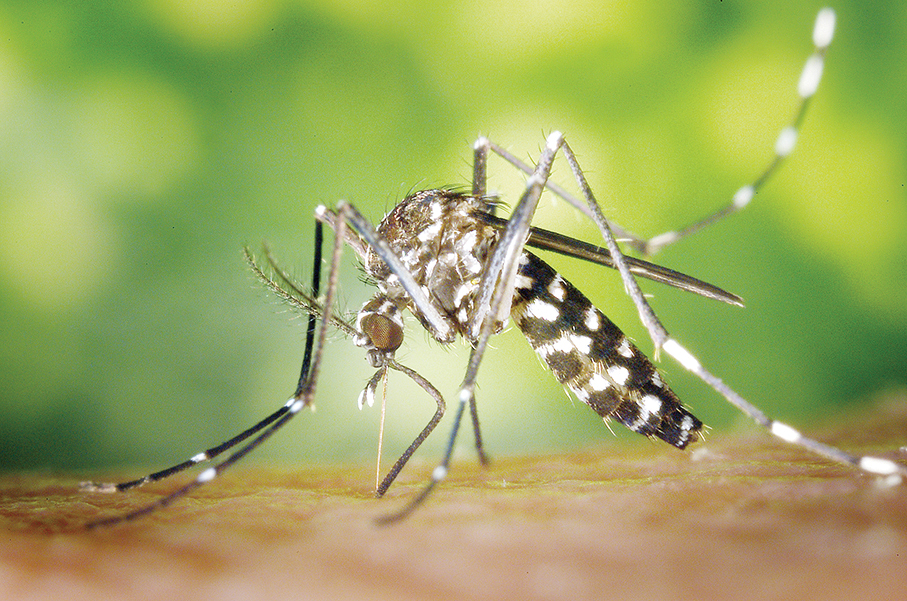
This 2002 file photo shows a Aedes albopictus, aka Asian tiger mosquito, beginning its blood meal.– Photo courtesy of James Gathany of US CDC via Wikimedia Commons