Interview by William Chan
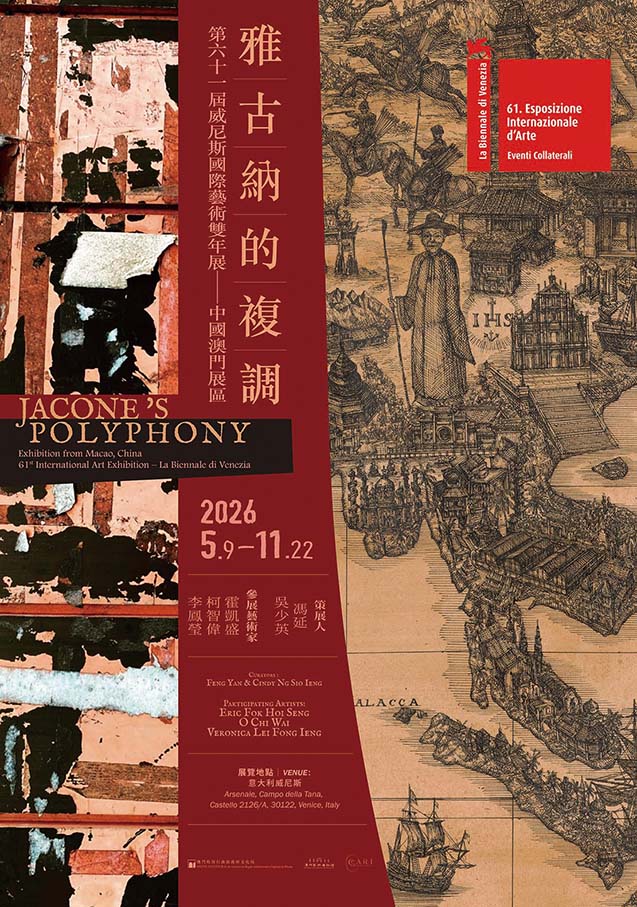
Following our discussion with curators Feng Yan and Ng Sio Ieng regarding Macau’s participation in the 61st International Art Exhibition – La Biennale di Venezia*, we turn to the three artists whose works form the core of “Jacone’s Polyphony.”
Through their diverse styles of art, Fok Hoi Seng, O Chi Wai, and Lei Fung Ieng bridge the gap between the unfulfilled 17th-century journey of the Jesuit painter Wu Li and the contemporary identity of Macau.
The exhibition, titled after Wu Li’s** Portuguese name, Jacone, explores “polyphony” – the harmonious coexistence of multiple independent voices. The participating artists told the Post in an online interview that this project was a profound personal encounter with a historical figure whose life mirrors the complexities of their own city.
Eric Fok Hoi Seng: mapping unfinished dreams
Eric Fok Hoi Seng, known for his intricate pen-and-ink maps, found deep resonance in Wu Li’s arrival in 17th-century Macau. “I knew Wu Li as a pivotal painter, but discovering his specific journey to Macau, from a Jiangnan literatus to a Catholic, and his unfulfilled aspiration to study theology in Rome was a revelation”, Fok told the Post. He noted that Wu Li’s dedication to studying theology and learning Latin highlights the city’s historical role as a cultural gateway.
Fok’s contribution is a large-scale screen work tracing the unfulfilled journey Wu Li intended to take him to Rome. By following the actual travel routes of Shen Fuzong (沈福宗) – another early Chinese traveller – Fok’s work symbolically completes Wu Li’s 300-year-old wish. “The screen acts as a spatial divider and a connector, blending geographical coordinates with cultural identity”, he said. “It is an attempt to use art to fill the gaps left by history”. For Fok, presenting Macau in Venice is about finding the city’s place within global narratives while avoiding regional limitations.
O Chi Wai: persistence of spiritual seeking
Multimedia artist O Chi Wai approached the project through the lens of inner exploration. He was particularly moved by Wu Li’s intellectual courage. “Wu Li spent his life seeking meaning. At 50, he was willing to start from scratch in Macau, learning Latin to take teachings back to China”, O remarked. This dedication prompted O to reflect on the speed of contemporary creation. “In an era of convenient technology, Wu Li’s persistence makes me ask: why do we create? What is the core message we wish to transmit?”
O’s work, Sanqu (A Cappella Reverie), is a three-screen multimedia installation combining 3D scanning animation, photography, and vocal music. It establishes a spiritual link between Wu Li’s era and the modern human condition. “The project allowed me to find an internal connection I hadn’t felt before”, he said, emphasising that Macau’s artistic strength often lies in quiet, dedicated cross-disciplinary collaborations.
Veronica Lei Fung Ieng: emotional texture of migration
Veronica Lei Fung Ieng describes Wu Li as a literatus who carried his faith with a sense of “regretful persistence”. Her work, Sigh of Migration, draws inspiration from Wu Li’s stay in Macau’s Liang Shui Jing Village (涼水街). “There is a 300-year-old echo between us. He waited in Macau for a journey that never happened; I am now taking the work inspired by his story to Venice. In a way, I am helping him complete that migration through time and space”, she noted.
Her artistic process mirrors Macau’s duality, using a rigid iron wire frame – representing historical structure – layered with tin and wax. “The wax is poured and dripped freely, representing the soft, fluid, and human side of our culture”, Lei said. Lei said she hopes international visitors will see her work as a window into a Macau that exists beyond surface-level stereotypes.
“Jacone’s Polyphony, Exhibition from Macao, China: 61st International Art Exhibition – La Biennale di Venezia” runs from May 9 to November 22. The exhibition hall is located in front of the Arsenale, the Biennale’s main building. Admission is free. For further information, visit the website of the Macao Museum of Art at www.MAM.gov.mo.
*www.macaupostdaily.com/news/28129
**Wu Li (1632–1718) was a prominent Chinese landscape painter, poet, and one of the “Six Masters of the early Qing period.” In the late 1600s, Wu Li travelled to Macau, where he encountered Jesuit missionaries and was introduced to Christianity. Afterwards, his art began blending traditional Chinese literati styles with subtle Christian symbolism, reflecting both his heritage and new faith. – Poe
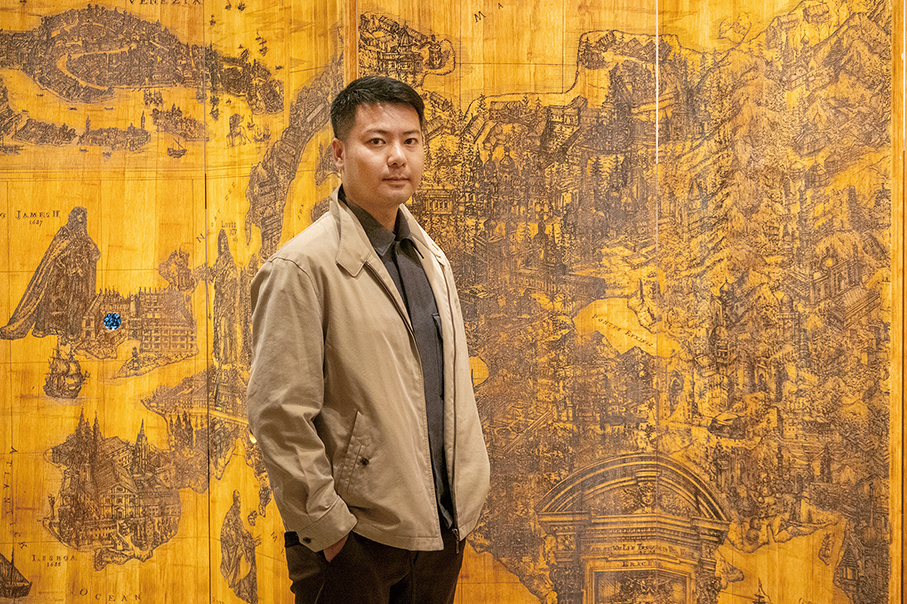
This undated and unlocated photo shows Eric Fok Hoi Seng posing in front of his work “Silent Travelogues”.
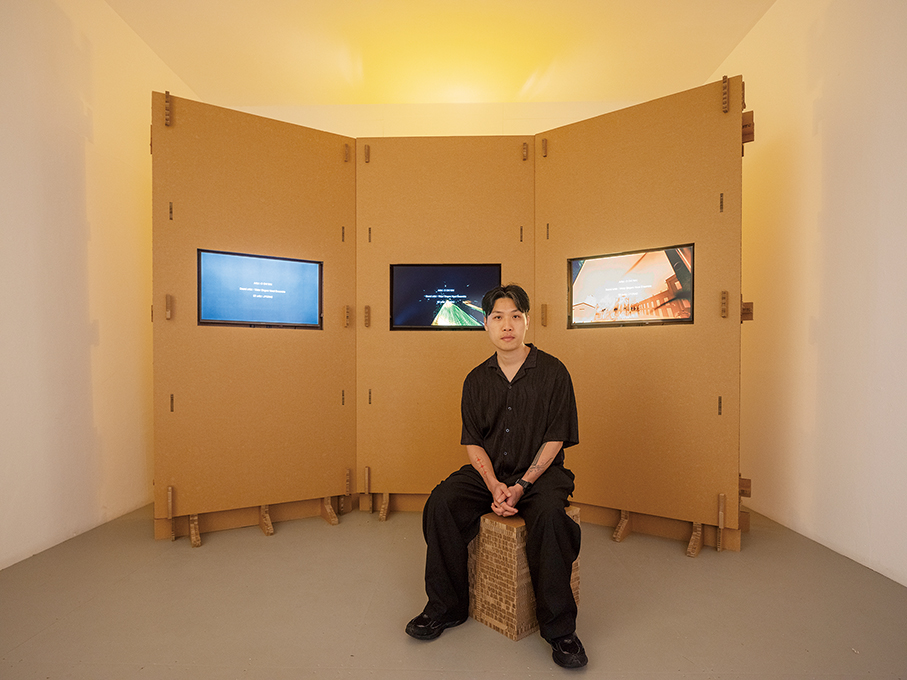
This undated and unlocated photo shows O Chi Wai posing in front of digital screens displaying his work, Sanqu (A Cappella Reverie), a five-minute video footage.
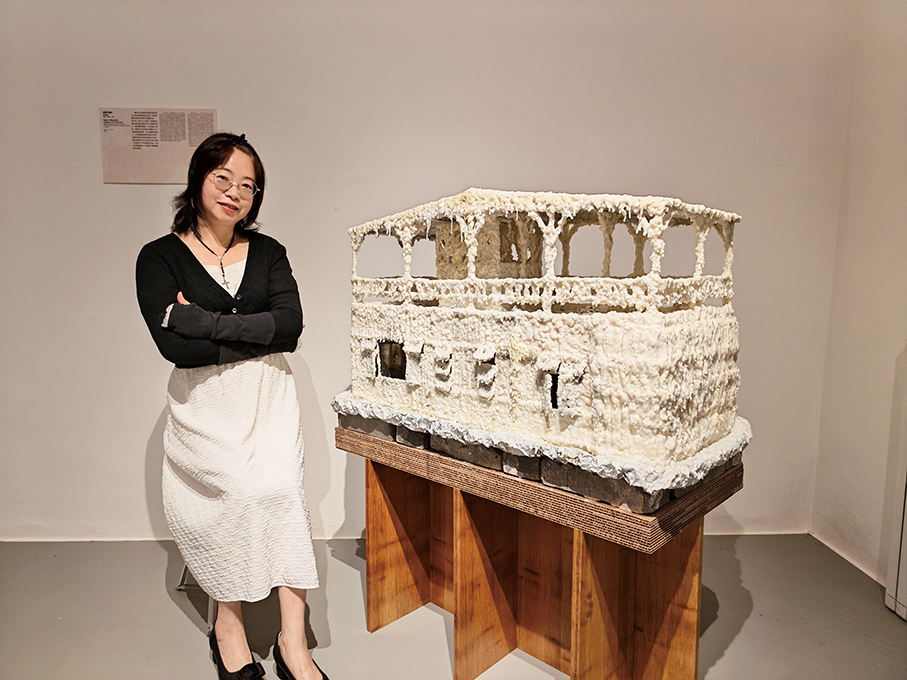
This undated and unlocated photo shows Veronica Lei Fung Ieng posing next to her work “Sigh of Migration”. – Photos provided by the organisers
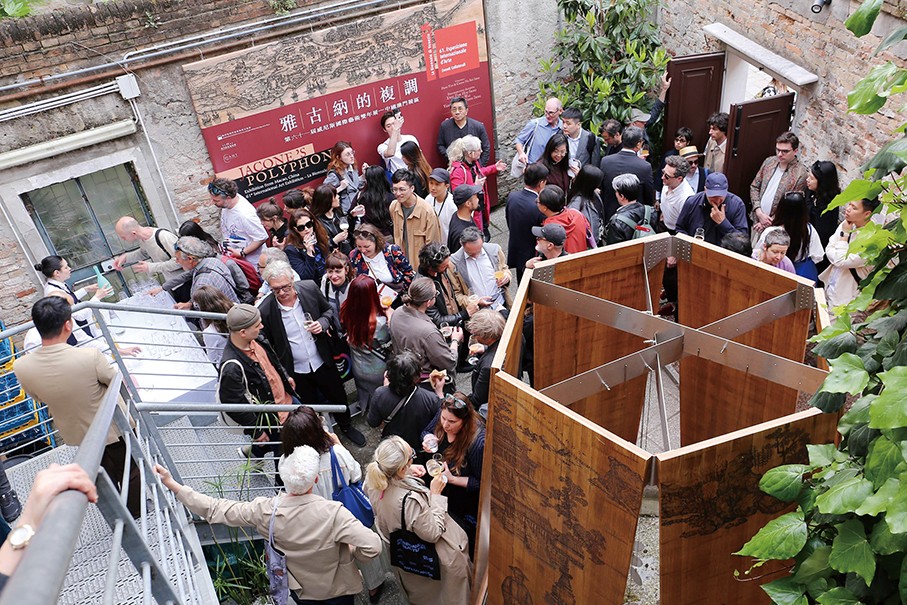
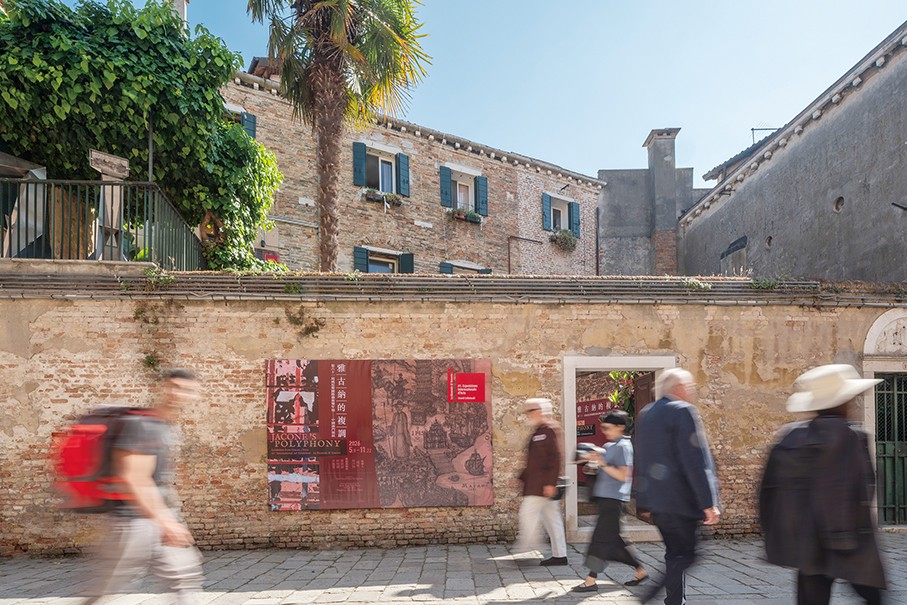
These pictures show the exhibition venue at Arsenale, Italy.