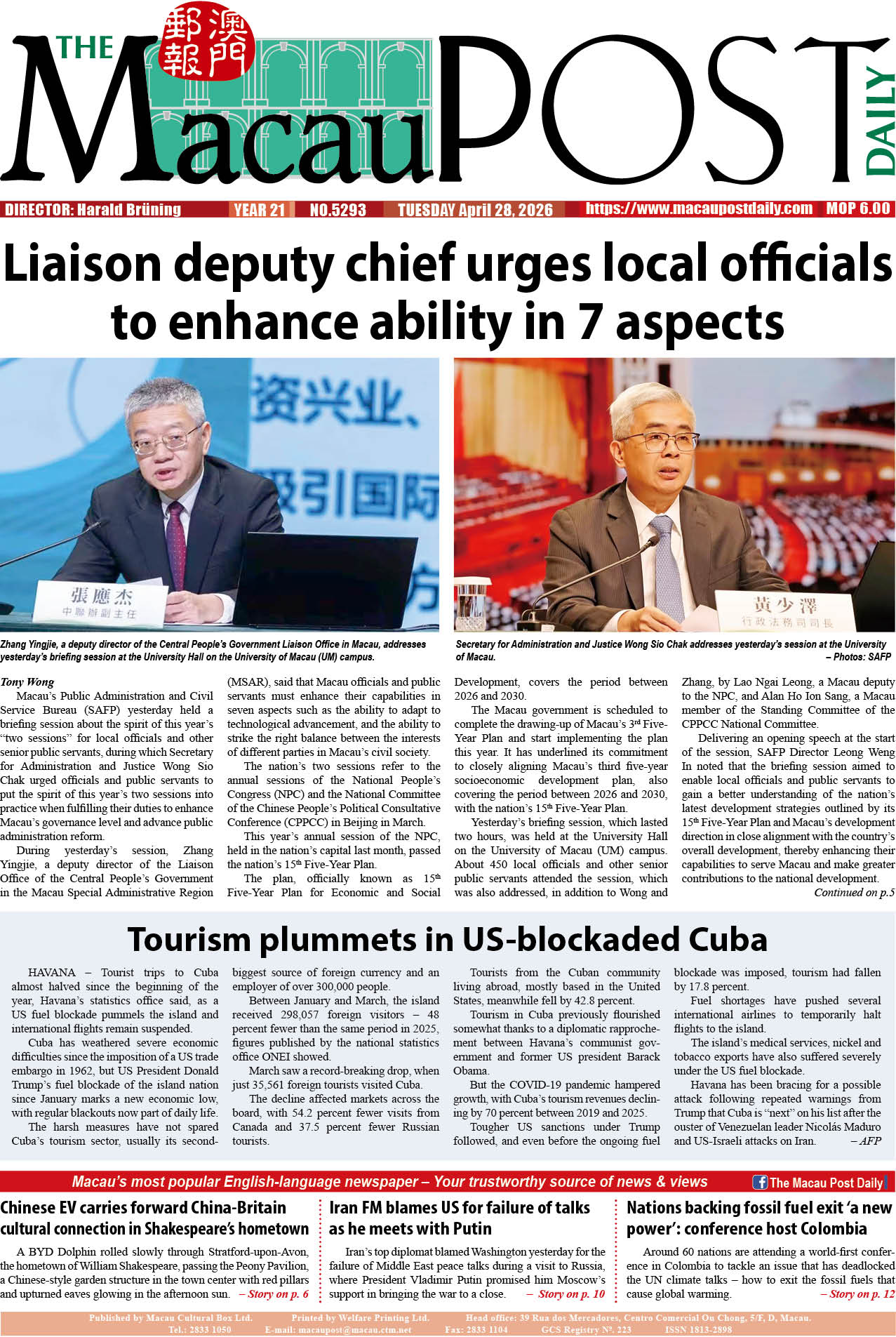
Macau’s Public Administration and Civil Service Bureau (SAFP) yesterday held a briefing session about the spirit of this year’s “two sessions” for local officials and other senior public servants, during which Secretary for Administration and Justice Wong Sio Chak urged officials and public servants to put the spirit of this year’s two sessions into practice when fulfilling their duties to enhance Macau’s governance level and advance public administration reform.
During yesterday’s session, Zhang Yingjie, a deputy director of the Liaison Office of the Central People’s Government in the Macau Special Administrative Region (MSAR), said that Macau officials and public servants must enhance their capabilities in seven aspects such as the ability to adapt to technological advancement, and the ability to strike the right balance between the interests of different parties in Macau’s civil society.
The nation’s two sessions refer to the annual sessions of the National People’s Congress (NPC) and the National Committee of the Chinese People’s Political Consultative Conference (CPPCC) in Beijing in March.
This year’s annual session of the NPC, held in the nation’s capital last month, passed the nation’s 15th Five-Year Plan.
The plan, officially known as 15th Five-Year Plan for Economic and Social Development, covers the period between 2026 and 2030.
The Macau government is scheduled to complete the drawing-up of Macau’s 3rd Five-Year Plan and start implementing the plan this year. It has underlined its commitment to closely aligning Macau’s third five-year socioeconomic development plan, also covering the period between 2026 and 2030, with the nation’s 15th Five-Year Plan.
Yesterday’s briefing session, which lasted two hours, was held at the University Hall on the University of Macau (UM) campus. About 450 local officials and other senior public servants attended the session, which was also addressed, in addition to Wong and Zhang, by Lao Ngai Leong, a Macau deputy to the NPC, and Alan Ho Ion Sang, a Macau member of the Standing Committee of the CPPCC National Committee.
Delivering an opening speech at the start of the session, SAFP Director Leong Weng In noted that the briefing session aimed to enable local officials and public servants to gain a better understanding of the nation’s latest development strategies outlined by its 15th Five-Year Plan and Macau’s development direction in close alignment with the country’s overall development, thereby enhancing their capabilities to serve Macau and make greater contributions to the national development.
During yesterday’s session, Zhang said that Macau currently enjoys two major types of development opportunities. The solid advancement of Chinese modernisation is providing Macau with a historic opportunity for its development, while the solid foundations and achievements that Macau has enjoyed since its return to the motherland have provided important opportunities for its transition towards higher-quality and more innovative development, Zhang said.
The MSAR was established on December 20, 1999, marking Macau’s return to the motherland and the end of Portugal’s temporary administration of the city.
4 problems
However, Zhang said, Macau must tackle four problems currently hindering its further development.
First, Zhang said, while Macau has achieved significant results in serving the nation’s development, its potential has yet to be further realised, adding that this situation is partially due to Macau’s ongoing public administration reform still failing to reach the desired level.
Second, Zhang said, while the local government has achieved positive results in planning and advancing its 1+4 appropriate economic diversification plan, the long-standing dominance of a single industry in Macau remains largely unchanged.
The local government’s 1+4 model aims to consolidate and diversify the development of the city’s tourism and leisure industry, i.e., the “1” element, while putting special emphasis on promoting the development of four new key industries, i.e., the “4” elements, namely +1) big health mainly driven by traditional Chinese medicine (TCM), +2) modern finance, +3) high-tech, and +4) MICE and commerce as well as culture and sport.
Third, Zhang said, while the first-phase development goals of the Guangdong-Macao In-Depth Cooperation Zone in Hengqin were achieved as scheduled in 2024, the island’s institutional development and alignment with Macau remains inadequate.
Fourth, Zhang said, in terms of improving residents’ well-being, while Macau’s social welfare has reached a level among the top in the world, residents’ sense of gain remains insufficient.
Zhang said that Macau generally does not lack employment opportunities, but structural contradictions are prominent. It is common for highly educated individuals in Macau to hold low-skilled positions, and the opportunities available in Macau for young people to fully realise their potential have yet to be expanded, he said.
Zhang also said that the channels available for residents to express their demands are still “not smooth enough”.
Seven aspects
Zhang also said Macau officials and public servants must enhance their capabilities in seven aspects.
The first is to enhance coordination capacity to integrate and serve the nation’s overall development.
The second, Zhang said, is to enhance the ability to adapt to changes. He said that local officials and public servants must enhance their ability to adapt to the emergence of various new concepts and new knowledge brought about by the global technological advancement.
Third, Zhang said, officials must also go into neighbourhoods to conduct on-site investigations and grasp first-hand information instead of only sitting in the office.
The fourth, Zhang said, is to enhance the ability to strike the right balance between the interests of different parties in Macau’s civil society.
The fifth, Zhang said, is to enhance problem-solving ability with the aim of advancing Macau’s appropriate economic diversification.
Sixth, Zhang said, officials must enhance their emergency response capacity to prevent and resolve various types of risks in civil society.
Seventh, Zhang said, officials must enhance their ability to ensure that Macau’s various development plans will be correctly executed and implemented.
Wong raises 5 suggestions
During yesterday’s session, Wong raised five suggestions for officials and public servants concerning their duties to enhance Macau’s governance level and advance public administration reform.
The first is to accurately grasp the reform spirit and apply it to their work. He said that it is essential to deeply study the spirit of the two sessions and the central authorities’ requirements, firmly establish a holistic perspective, and plan and advance their own work within the context of the MSAR’s overall reform agenda.
The second is to cooperate with the government’s reform efforts and strengthen cross-departmental collaboration. From an overall perspective, public entities should proactively coordinate, collaborate closely, remove bottlenecks, and work together to ensure the smooth progress of the government’s reform tasks, achieving efficient operation of Macau’s governance system.
The third is to break through rigid thinking patterns and drive reform with innovation. It is necessary to transcend traditional mindsets, proactively innovate ideas and methods, and introduce new approaches and measures in management, services, and policy implementation.
The fourth is to demonstrate a sense of responsibility and dedication to ensure that reform is implemented. Officials must personally deploy and oversee reform tasks, ensuring clear goals, detailed work plans, and well-defined responsibilities to guarantee that reforms are implemented faithfully and effectively.
The fifth is to remain committed to the original aspiration of serving the people and work diligently for their well-being. This commitment must be transformed into action by improving the quality and efficiency of public services and building a clean, efficient, and people-orientated government.
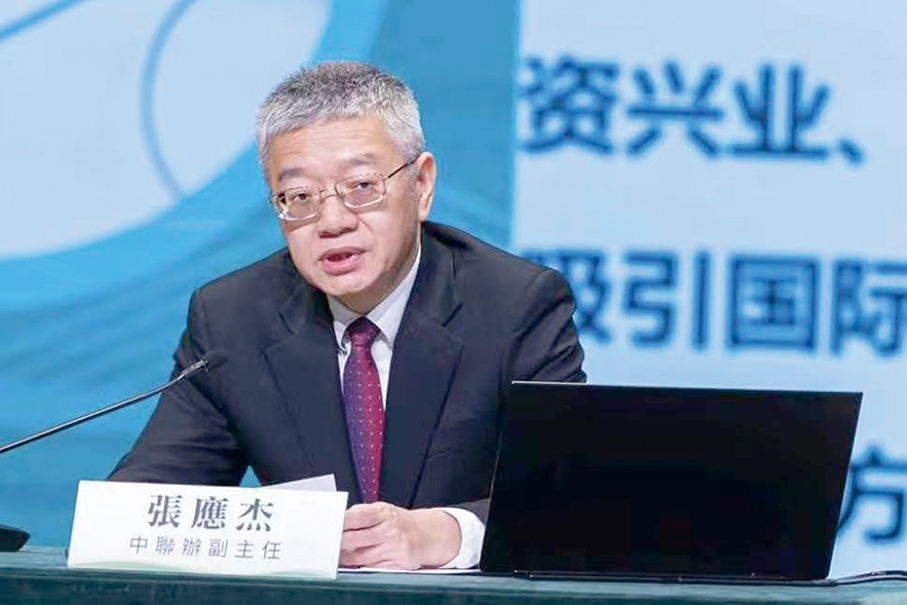
Zhang Yingjie, a deputy director of the Central People’s Government Liaison Office in Macau, addresses yesterday’s briefing session at the University Hall on the University of Macau (UM) campus.
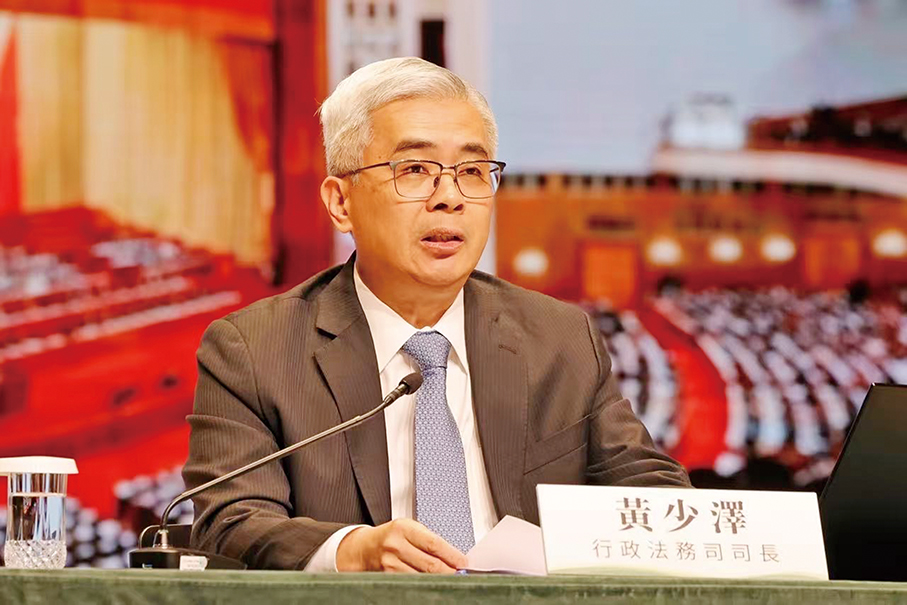
Secretary for Administration and Justice Wong Sio Chak addresses yesterday’s session at the University of Macau. – Photos: SAFP
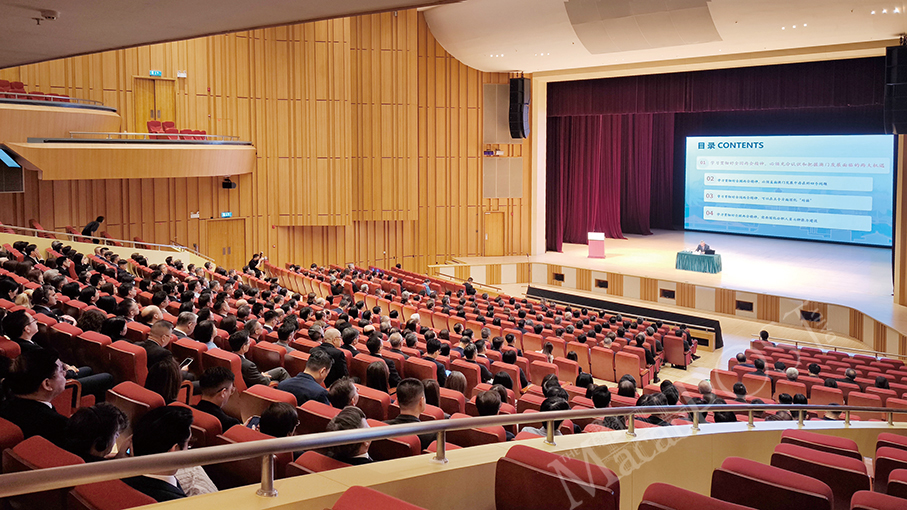
Local officials and public servants attend yesterday’s session at the University of Macau’s (UM) University Hall. – Photo: Tony Wong