The Health Bureau (SSM) yesterday released its mandatory disease notification data for last month, revealing a significant rise in gastrointestinal infections.
A total of 1,608 cases of notifiable diseases were recorded during the month, the statement said. The three most reported illnesses were influenza with 1,307 cases, the rotavirus with 84 cases, and the norovirus with 74 cases.
According to the statement, norovirus cases increased by approximately 2.5 times compared to December, rising from 21 cases to 74.
Rotavirus cases also showed a marked increase, with 84 cases reported in January.
Approximately 80 percent of rotavirus cases were linked to a school-related gastroenteritis outbreak. Influenza cases, meanwhile, decreased by 73.1 percent, from 4,855 cases in December to 1,307 in January.
The bureau said that the norovirus is a leading cause of non-bacterial gastroenteritis and can affect all age groups. It spreads through contaminated food or water, contact with vomit or faeces from infected individuals, or contact with contaminated surfaces. Outbreaks are common in institutional settings such as schools and nursing homes during winter.
The rotavirus is an acute gastrointestinal infection primarily affecting young children, with symptoms including fever, vomiting, and watery diarrhoea. It is transmitted through contaminated food or water, or through contact with infected individuals or contaminated surfaces. Cases are more common in autumn and winter.
Influenza cases totalled 1,307 in January, a decrease of 40.4 percent compared to the same month last year. The bureau noted that influenza is a highly contagious respiratory illness most common in winter and summer months, with vaccination being the most effective preventive measure.
The statement also reported three imported cases of dengue fever and one imported case of chikungunya fever during January. Both are mosquito-borne diseases transmitted by Aedes mosquitoes, with symptoms including fever, joint pain, and rash.
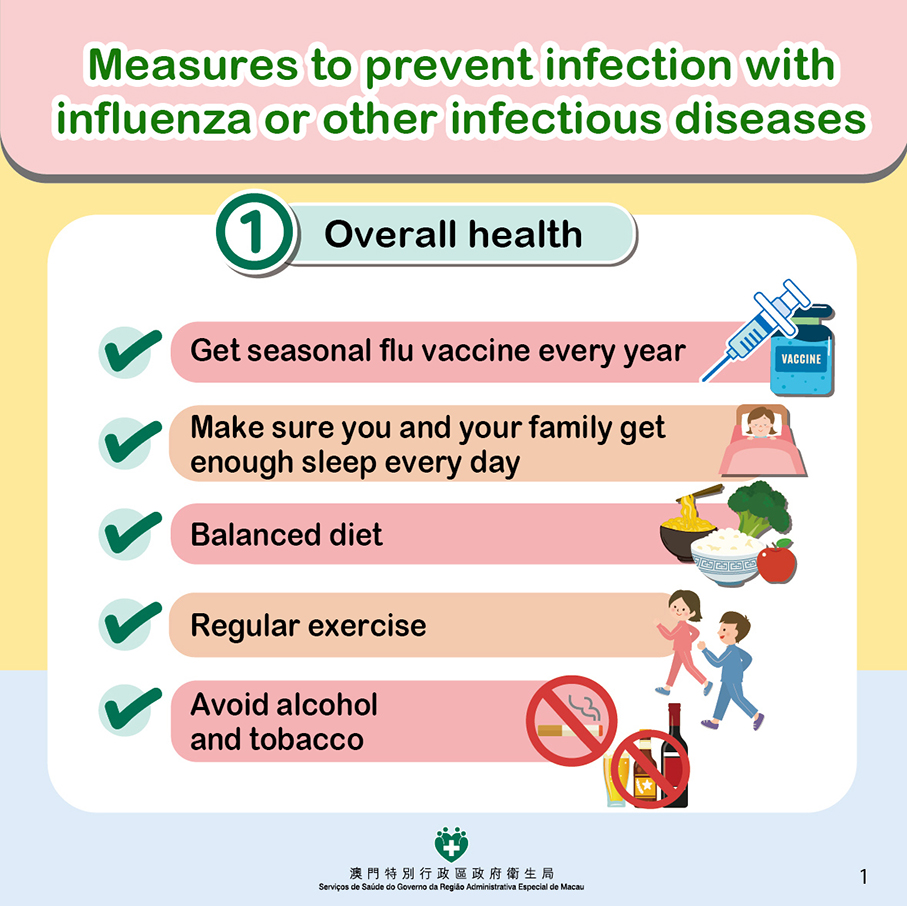
This poster provided by the Health Bureau (SSM) last night promotes ways to reduce the risk of influenza and other infectious diseases. The bureau calls on residents to strengthen personal protective measures.