Analysis by iGEM team of Pui Ching Middle School
Pui Ching–Macau, the city’s first high-school iGEM team, has explored an eco-friendly, safe, and sustainable biological flame-retardant coating.
Their work has been published in the international journal Synthetic and Systems Biotechnology and earned them a Gold Medal at the International Genetically Engineered Machine (iGEM) Competition.*
A flame can only form when three essential elements are present: fuel, an oxidizer, and heat. Under normal conditions, oxygen in the air serves as the oxidizer. When a fuel is exposed to heat above its ignition temperature while oxygen is available, combustion—and therefore fire—begins.
Halogen-containing compounds are among the most widely used types of flame retardants. However, they have been shown to pose risks to both human health and the environment. These flame retardants can act as potential mutagens and, more critically, have been linked to tumour formation and neurodevelopmental disorders.
Biomacromolecules such as DNA and proteins have been explored as alternative flame retardants because they are biodegradable and non-toxic. Owing to their high phosphorus and nitrogen content, certain biomacromolecules can markedly reduce flammability and help suppress combustion. When materials are coated with phosphate-containing compounds and exposed to fire, they promote char formation, which insulates the underlying material from oxygen. Nitrogen-rich compounds, on the other hand, decompose upon heating to release ammonia and other gases that react with oxygen to form water and nitrogen gas – the latter serving as an inert barrier that limits oxygen availability.
According to the Pui Ching–Macau team, their study introduces a protein-based alternative flame retardant that functions by limiting oxygen availability and thereby preventing combustion. They selected two proteins for their flame-retardant properties: Serine/arginine-rich splicing factor 1 (SRSF1), an SR protein with a high nitrogen content, and α-casein, which is expected to contain a high level of phosphorus.
To ensure the coating adheres effectively to a variety of surfaces, the team incorporated strong adhesive protein domains – specifically mussel foot protein-5 (mfp-5) or a cellulose-binding domain (CBD) – by fusing them to the flame-retardant proteins, enhancing the overall performance of the alternative fire retardants (FRs).
They began by engineering Escherichia coli (E. coli) to biosynthesize the target proteins using synthetic biology methods. Subsequent experiments were carried out to validate the flame-retardant efficiency and to explore the potential application range of these protein-based FRs.
The findings indicate that the alternative FRs perform exceptionally well, demonstrating strong flame-retardant properties along with robust adhesion. To evaluate how these FR proteins function in practical applications, the team carried out flammability tests following the BS476-4:1970 standard, as well as vertical burn testing in accordance with ASTM D6413. Their results show that FR proteins fused with CBD enhanced flame-retardant performance by 50 percent without producing any toxic by-products, effectively preventing flare-ups and offering an environmentally friendly solution.
This innovation not only fills a market gap for environmentally friendly fire-resistant materials in Macau but also offers a sustainable, green alternative for the wider flame-retardant coatings industry. Free of hazardous chemicals and exhibiting outstanding adhesive stability, it shows strong potential for broad adoption in the future. With continued development, it could gradually replace traditional fire-retardant coatings, reducing risks to human health and the environment while guiding the industry toward a more sustainable path.
+++
Full text in English recently provided to the Post by Winston Wong – iGEM team of Pui Ching Middle School. Link to the study: https://www.researchgate.net/publication/355970140_Using_recombinant_adhesive_proteins_as_durable_and_green_flame-retardant_coatings/fulltext/61969ddd3068c54fa5fd5321/Using-recombinant-adhesive-proteins-as-durable-and-green-flame-retardant-coatings.pdf?origin=scientificContributions
* iGEM is an international not-for-profit organisation dedicated to advancing the field of synthetic biology and building the global synthetic biology workforce through education and competition, while cultivating an open, collaborative and cooperative community that strives to find solutions for a healthier, more resilient and sustainable world.
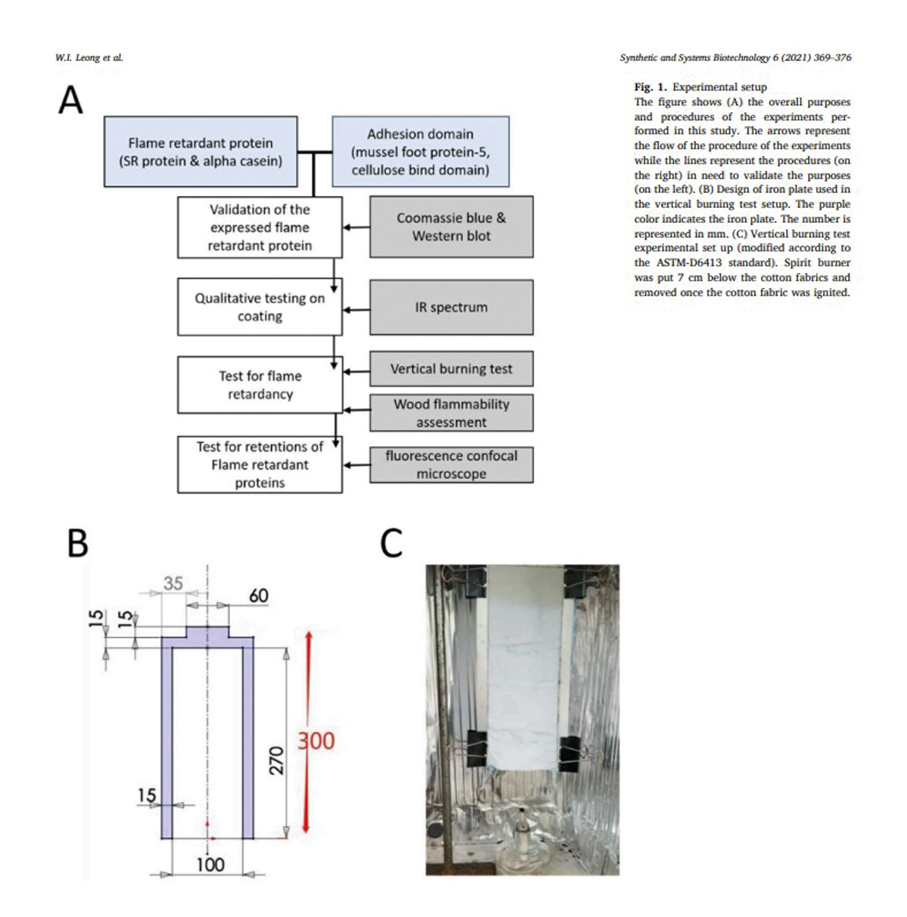
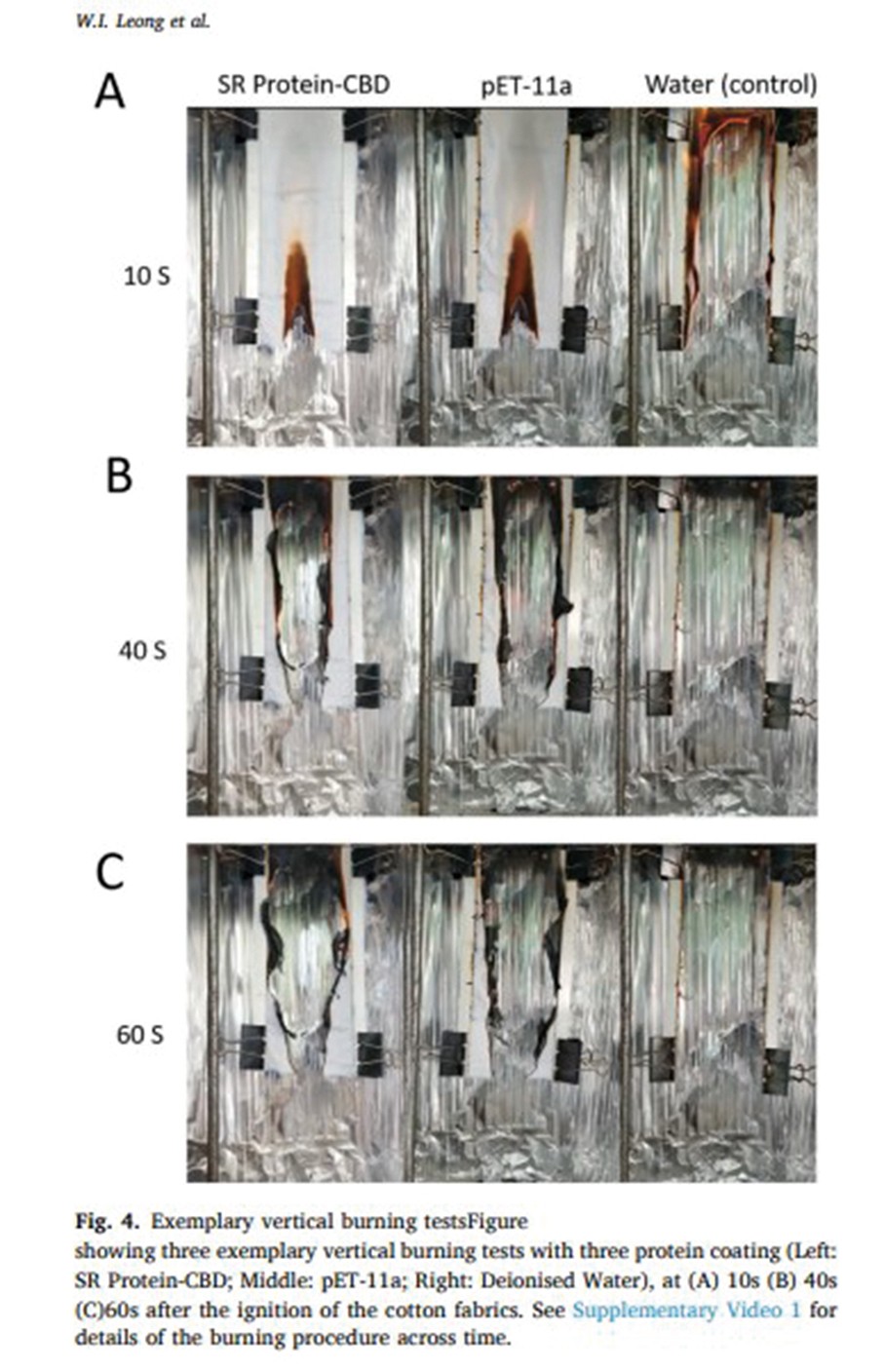
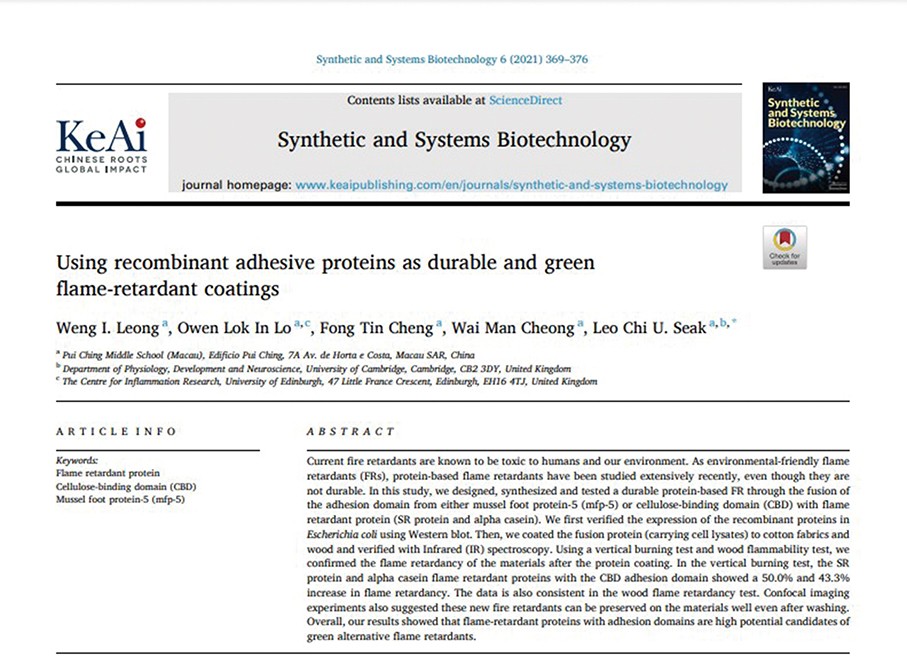
Screenshots of the study taken yesterday

Photo of beakers and lab equipment courtesy of Unsplash