The Super El Niño event that formed last month is highly likely to persist through the spring of 2027, with among its effects being the possibility of bringing off-season rainfall and temporary extreme cold snaps below 5°C to the Pearl River Delta region between January and March, as noted in a WeChat statement by the Zhuhai Meteorological Bureau said on Monday.
The Super El Niño is an unusually intense climate pattern that occurs when ocean surface temperatures in the central and eastern tropical Pacific rise 2°C or more above average for an extended period.
Citing the National Climate Center, the statement noted that the phenomenon is projected to become “the strongest El Niño event recorded since systematic climate monitoring began.”
For the remainder of 2026, from this month through December, rainfall in Zhuhai is expected to remain close to historical averages, with temperatures running 0.5°C to 1.0°C higher than normal, the statement said.
However, for spring 2027 (January through March), rainfall is forecast to surge 20 to 30 percent above average, with heavy rainstorm days likely arriving earlier and occurring more frequently than usual, as forecast by the Zhuhai Meteorological Bureau for Zhuhai. While average spring temperatures are expected to align with seasonal norms, severe cold surges are highly likely to trigger temporary drops below 5°C.
Globally, a total of 22 El Niño events have been recorded since 1952, with only three previously classified as super events: April 1982 to June 1983, April 1997 to April 1998, and October 2014 to April 2016. In Zhuhai during the last super El Niño in January 2016, it recorded an all-time low temperature of 2.0°C, accompanied by rare soft hail, the statement said.
In Macau, the city recorded its lowest temperature on record since 1949 at 1.6 degrees on January 24, 2016.
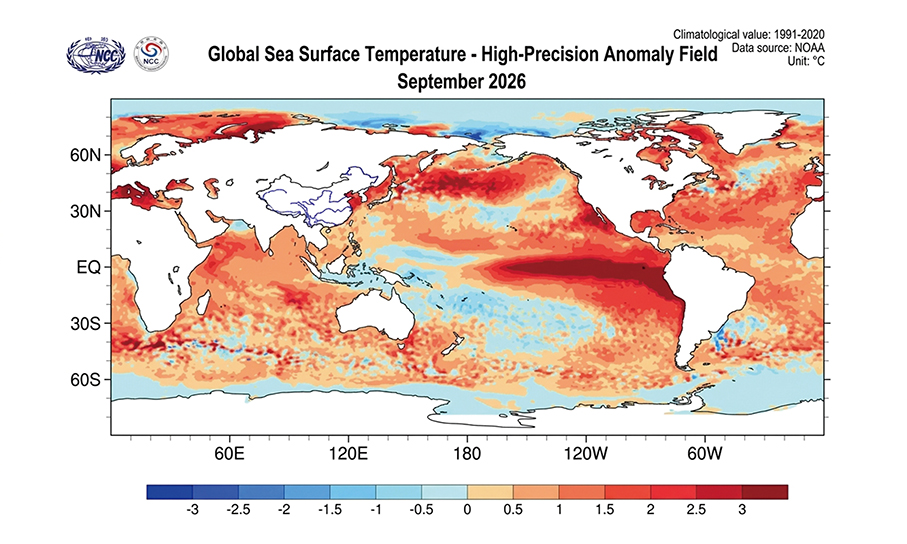
This screenshot taken from the Zhuhai Meteorological Bureau’s WeChat page, with translation from Chinese arranged by the Post, shows a chart showing the “Global Sea Surface Temperature - High-Precision Anomaly Field”