Interview and review by William Chan
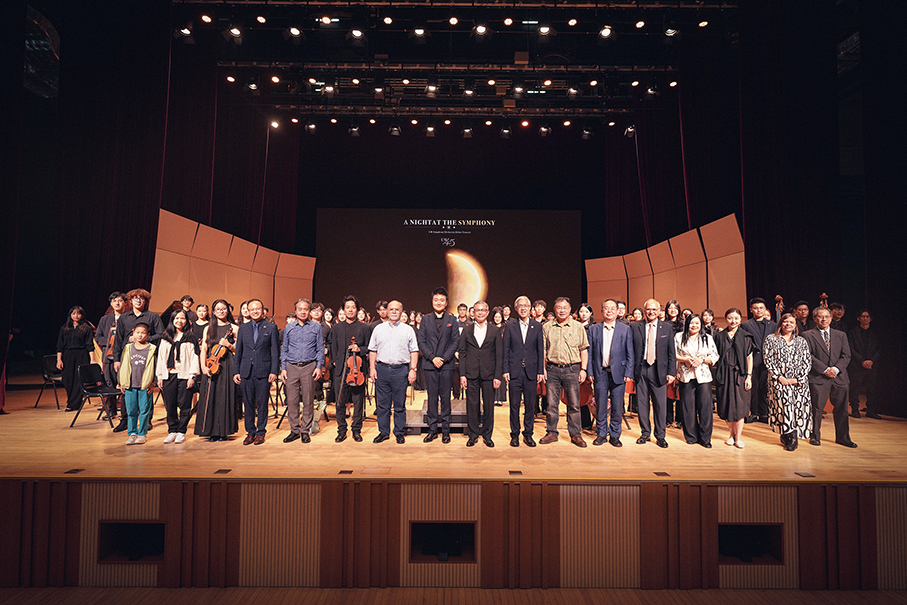
The University of Macau Symphony Orchestra (UMSO) held its debut concert, “A Night at the Symphony,” on campus last Tuesday. The programme featured Verdi’s Aida, Ravel’s Pavane pour une infante défunte (“Pavane for a Dead Princess”), Tchaikovsky’s 1812 Overture, and Grieg’s Peer Gynt Suite No. 1, Gershwin’s An American in Paris Suite, as well as Leslie Bricusse and Anthony Newley’s Pure Imagination.
Formed just last year, UMSO is the university’s first symphony orchestra. Although the university does not offer a music major, it has for years trained amateur students under professional music teachers, allowing them to learn music and perform as an ensemble. As a fully instrumented symphony orchestra, UMSO currently has around 100 members from different disciplines across the university.
Beyond the music, the orchestra prepared specific visuals and lighting for each piece. For example, Peer Gynt Suite featured four AI-generated oil paintings representing the respective four movements of the piece. The 1812 Overture, which depicts France’s ill-fated invasion of Russia, was accompanied by historical paintings illustrating the story – from Napoléon’s planning of the invasion, to the battle itself, and finally to the French defeat and the entry of anti-French coalition forces (including Russians) into Paris.
Conductor Ng Sa frequently briefed the audience about the pieces, giving many details that even I, as a player, did not know. For instance, despite the worldwide success of the 1812 Overture, Tchaikovsky himself did not like the piece, finding it loud and noisy. During Ravel’s and Gershwin’s pieces, Ng also noted an interesting story between the two brilliant composers: Gershwin so admired Ravel that he sought him out in Paris, an encounter that bore influence upon the tune played in An American in Paris. Ravel, after hearing Gershwin’s music, was astonished and refused to teach him, commenting: “Why become a second-rate Ravel when you are already a first-rate Gershwin?”
His words resonated with the audience, composed mainly of professors and students, as a relatable statement on education: to help students become their best selves, not mere followers.
Since I was also a player, it is better for me to write about audience feedback rather than my own performance. I spoke with several attendees and received generally positive comments.
Classical music is often said to be fading, like many traditional arts. Most people I talked to remarked on the strength of the repertoire: it was familiar, easy to listen to, and concise. Plus, the music is wholesome, with most people surprised by the performance from the students, who are non-music majors. The concert ran just over an hour –slightly longer than a full symphony –and combined good visuals with thoughtful lighting. Audience members felt that the overall experience was enhanced as a result, allowing them to appreciate the music more deeply.
As a classically trained amateur myself, I have often shied away from inviting friends to concerts because I have sometimes found them getting bored. Tuesday’s concert, from what I heard, was anything but boring. It proved that classical music, when presented with creativity and heart, can still excite a modern audience.
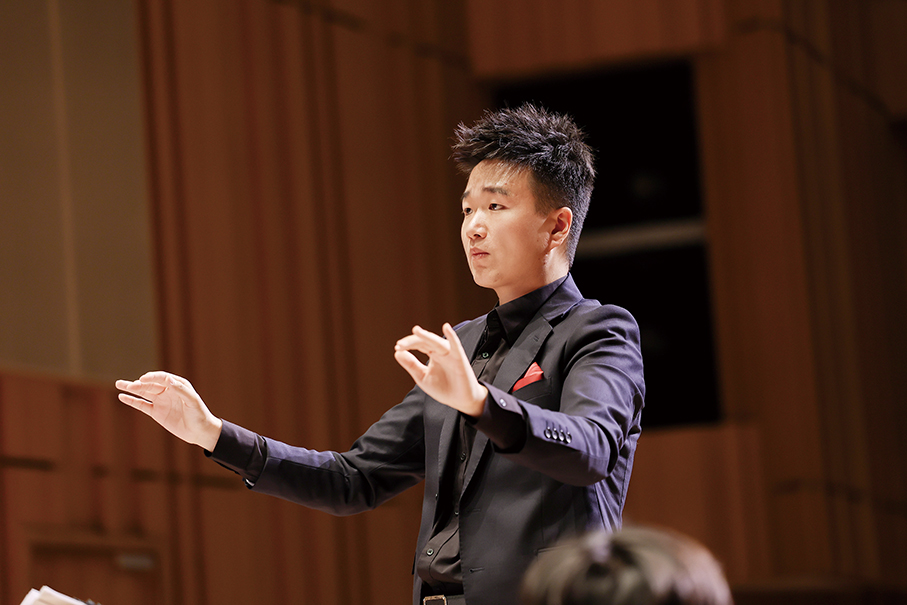
Ng Sa conducts at UM N2 Hall last Tuesday. – Photos: Leong Wai Keong, Tang Chao, Zhang Boyu
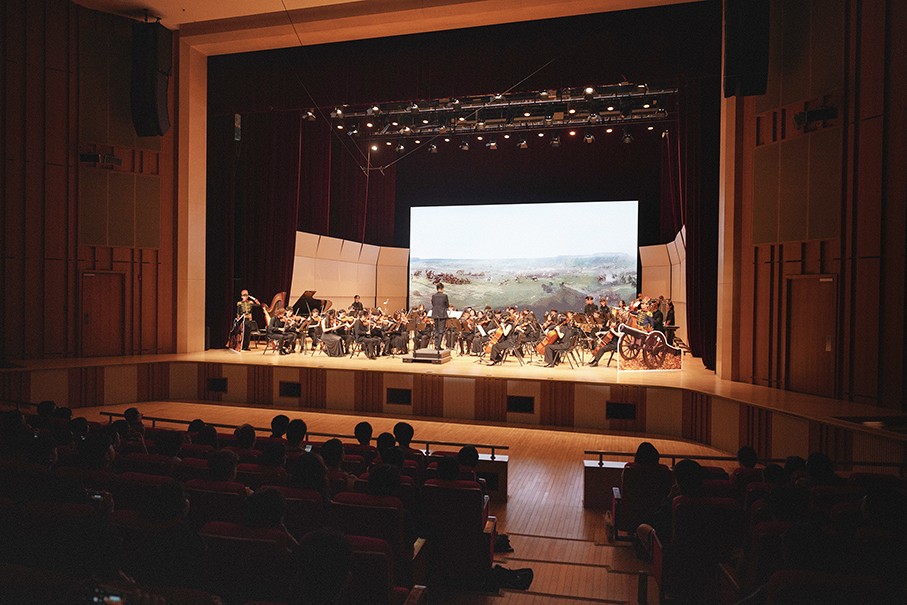
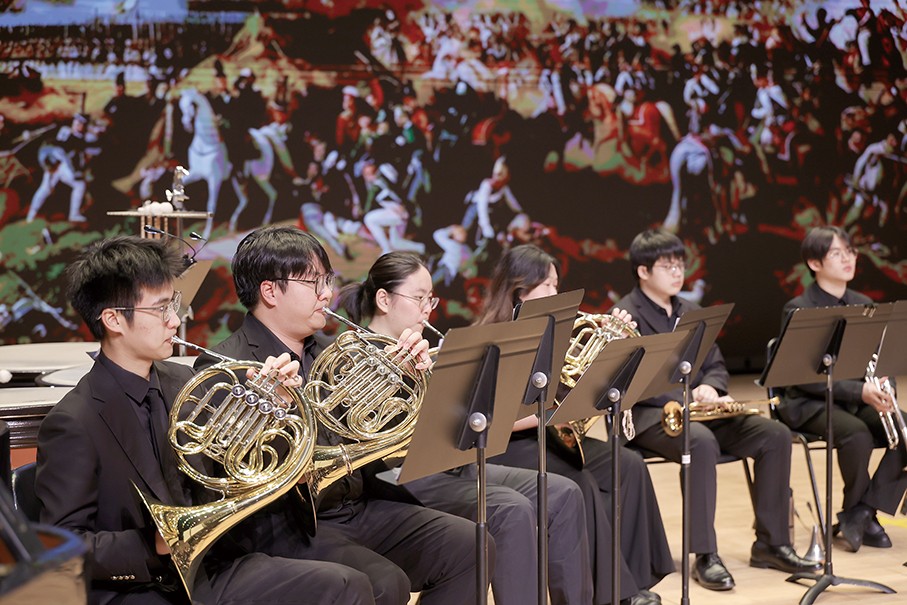
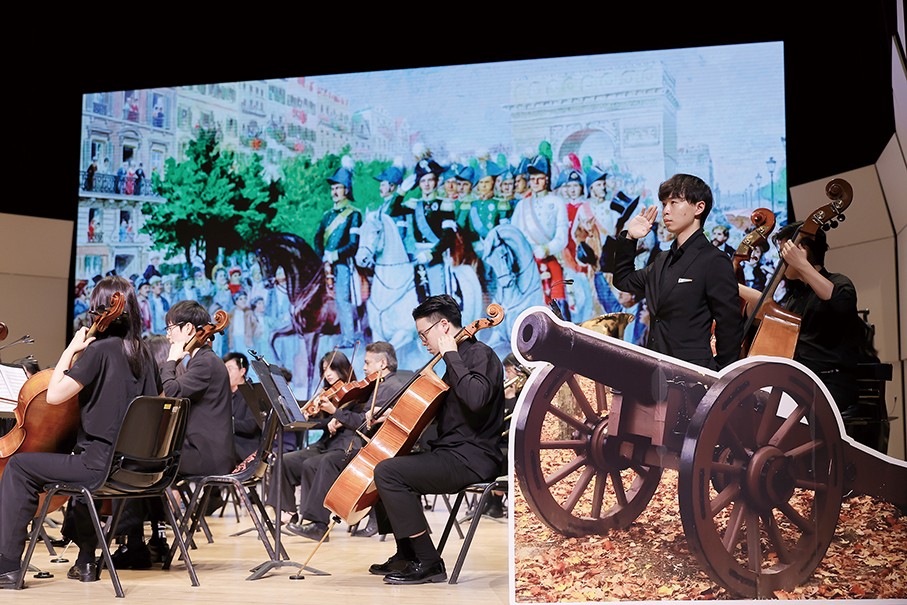
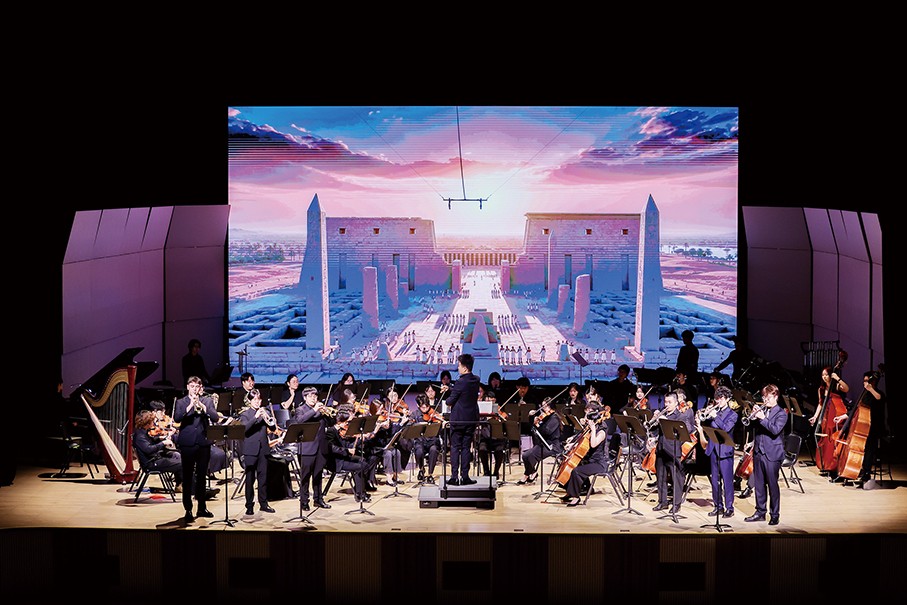
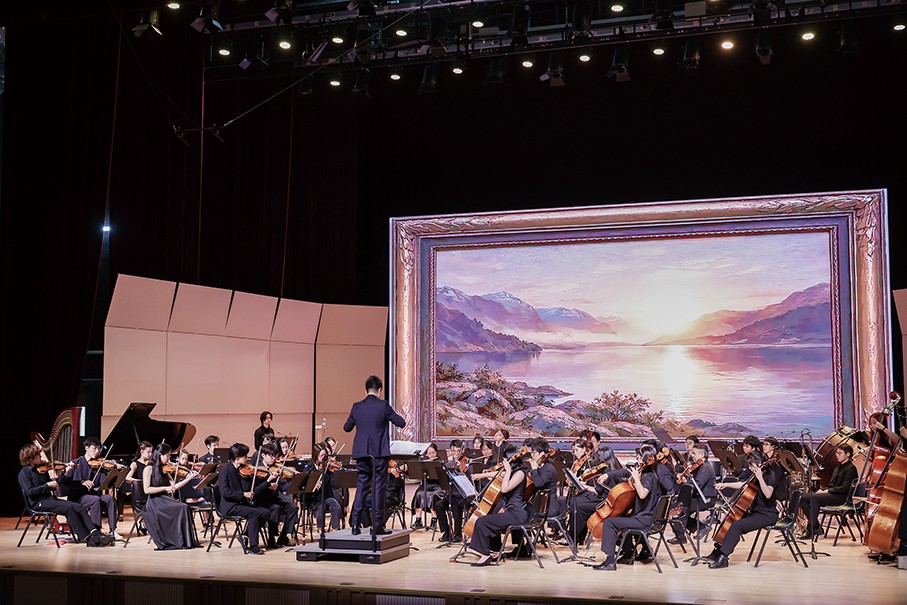
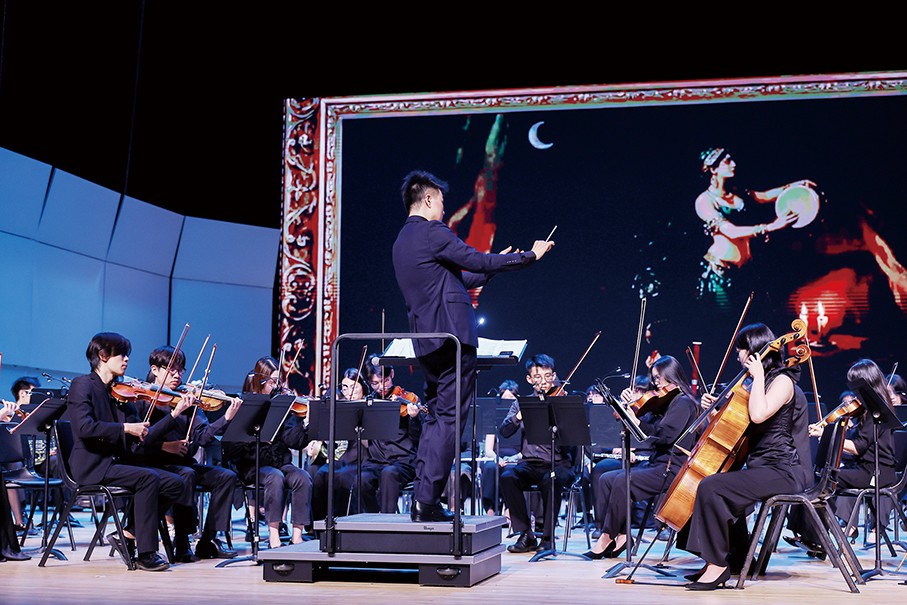
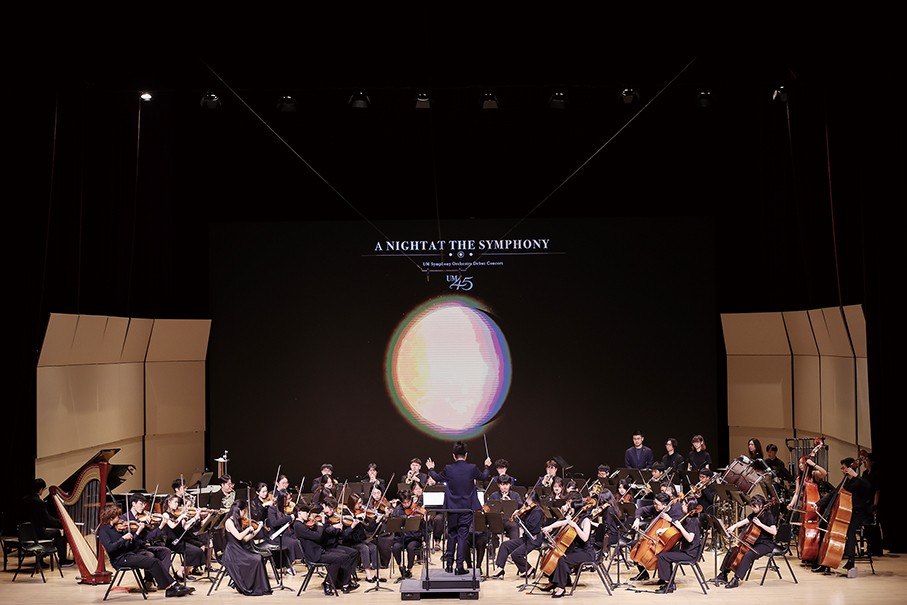
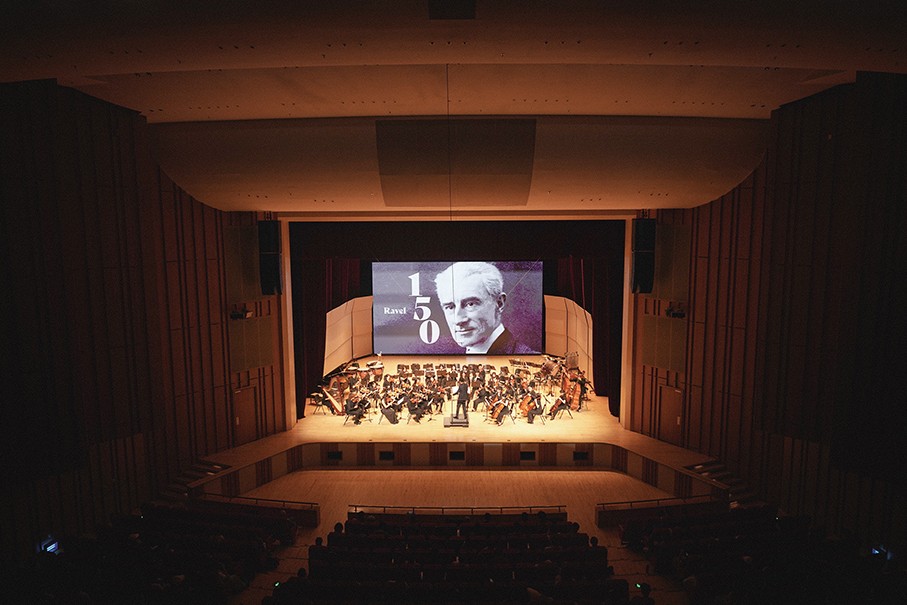
University of Macau (UM) Symphony Orchestra performs its debut concert, “A Night at the Symphony,” on campus last Tuesday.