Interview by William Chan
Macau is poised to make a cultural statement at the 61st International Art Exhibition of La Biennale di Venezia.* Macau will present “Jacone’s Polyphony,”** an exhibition curated by Feng Yan and Ng Sio Ieng, featuring the works of three contemporary local artists: Fok Hoi Seng, O Chi Wai, and Lei Fung Ieng.
This 61st Biennale in Venice, running from this Saturday, May 9 to Sunday, November 22, will be showcased across Venice, primarily at the historic Giardini and Arsenale venues. The curators told the Post in a recent online interview that they aim to bridge 17th-century Macau with the contemporary art world, offering a unique perspective on cultural integration and dialogue within a globalised context. “The exhibition centres on the remarkable life of Wu Li, also known as Jacone, a prominent figure from the late Ming and early Qing dynasties. Wu Li was not merely one of the ‘Six Masters of the Early Qing,’ but a pioneer of cross-cultural self-awareness,” they said.
“Wu Li’s journey from a Jiangnan literatus to a Catholic, his unfulfilled aspiration to study theology in Rome, and his eventual stay in Macau are central to the narrative,” according to Feng and Ng. In Macau, Wu Li adopted a Portuguese name and authored “San Ba Ji,” reinterpreting Western hymns through Chinese folk melodies.
According to DeepSeek, Jiangnan is a traditional geographic region in southern China, generally defined as the area south of the lower Yangtze River, including parts of modern-day Shanghai, southern Jiangsu, northern Zhejiang, and southern Anhui. It is historically and culturally known for its prosperous rice cultivation, abundant waterways, and rich literary and artistic heritage.
The curators also emphasised that Macau has always been more than a simple East-West meeting point. It is a crucible for cultural translation, faith integration, and overlapping identities. “Wu Li’s story reflects the city’s spirit, documenting a Chinese intellectual’s encounter with, acceptance of, and reshaping by foreign cultures.”
They noted that Wu Li’s narrative embodies Macau’s unique genetic makeup as a conduit for East-West exchange, transforming 17th-century cross-cultural practices into a spiritual theme that contemporary art can interpret and international audiences can empathise with.
The exhibition’s title, “Jacone’s Polyphony,” is key to its conceptual framework. The curators explained that polyphony signifies a harmonious interplay of multiple voices, each distinct yet contributing to a unified whole. “This mirrors Wu Li’s own life, where his identities as a literatus and a Catholic, traditionalist and believer, Chinese and Western, Jiangnan and Macau, coexisted without conflict.”
Wu Li’s life trajectory and spiritual aspirations provide the linear structure for the exhibition. Upon this foundation, artists Fok Hoi Seng, Lei Fung Ieng, and O Chi Wai layer their distinct artistic languages. They explore themes of ‘spiritual migration,’ ‘spatial tracing,’*** and ‘cultural translation,’ respectively. “This creates a multi-voiced dialogue within the exhibition space, and the approach ensures that while individual artistic voices are clearly presented, they remain cohesive with the overarching theme. Together, they form a collective expression representing both Wu Li’s multifaceted self and the essence of Macau’s culture,” the curators underlined.
The curatorial framework also deeply resonates with the Biennale’s overarching theme, “In Minor Keys”. “In our opinion, this theme calls for attention to the subdued, introspective, and subtle voices behind grand narratives, exploring forgotten individual stories and alternative possibilities within mainstream discourse,” Feng and Ng noted, adding that this aligns perfectly with their vision. “Wu Li, despite his profound achievements and cross-cultural practices, has often been reductively labelled as merely a ‘painter’ in art history. Similarly, Macau’s history is frequently simplified to ‘port,’ ‘handover,’ or ‘gambling’. However, Macau’s true strength lies in the subtle, continuous, and everyday cultural fusion that has, over centuries, forged a unique cultural identity.”
The exhibition will be held at the Arsenale (Gallery) in Venice, Italy, during the Venice Biennale. The Post will cover the artists’ interviews next month, with photos of the gallery. For more information of the Biennale, visit: www.labiennale.org/en
*The Venice Biennale is one of the world’s most prestigious and influential cultural institutions, often called “the Olympics of the art world.” Founded in 1895 and held annually in even-numbered years (alternating with an architecture-focused edition in odd-numbered years), it takes place across historic venues in Venice, Italy – primarily the Giardini (home to permanent national pavilions), the sprawling Arsenale, and various palazzos and churches throughout the city. - DeepSeek
** In music, polyphony (which means “many sounds” in Greek) refers to a texture consisting of two or more simultaneous lines of independent melody. Unlike a single voice singing alone or a lead singer backed by chords, polyphony treats every “voice” or instrument as an equal participant with its own distinct rhythm and melodic contour. – Gemini
***Spatial tracing refers to two distinct cutting-edge technologies: computer vision techniques that track objects in 3D space from video, and biological methods mapping gene expression within tissue structure. Key approaches include lifting 2D pixels to 3D via [[SpatialTracker|https://www.youtube.com/watch?v=Z6TcrGf97mM]] and analysing spatial-temporal cell domains using tools like stTrace or SpaceTracer. - Google AI Overview
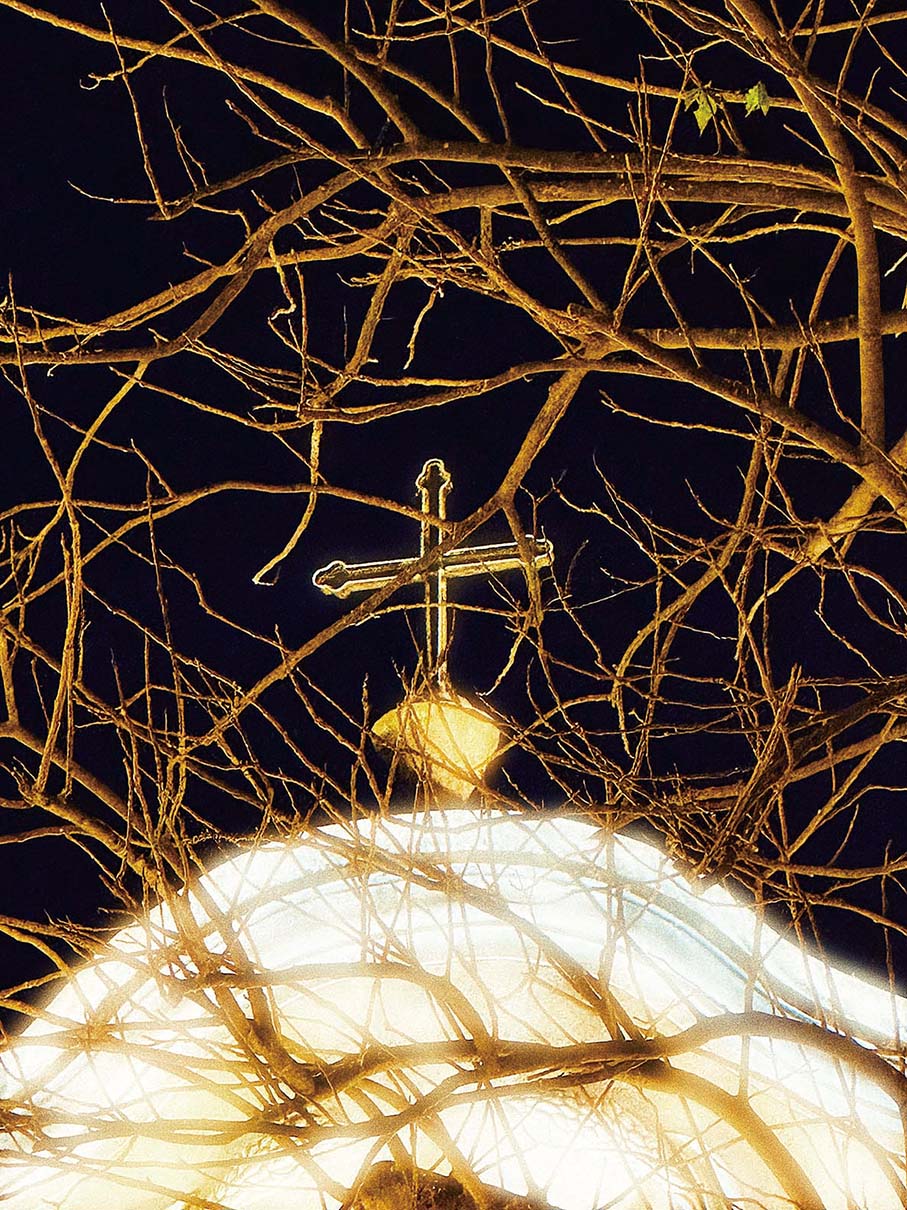
“Sanqu (A Cappella Reverie)” by O Chi Wai
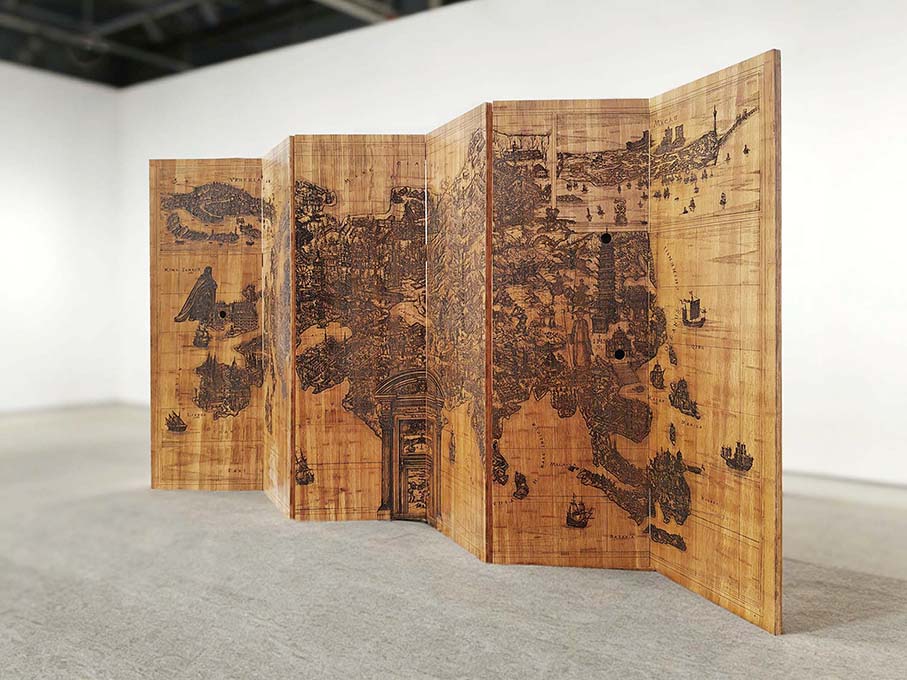
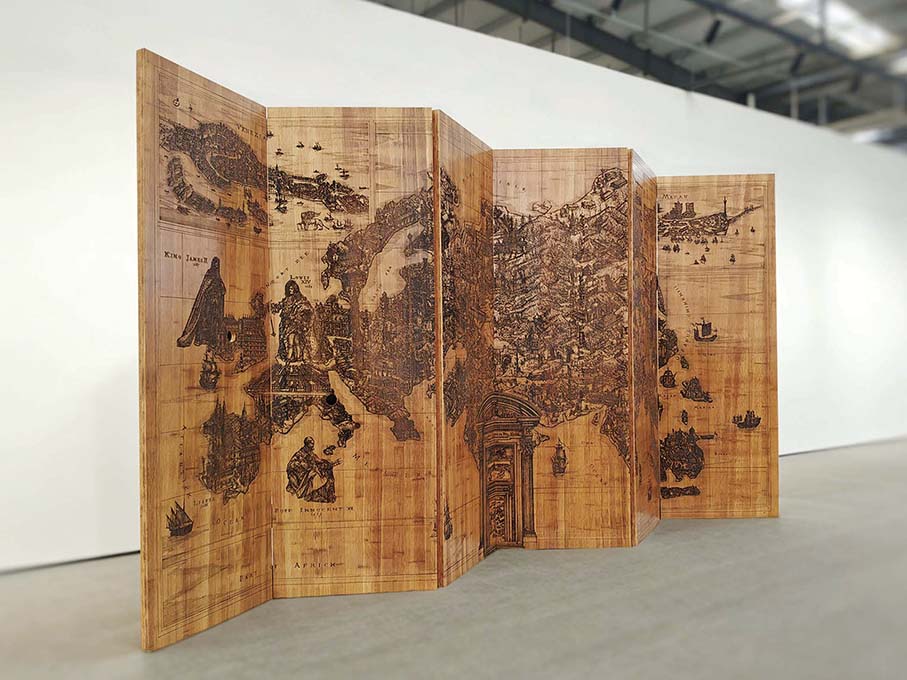
“Silent Travelogues” by Eric Fok Hoi Seng – Photos: Feng Yan
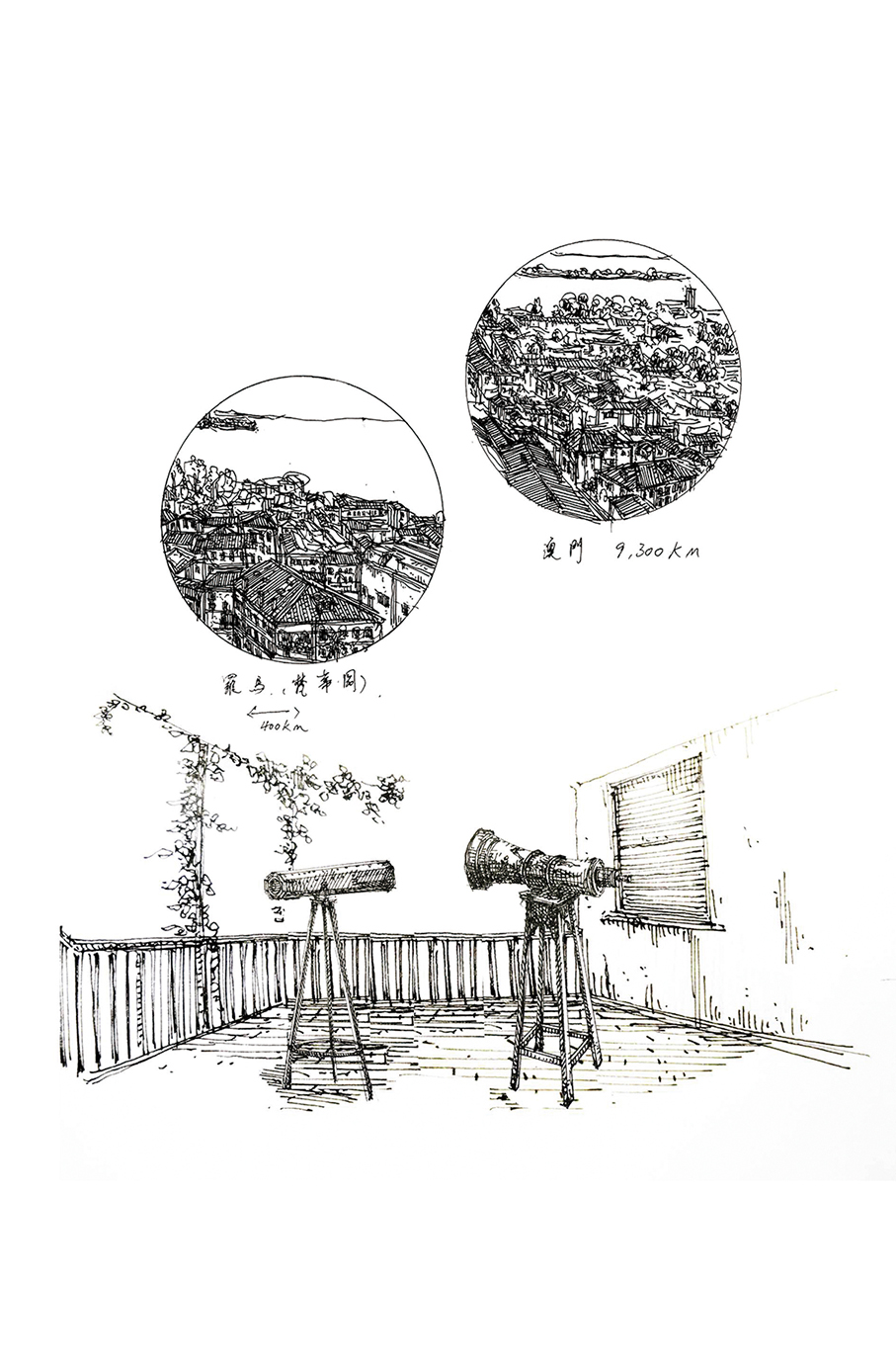
“A Place for Distant Views” by Fok Hoi Seng
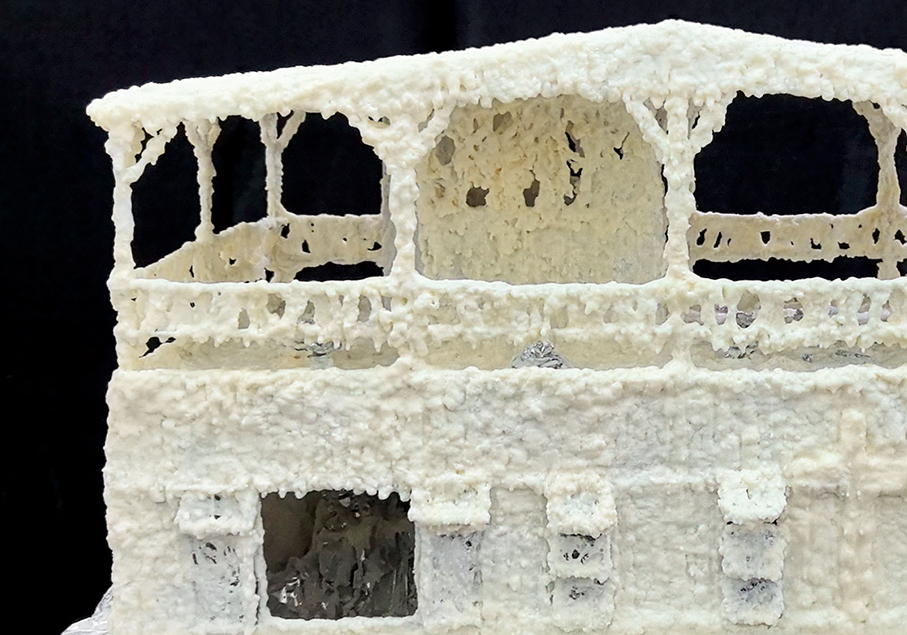
“Sigh of Migration” by Veronica Lei Fong Ieng
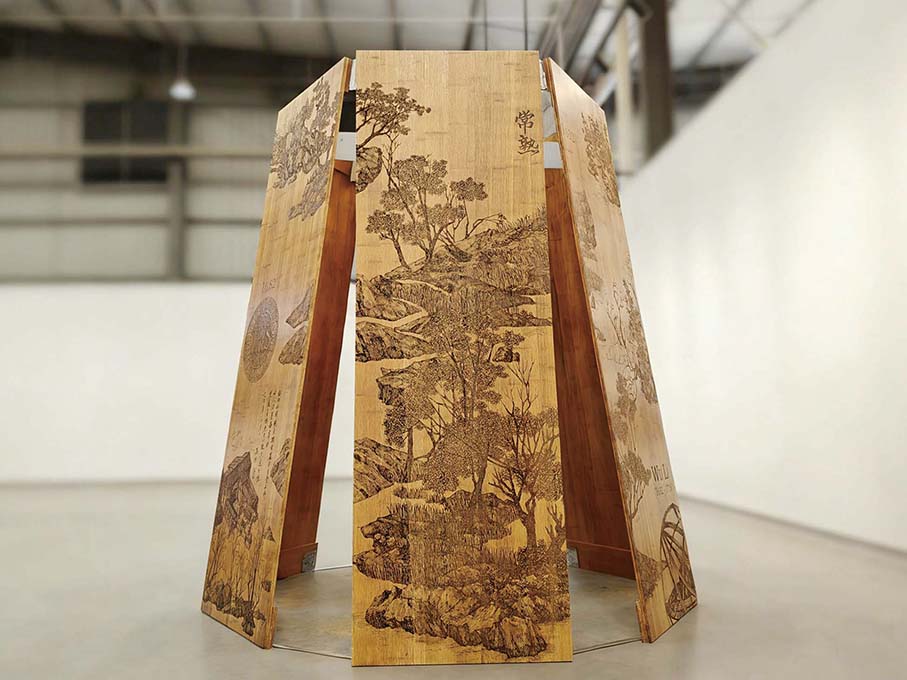
“Layers of Time” by Eric Fok Hoi Seng – Photo: Feng Yan