The “Silent Radiance of Unity – Macao in Harmony” religious art exhibition, presented by Macau’s religious communities and launched last November at Kun Iam Temple, has now moved to the University of Macau’s (UM) Centre for Macau Studies. It coincides with a series of four multicultural salons this month.
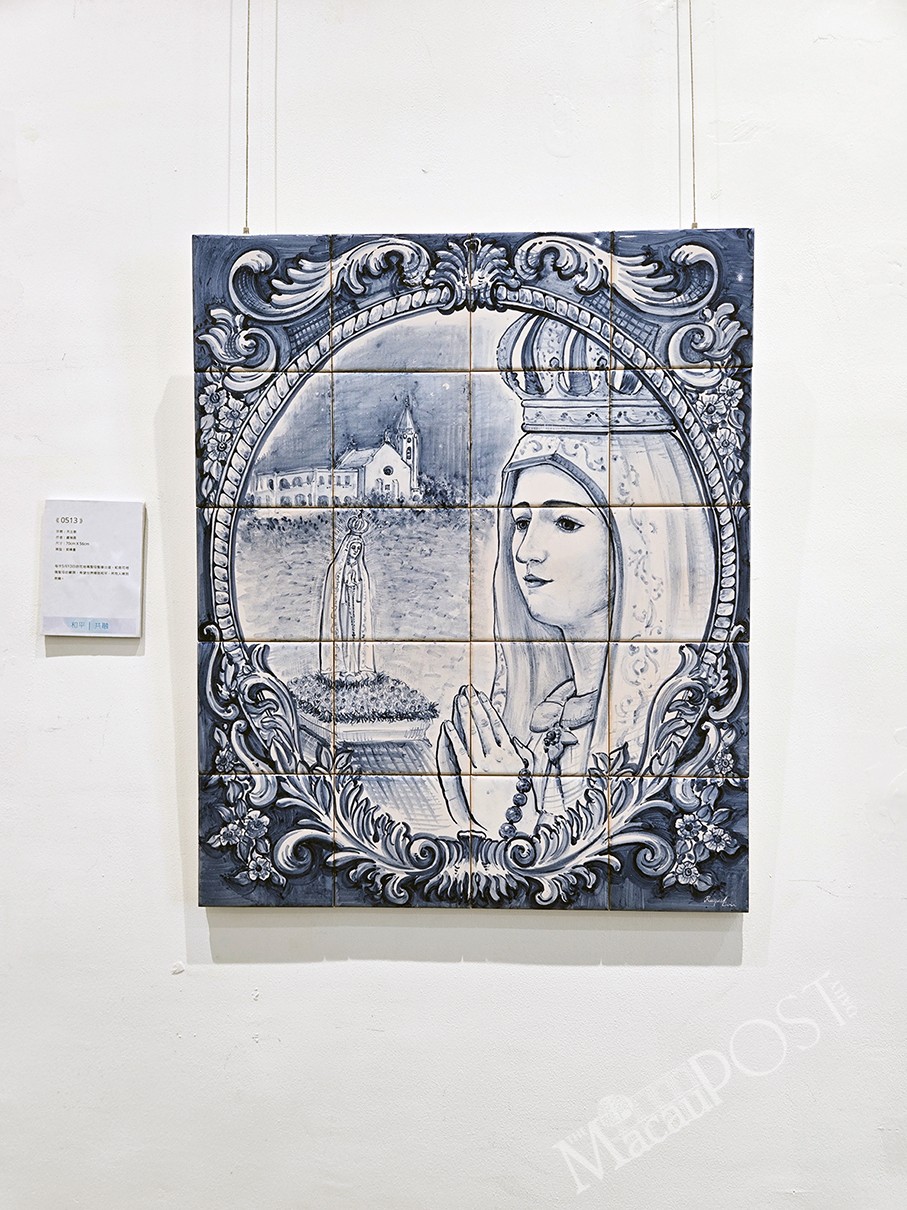
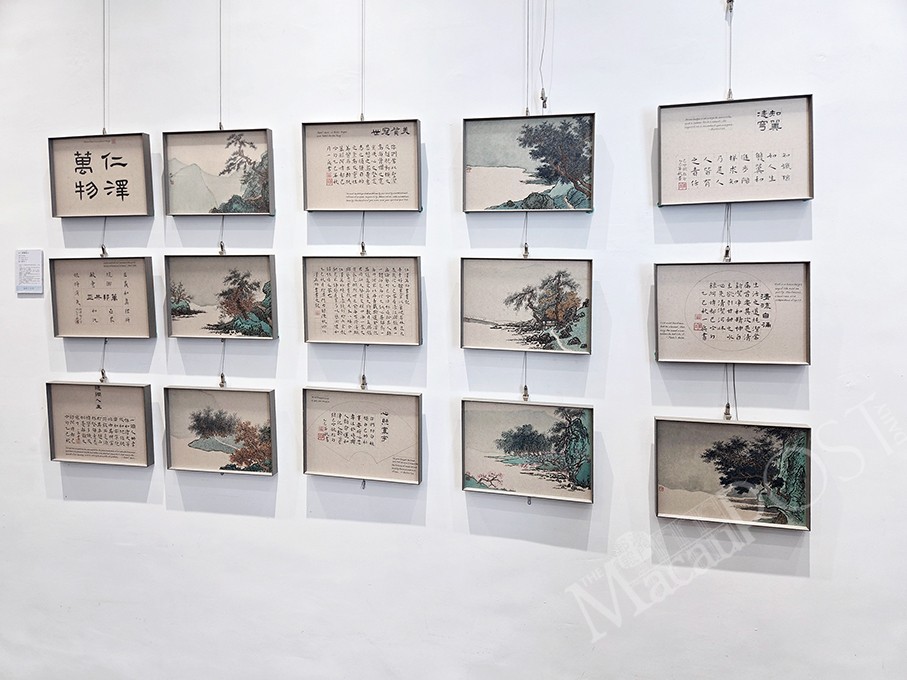
The exhibition features dozens of religious works by artists from Macau and abroad, all of whom aim to express shared spiritual values through media such as calligraphy, sculpture, Portuguese-style tile painting, Chinese painting, and seal engraving.
During the opening ceremony on March 5, Agnes Lam Iok Fong, director of the Centre for Macau Studies, traced the interfaith platform’s growth: from five faiths in 2021 (Catholicism, Buddhism, Daoism, Protestantism, Bahá’í), adding Islam in 2023 for “Winds from Afar,” music in 2024, and now Hinduism and Judaism making it eight religions in total. “Light does not argue. It illuminates,” she said, highlighting their shared pursuit of goodness, beauty, and peace.
Prof. Kong Siew Huat, UM associate professor in management and president of the Spiritual Assembly of the Bahá’ís in Macau, expressed delight at hosting the exhibition on campus to engage students. He stressed that its goal is not proselytising but using rationality to appreciate the universal values and goodness in all religions, promoting inclusivity among people and faiths.
At the multicultural salon on March 5, which featured Buddhism and Daoism, Master Xin Hui, vice chairman of the Buddhist Association of Macau, told the audience how their associations assist individuals of all ages in navigating daily pressures and challenges. She said that their primary strategy involves imparting religious insights to help people shift their perspectives and develop coping mechanisms.
Master Xin Hui underlined, “To better help others, you have to first help yourself. Helping is a form of blessing, and instead of teaching purely conceptual ideas, we prioritise practice and interaction among people.” She further noted that many global events, from family members suffering from Alzheimer’s disease to ongoing conflicts like the Iran war, are beyond individual control, and adopting new perspectives can aid in coping with such difficulties.
In addition, Master Xin Hui, supported by other religious representatives, also advocated for establishing community and support centres in Hengqin for Macau residents. She suggested that such facilities could enhance the religious lives and psychological well-being of residents, particularly those with religious affiliations.
Admission to the upcoming salons is free, held in Putonghua at UM E34-G016. The last talk, which is about Hinduism and Judaism, will be held this Wednesday. Admission to the exhibition is also free of charge, and held on weekdays from 10 a.m. to 6 p.m. until the end of this month.
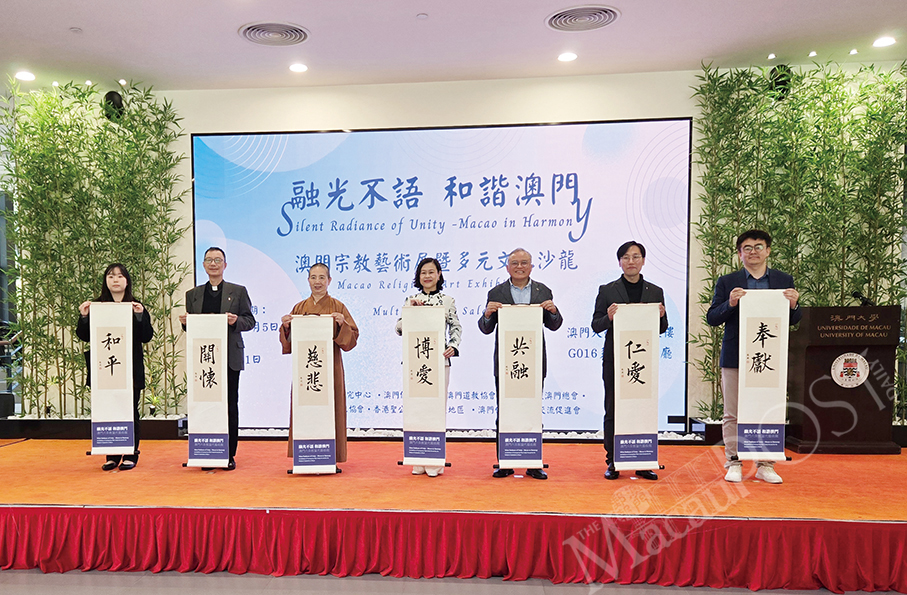
Centre of Macau Studies director Agnes Lam (centre) and religious representatives from Macau’s six faiths unveil the “Silent Radiance of Unity – Macao in Harmony” exhibition at the centre on March 5. – Photos: William Chan
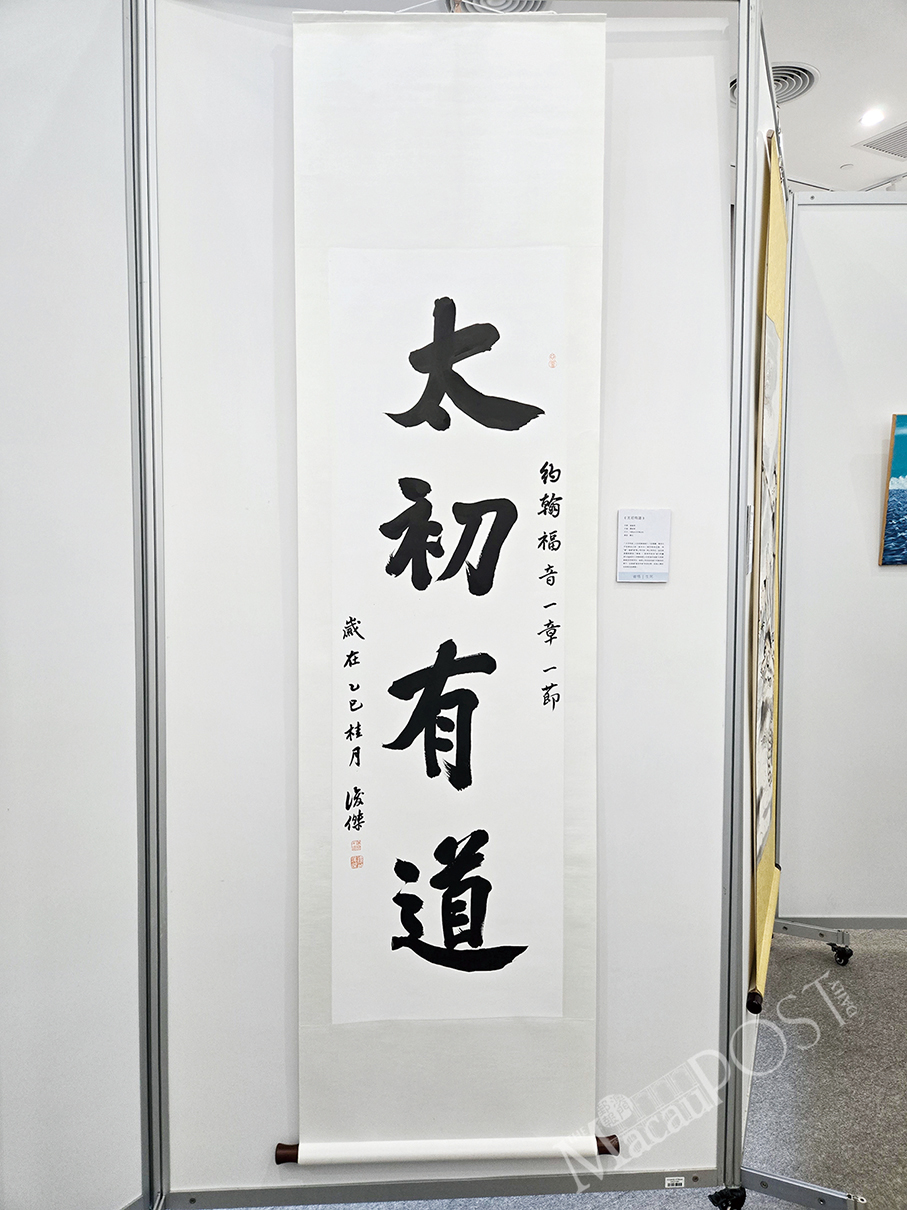
This photo taken on March 5 shows Chinese calligraphy artwork displaying “太初有道” (“taai cho yauh douh” – In the Beginning Was the Word) from John 1:1. The Chinese character 道 (dao) is also the central concept of Daoism, representing “the Way” – the fundamental principle underlying the universe. Early Bible translators deliberately chose this character to render the Greek “Logos,” creating a bridge between Christian theology and Chinese philosophy.
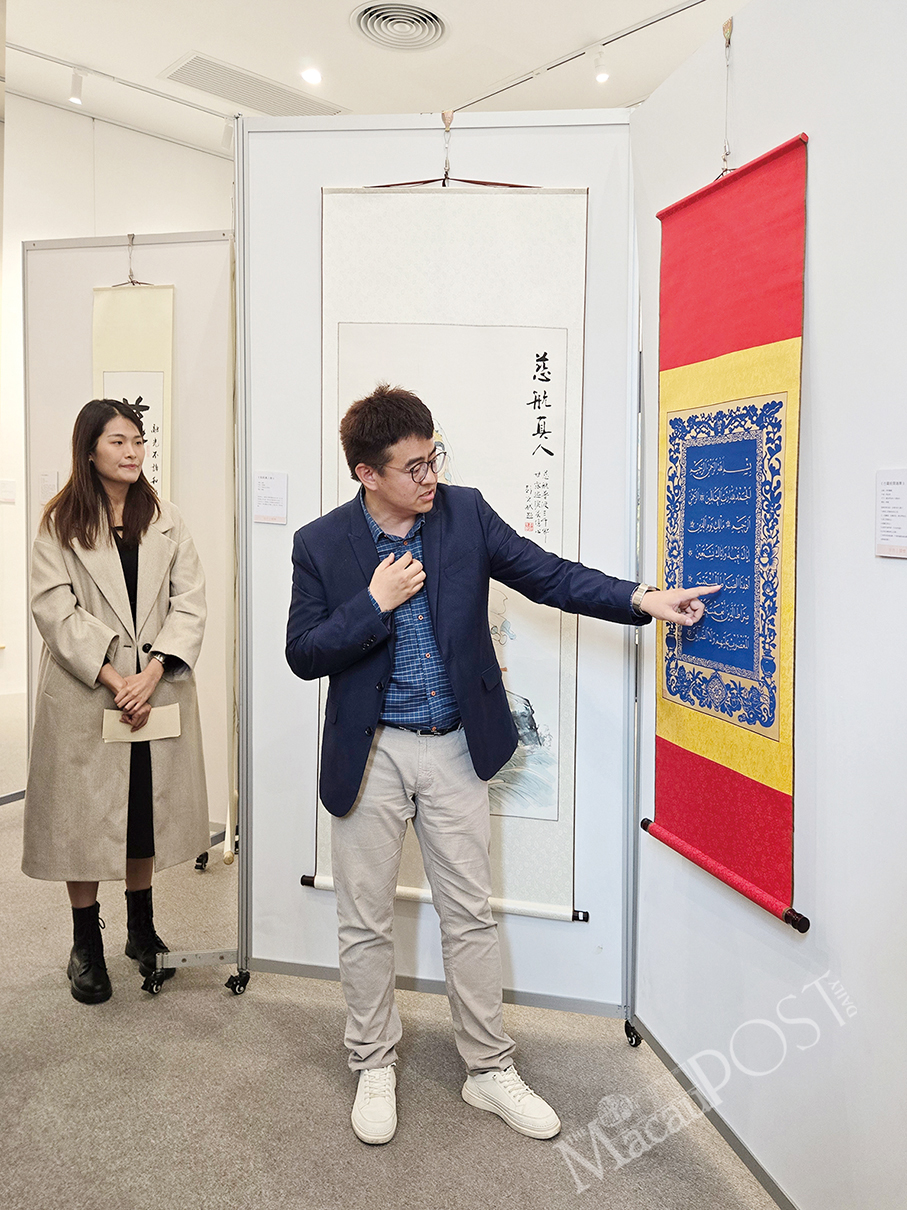
City University of Macau professor Ma Ming recites Surah Al-Fatiha, the Koran’s opening chapter, from a scroll at the exhibition on March 5.
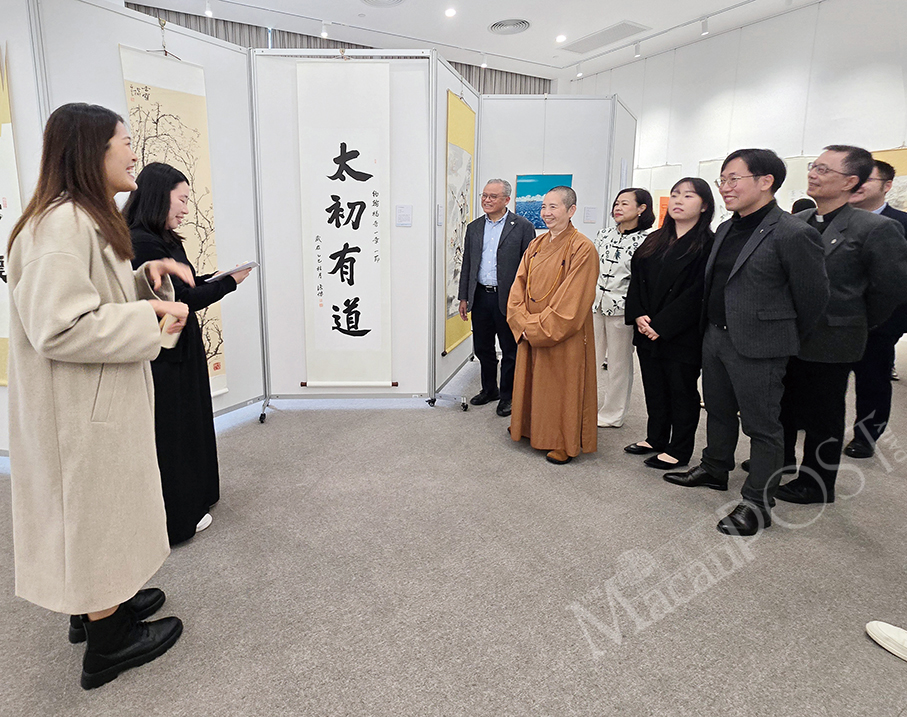
Moderator Chong Chon Fai (left) facilitates discussion with of the Buddhist Association of Macau Vice Chairman Master Xin Hui (Centre) and Secretary-General of the Taoist Association of Macao Sou Ka Ian, during Thursday’s “Multicultural Salon: Silent Radiance of Unity - Macao in Harmony” salon at the University of Macau on March 5.