Residents yesterday shared mixed views on alcohol consumption in Macau, with some describing it as a serious social issue while others see it as a matter of personal responsibility.
Speaking to the Post yesterday, several residents pointed to the ubiquitous visibility of drinking alcohol in daily life, particularly in nightlife and social settings.
For 21-year-old Nic, alcohol consumption is a noticeable part of social life in Macau, particularly among younger people. She noted that during her school years, drinking was often associated with having fun, and added that it remains common among young people to drink several times a week or as a way to unwind after work.
“Yeah, I would say so, there are a lot of bars around Macau and back in our high school days, we would associate fun with alcohol,” Nic said, adding she believes that young people are exposed too early due to peer influence, pointing out that stricter ID checks could help, saying existing age restrictions are “already enough”.
The legal minimum age for drinking alcohol in Macau is 18.
Meanwhile, Janelle, 21, described alcohol consumption as a serious issue, linking it to Macau’s broader social environment. She said consuming alcoholic drinks is highly visible in daily life, particularly through bars, casinos and events that promote alcohol consumption. Janelle warned that alcohol can lead to health problems and risky behaviour. “Alcohol can lead to various health problems, including addiction and mental health issues,” she said, adding that stricter regulations, education and stronger support services could help reduce harmful drinking.
Savanna, 21, took a more moderate view, saying she does not see alcohol consumption as a major issue but acknowledged that many people lack awareness of their limits. She also expressed frustration at irresponsible behaviour such as littering and public drinking. “I personally don’t see alcohol consumption as a serious issue but I am aware that not a lot of people know their tolerance,” she said. Savanna added that young people have easy access to alcohol and suggested stronger enforcement or restrictions could be considered.
Moreover, for Sky, 21, alcohol consumption can be linked to mental health issues, with some people using it as a coping mechanism. He warned that this can worsen long-term wellbeing and affect relationships. Sky suggested a range of measures to reduce harm, including raising prices, limiting availability and promoting healthier alternatives. “If your mental health is so bad that it’s leading you to the brink of drinking [alcoholic beverages], find someone you trust, or seek out help,” he said.
Rex, 26, highlighted how alcohol affects individuals differently, noting that some people may function normally while others display aggressive or disruptive behaviour when drinking. She said reactions to alcohol vary widely, adding that some individuals can become “belligerent” after drinking, while others remain in control, suggesting the issue is complex and requires deeper understanding.
While views differ on the severity of the issue, interviewees generally agreed that alcohol consumption remains highly visible in local society, with concerns centred on early exposure, social behaviour and the need for balanced measures to reduce harm.
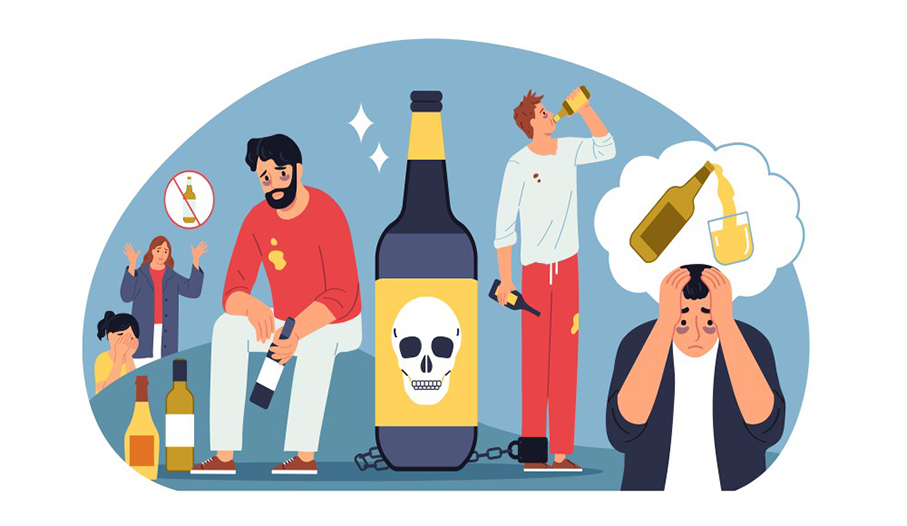
This image downloaded courtesy of the website of the Mental Health Centre in India warns the public of the risks of excessive consumption of alcohol.