Aiming to optimise the import of alcoholic beverages and tobacco business operations for the industry and shorten the required cash flow time, the Economic and Technological Development Bureau (DSEDT) is holding four industry consultation sessions to review procedures outlined in the government’s “Consumption Tax Regulations” and extensively gathered opinions from local tobacco and alcohol importers.
The first two sessions were held at Luso International Bank Building in Nam Van yesterday. The last two will be held today at the building where the bureau is headquartered. The consultation process will end on Sunday.
DSEDT Director Yau Yun Wah noted that the current “Consumption Tax Regulations” govern only two categories of imported goods: spirits with an alcohol content of 30 percent or more (excluding rice wine) (Group II) and tobacco (Group III), including shredded tobacco, cigars, and cigarettes.
A review of the current procedures under the regulations showed that most tobacco and alcohol importers or operators predominantly use the “simultaneous voluntary payment system” stipulated by the regulation, Yau said, adding that the system requires taxpayers to pay the consumption tax to the government before the goods arrive in Macau. For importers, this operational process increases their costs.
Additionally, if an import permit is cancelled or there is a shortfall in the goods upon arrival, importers must apply to the government for a refund of the prepaid taxes, based on the current regulation, Yau added.
Yau noted that the proposed amendments primarily focus on optimising the “deferral of tax payment deadlines” and the “full digitalisation of tax payment procedures”.
Considering that the tax payment deadlines may affect business’ cash flow, the bureau’s senior official Sarah Lo Chi Man added that the proposed amendments means that importers would no longer have to pay consumption taxes before the goods arrive in Macau. Instead, the tax payable would be retained. She noted that this change would eliminate the need for operators to apply for tax refunds or wait for reimbursements, thereby reducing the required cash flow time.
Furthermore, regarding plans for the full digitalisation of tax payment procedures, Lo added that importers would only need to open an account at a participating bank and provide a one-time authorisation, which would allow the bureau to retain, release, or deduct the applicable consumption tax from the designated account for each import permit.
Once authorised, importers would no longer need to apply for individual import permits or arrange separate tax payments using different methods, saving time, effort, and costs associated with each transaction, Lo said.
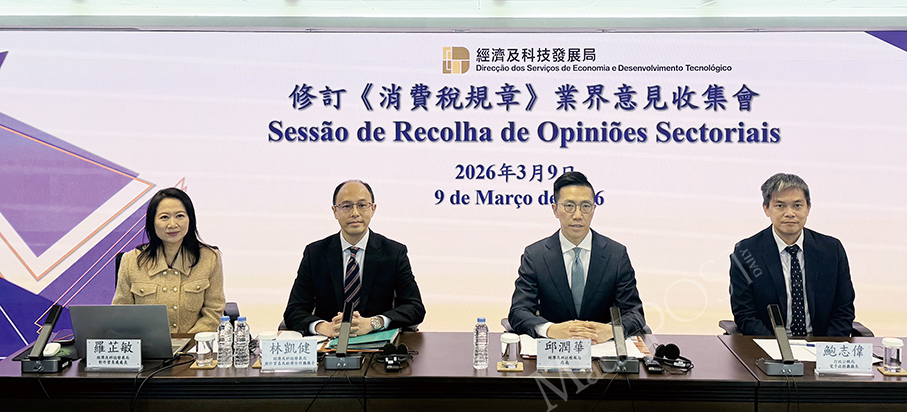
Economic and Technological Development Bureau (DSEDT) Director Yau Yun Wah (second from right), DSEDT senior official Sarah Lo Chi Man ( left) and other representatives pose for a group photo in the Luso International Bank Building in Nam Van during one of yesterday’s two industry consultation sessions about reviewing the government’s “Consumption Tax Regulations” procedures. – Photo: Ida Cheong