Following the launch of three concurrent solo exhibitions at the former municipal cattle stable earlier this month, the academic director of Ox Warehouse, Noah Ng Fong Chao sat down with the Post to reflect on the art space’s two-decade history, its core philosophies, and the path forward in an era of regional integration and technological change.
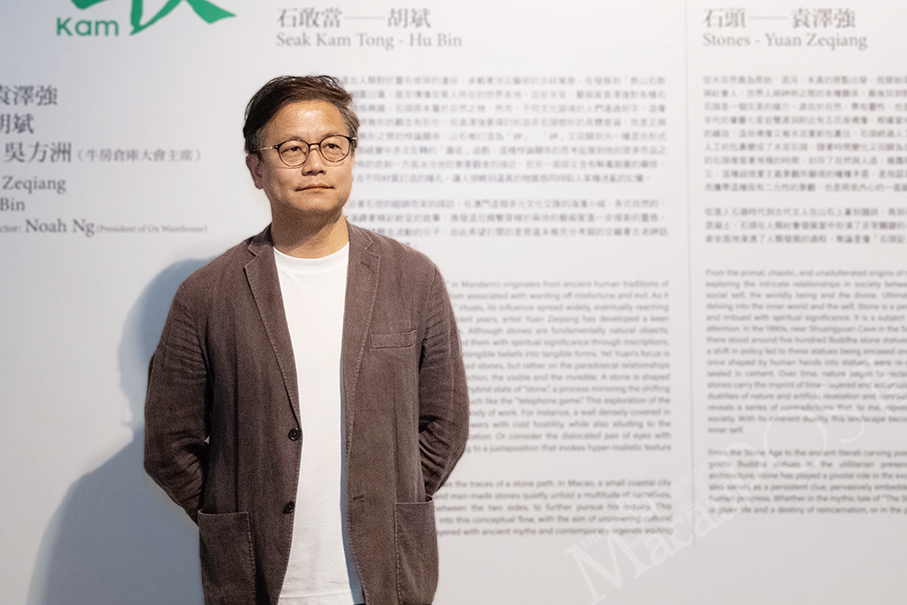
Academic director of Ox Warehouse, Noah, Ng Fong Chao, poses at the exhibition during Saturday’s interview. – Photos: Grayson Wong
In an in-depth interview on Saturday at the venue, Ng give insights into the organisation’s foundational mission and the challenges it has faced. Since its inception in 2003, Ox Warehouse’s curatorial focus has been to champion contemporary and experimental art. It was founded to create a platform for alternative and conceptually driven works that were not widely seen in Macau at the time. “We want to show the Macau public that art can take thousands of forms,” Ng said, emphasising a goal to broaden the public’s understanding of what art can be.
“We were a group of young people with a simple motivation,” Ng recalled. “As creators ourselves, we saw the world developing, and as part of that world, we wanted to create more opportunities for Macau’s art scene to have a dialogue with it.” For over two decades now, the space at the junction of Avenida do Coronel Mesquita and Avenida do Almirante Lacerda has been a hub for this mission, cultivating not only artists but also a new generation of arts administrators.
Looking ahead, Ox Warehouse is committed to strengthening international collaborations and expanding the scale of its “International Residency and Research Programme.” The team is actively pursuing deeper regional partnerships with artists from the Chinese mainland, particularly from the Greater Bay Area (GBA). Maintaining its original mission, the organisation continues to champion artistic creativity and the spirit of experimentation, Ng said.
The erstwhile municipal cattle stable, originally constructed in 1912, served as a facility for beef trading, storage, and cattle quarantine. Following reconstruction in 1924, it retained its original function until the livestock operation relocated to Ilha Verde in 1987. Subsequently, part of the site was converted into a warehouse, while another section was designated as exhibition space in 2003. The site comprises two parallel single-storey buildings with large truss structures, featuring distinctive red-brown roofs and ochre-coloured walls that exemplify Portuguese eclectic architectural style.
Addressing the proliferation of new art spaces across the city, Ng views them not as competition but as vital components of a larger, interconnected “art ecosystem.” He believes different organisations are non-competing, non-substitutable links in a single “ecosystem chain,” each serving a distinct function. While some may focus on emerging student artists or local artists exclusively, Ox Warehouse has evolved to support more mature practitioners who are in their 30s and 40s, artists who have achieved a certain level of creative and conceptual maturity.
“It’s not a conflict; we operate on different, non-substitutable links in the same chain,” he explained. “Some notable art organisations in Macau have different focuses, such as student groups or local artists, for us we have aimed to invite artists globally to participate in our exhibitions.” This symbiotic relationship ensures that local artists are supported at every stage of their careers, providing channels for international cooperation, strengthening the entire ecosystem.
This collaborative vision extends to a robust regional and international integration strategy. Ng is a vocal proponent of deeper integration with the Greater Bay Area (GBA), arguing that Macau’s small size necessitates a broader stage. “Our vision cannot be confined to a population of 680,000,” he said. “The GBA offers a massive population base and world-class institutions for exchange.” This strategy is built on a foundation of shared Lingnan (southern Chinese) culture and language, which facilitates trust and deeper collaboration, he added.
Beyond the GBA, Ox Warehouse actively fosters a global dialogue through its “International Residency and Research Programme,” inviting artists from Europe and other parts of the world. The current exhibitions, featuring three artists from the Chinese mainland, are part of this broader strategy of cultural exchange. Ng pointed out that Ox Warehouse actively runs residency programmes for artists from cities like Chengdu and Hangzhou, as well as international artists from Belgium and the Netherlands. This exchange-based model enriches the local scene with diverse perspectives while simultaneously promoting Macau’s unique artistic identity – one shaped by over 400 years of Sino-Portuguese cultural history – on the world stage.
Members of the public may view the works at the free-admission exhibition daily from 10 a.m. to 7 p.m. until February 8.
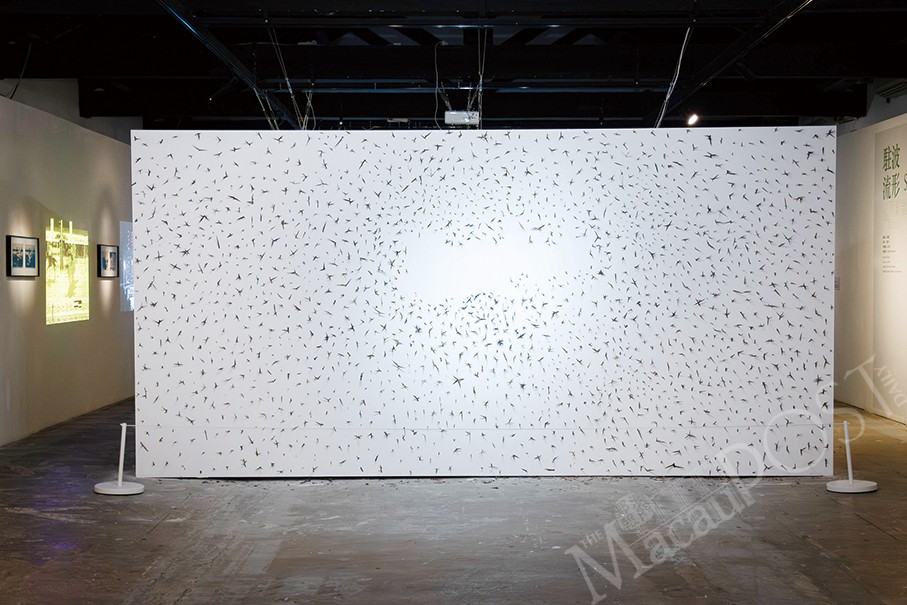
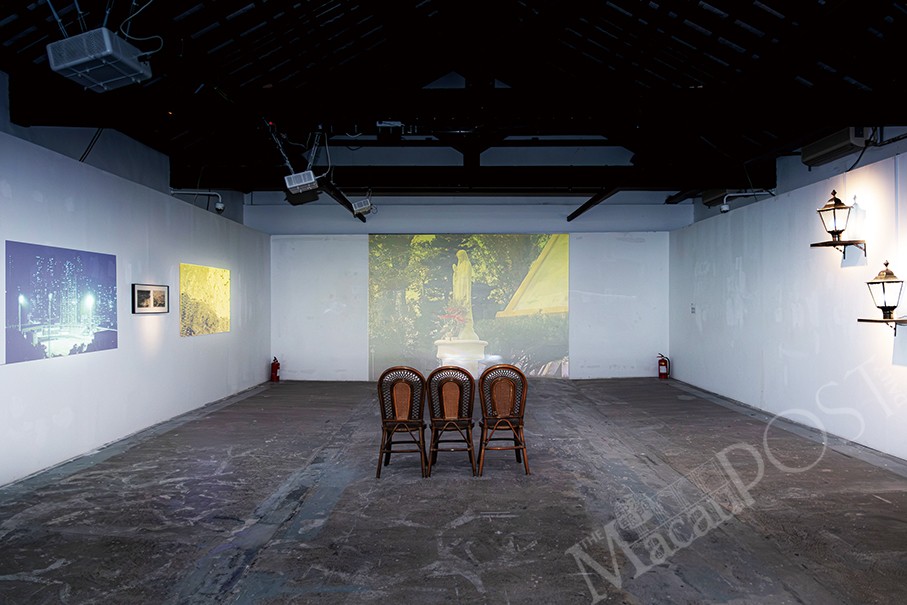
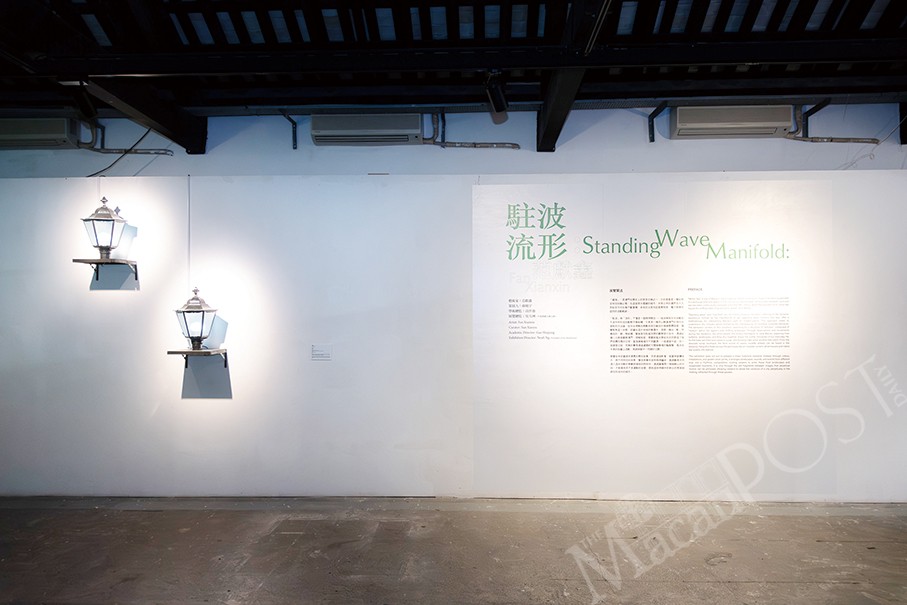
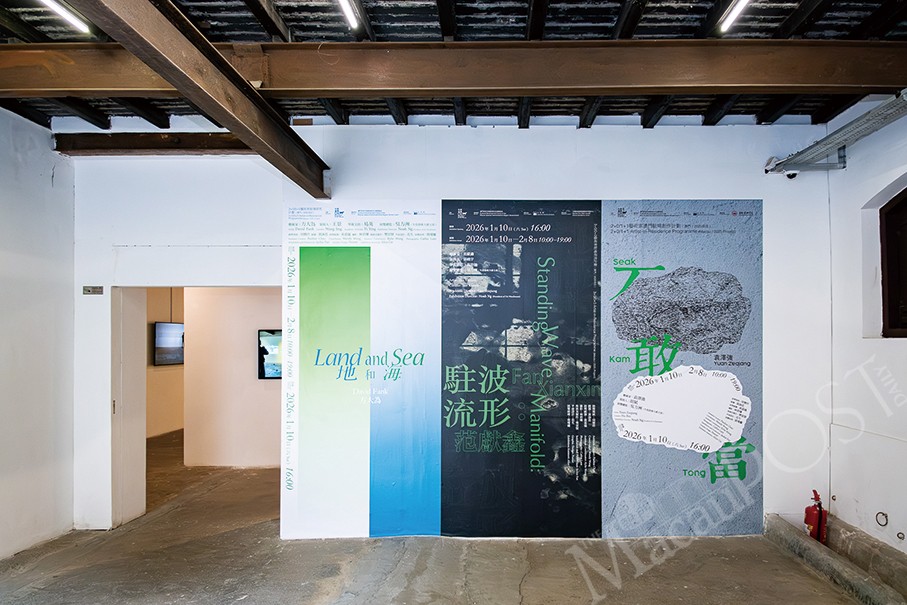
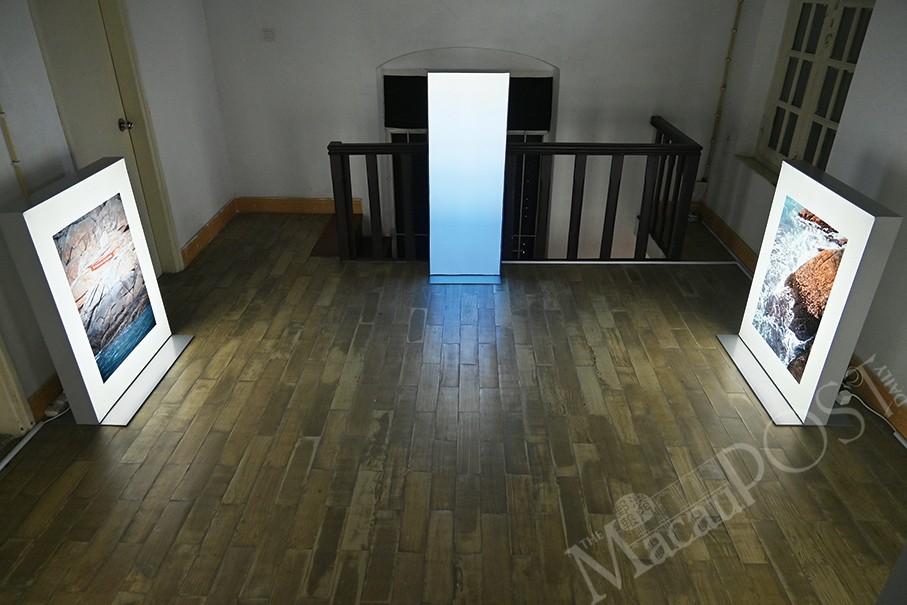
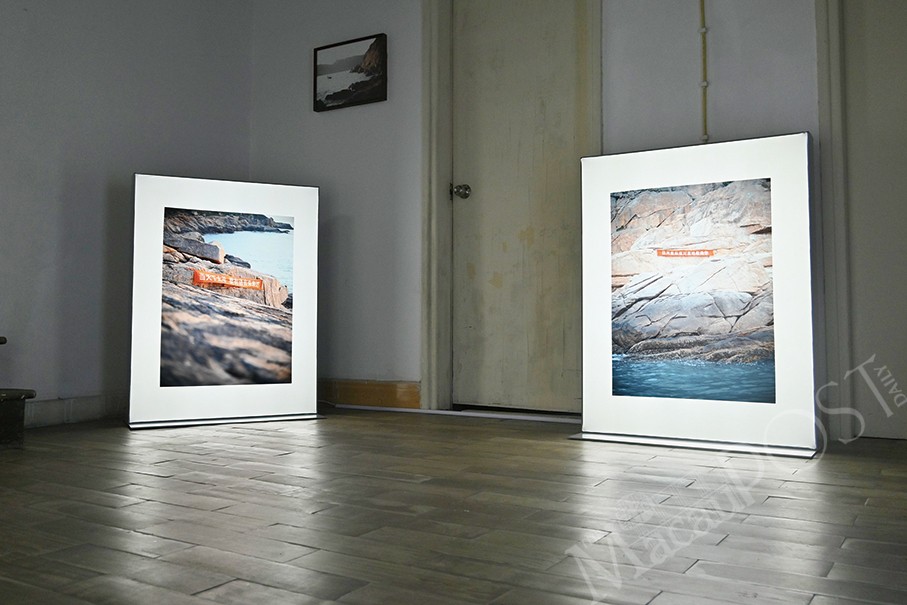
Photos of the “Land and Sea: David Fank” exhibits recently taken by Rui Pastorin