As more and more local residents head to Zhuhai for shopping and dining, citing lower prices and the perception of better-quality goods and services there, local spending patterns are shifting.
The Post spoke to several local eatery representatives yesterday to gauge how the trend is affecting local businesses, with views ranging from resilience to growing concern.
Mimi, 30, who works as a cook in a Filipino restaurant, told the Post that the trend of locals spending more and more of their money in the mainland was driven mainly by affordability. “They want to spend more money in the Chinese mainland because it’s cheaper there,” she said. However, she noted that her restaurant has not been affected, as its core clientele is Filipino. “Our customers are mostly Filipinos. Filipinos prefer Filipino food, so we don’t really feel the impact”, she added.
Meanwhile, 27-year-old Iris, who runs a local café, also said her business had seen limited effects. She said that her café mainly serves local office workers and is focused on healthier options that, she said, were “not that usual in the Chinese mainland”. While weekend turnover is less predictable, she said that her cafés overall performance remained stable. Iris added that other food businesses, particularly those offering daily meals, were more affected, and suggested that improving service quality could help local businesses compete with their counterparts in the mainland. “Mainland Chinese service is actually better than us,” she said, adding that better customer service could encourage locals to spend more of their money in Macau again.
In contrast, Liz, 33, said her restaurant has been hit by the downturn. “Business is worse than before,” she said, adding that discounted set menus and coupons starting at 3 p.m. were now needed to attract customers. She said that the decline was due to residents saving money and choosing to eat in Zhuhai instead, where prices are lower.
A local seafood restaurant owner surnamed Liu spoke to the Post in a phone interview, pointing out that the overall local catering industry situation is “severe”, with businesses being particularly pessimistic about public holidays and weekend evenings, adding that compared to pre-pandemic levels, both turnover and the spending power of Macau residents have declined by about one-third.
Liu noted that residents’ spending power has weakend, earning money has become more difficult and post-pandemic consumption has grown more cautious, reducing residents’ willingness to spend. He added that under the “Macao Vehicles Northbound Travel” policy, many residents choose to spend holidays and weekends in the mainland, diverting customer flow away from local restaurants.
Liu said he hopes that the government will develop special projects in the northern district and Fai Chi Kei district to attract tourists for photo-op venues – known in Cantonese as “da kat” – and consumption, thereby driving foot traffic to nearby eateries. He added that the three-day “Celebrating the Return: Dine-in Discount” campaign last month, which offered a 30 percent discount, had had some effect. However, he stressed that the current consumption weakness and business downturn are not short-term phenomena but part of a longer-term shift, noting that the local customer base alone is insufficient to support a recovery in the restaurant sector.
Meanwhile, a beef offal shop owner surnamed Kwok told the Post yesterday that her business relies mainly on local customers and remains relatively stable on weekdays. However, at weekends and public holidays, the shop depends largely on tourists, leading to fluctuations in overall business due to varying visitor numbers, without significant growth or sharp declines. She observed that customer numbers drop noticeably after 5 p.m. to 6 p.m., as many residents travel to the mainland to dine.
Facing competition from mainland catering brands, Kwok said she has not made targeted adjustments through discounts to balance profits. Instead, she focuses on improving competitiveness by enhancing value for money and the flavour of her dishes. She added that residents’ spending power has declined, with a growing tendency to prioritise essential goods while reducing spending on non-essential items such as beverages and snacks.
A customer surnamed Ho told the Post yesterday that when choosing a restaurant, she prioritises a comfortable environment, followed by personal preference for the cuisine. She noted that dining prices in Macau are inherently higher than those on the mainland and believes acceptance of this price difference ultimately depends on the individual mindset.
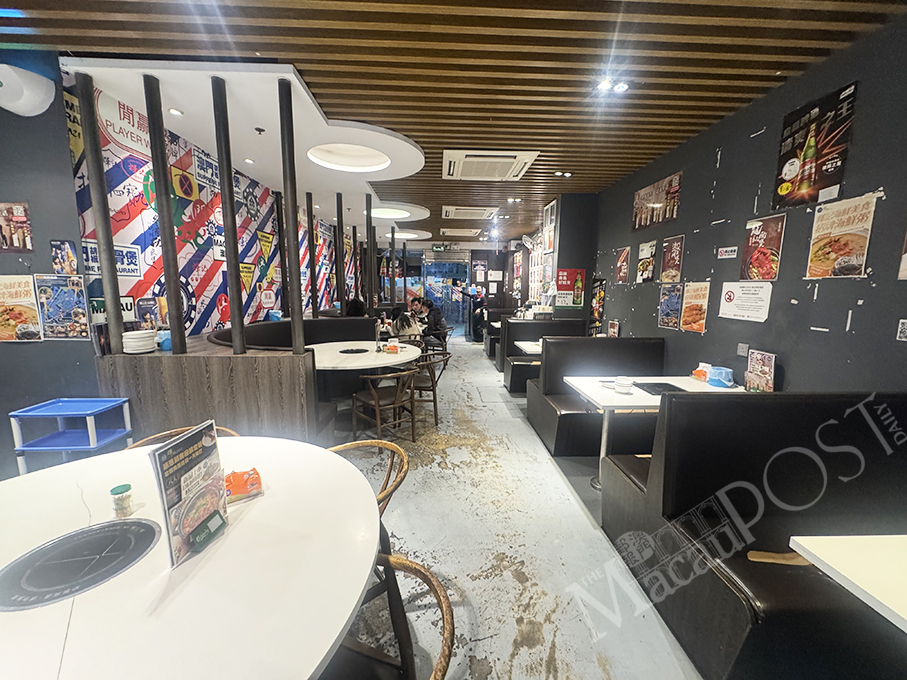
About half a dozen customers have their dinner at a seafood restaurant in Fai Chi Kei district yesterday evening. – Photos: Ida Cheong
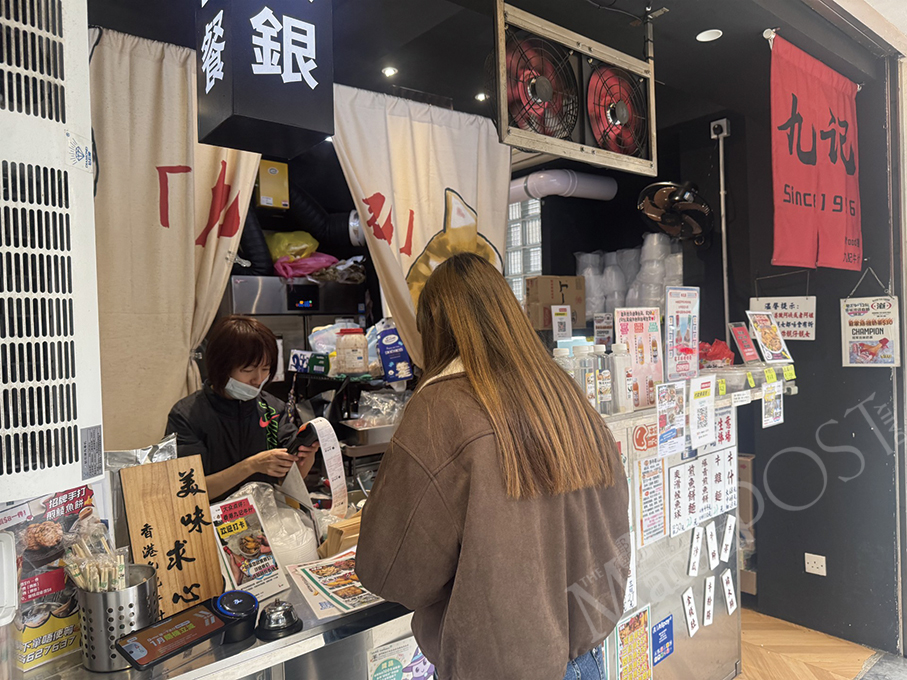
A customer orders food at a beef offal takeaway in the Horta e Costa area yesterday.