The government announced yesterday that it has increased its caregiver subsidy to 2,400 patacas from 2,175 patacas per month, effective from this month.
The government’s caregiver subsidy is issued to those who are looked after by a caregiver, rather than the caregiver.
The caregiver subsidy was launched in December 2020 as a pilot scheme, which was transformed into a permanent programme in December 2023.
Moreover, according to yesterday’s government announcements, those with a severe or profound level of primary psychosis* have been newly included as the subsidy’s beneficiaries.
The caregiver subsidy is paid to the respective beneficiaries once every two months, meaning that they receive a payment equivalent to two months of their subsidies every time.
The 10.3-percent increase in the monthly amount of the caregiver subsidy was announced by an executive order by Secretary for Social Affairs and Culture Wallis O Lam published in the Official Gazette (BO) yesterday, when the Social Welfare Bureau (IAS) also issued a statement on the matter.
The executive order, which was signed by Wallis O on December 31 last year, takes effect today after its promulgation in the gazette yesterday.
This is the first time that the caregiver subsidy has been increased since its inception in December 2020.
The executive order gazetted yesterday amends the government’s regulation governing its caregiver subsidy programme which came into force in December 2023.
After including the new category of beneficiaries (those with a severe or profound level of primary psychosis) announced yesterday, the caregiver subsidy programme now covers those who are bedridden; those with a severe or profound intellectual disability; those with a severe or profound physical disability; and those with a severe or profound mental disability (only limited to autism and primary psychosis).
Only permanent local residents who have habitually been living in Macau over the past 18 months are eligible for the caregiver subsidy.
Those who are bedridden are officially defined as those who are unable to sit or stand by themselves without the assistance of others or tools.
In Macau, those with disabilities need to be assessed by the Social Welfare Bureau first to determine the officially recognised levels of their disabilities. Under the assessment system, there are six kinds of impairment, namely visual, audio, verbal, physical, intellectual, and mental. There are four levels for the six kinds of impairment, namely slight, moderate, severe, and profound.
According to yesterday’s announcements, another relaxation of the caregiver subsidy’s eligibility is that those under the age of four with an intellectual disability, a physical disability or a mental disability are eligible for the subsidy regardless of the levels of their disabilities.
In order for the potential beneficiaries to be eligible to receive the subsidy, according to the regulation, the respective caregivers must also meet certain criteria.
The caregivers must be local residents – permanent or non-permanent – aged at least 16 and must live with those who depend on them. In addition, the caregivers must be officially regarded as being capable of providing proper assistance to those being taken care of.
The caregiver subsidy is only issued to those with financial hardship. The amendments to the subsidy’s regulation announced yesterday also raise the maximum limits of the applicants’ household monthly income.
For instance, according to the new limits which take effect today, the monthly income of a two-member household now must not exceed 29,560 patacas in order to be eligible for the subsidy, while the maximum limit for a household with eight or more members now stands at 75,000 patacas.
* Primary psychosis refers to a mental disorder where psychosis is the core and defining feature, rather than being secondary to another condition. This typically includes diagnoses such as schizophrenia and related psychotic disorders, where symptoms like delusions, hallucinations, and disorganised thinking are central. It distinguishes these conditions from secondary psychosis, which is caused by other medical issues like substance use, brain injury, or a mood disorder. The term emphasises that the psychosis is the principal illness itself. – DeepSeek
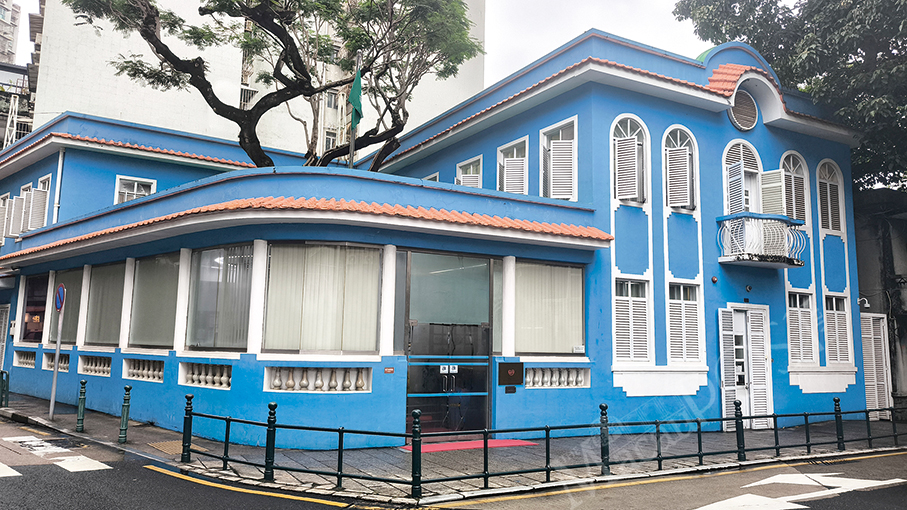
This file photo taken last year shows the headquarters of the Social Welfare Bureau (IAS) on Estrada do Cemitério. – Photo: Tony Wong