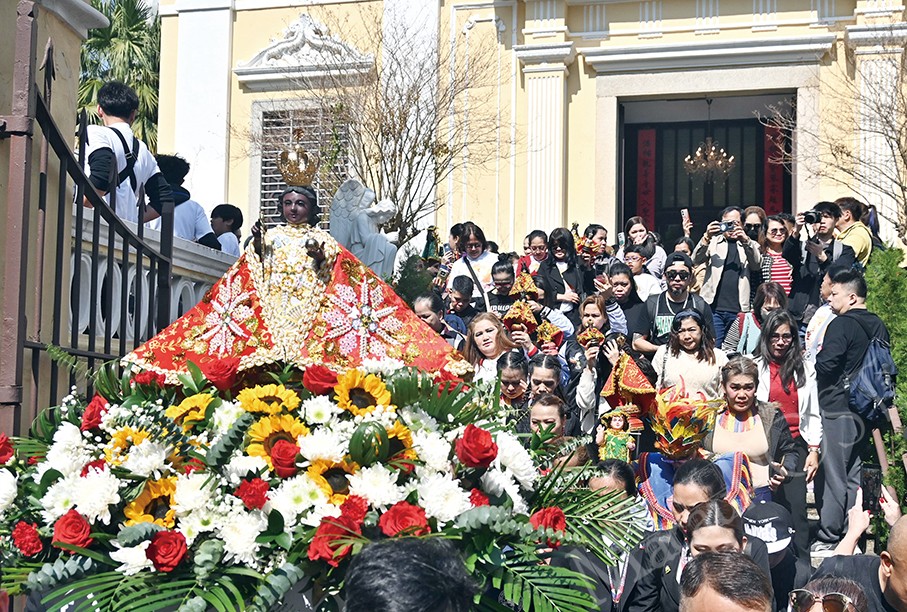
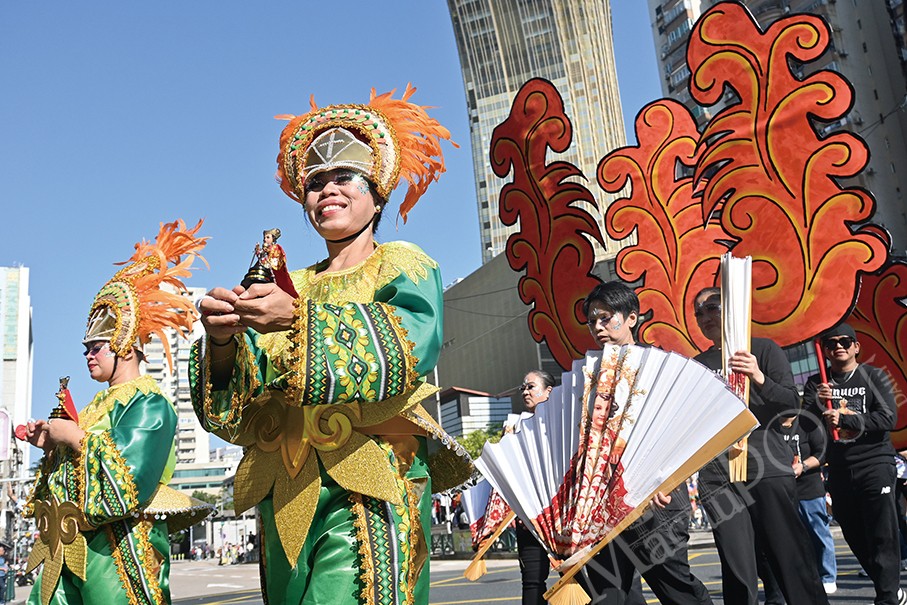
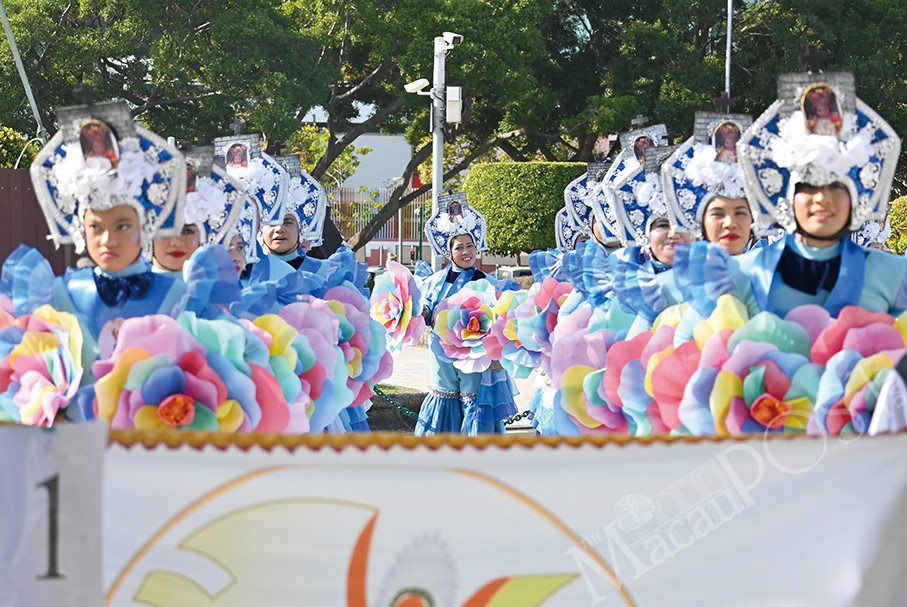
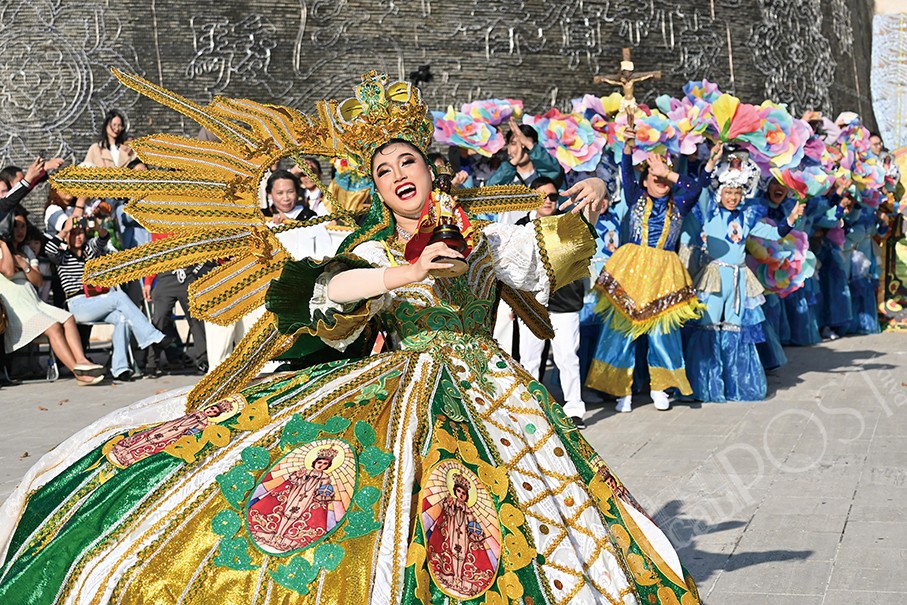
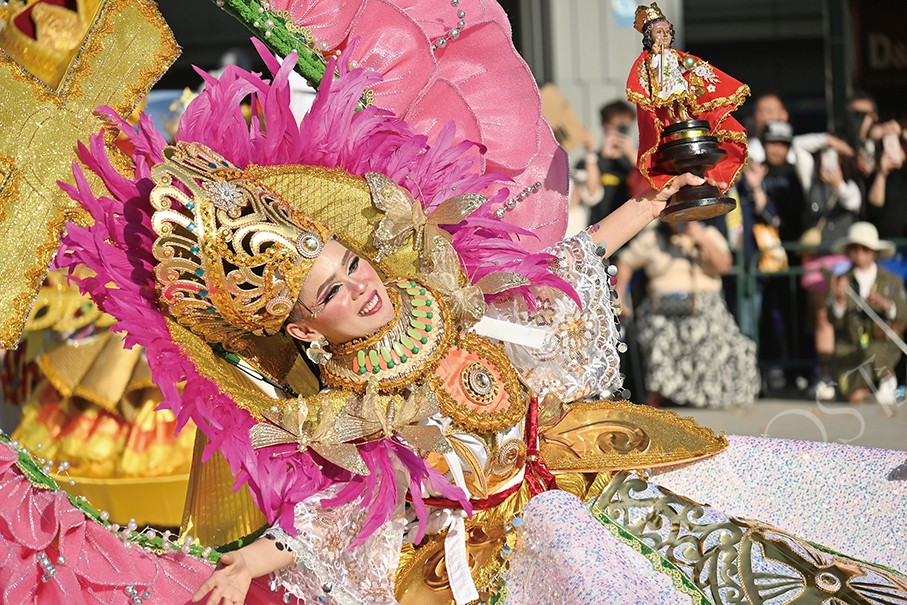
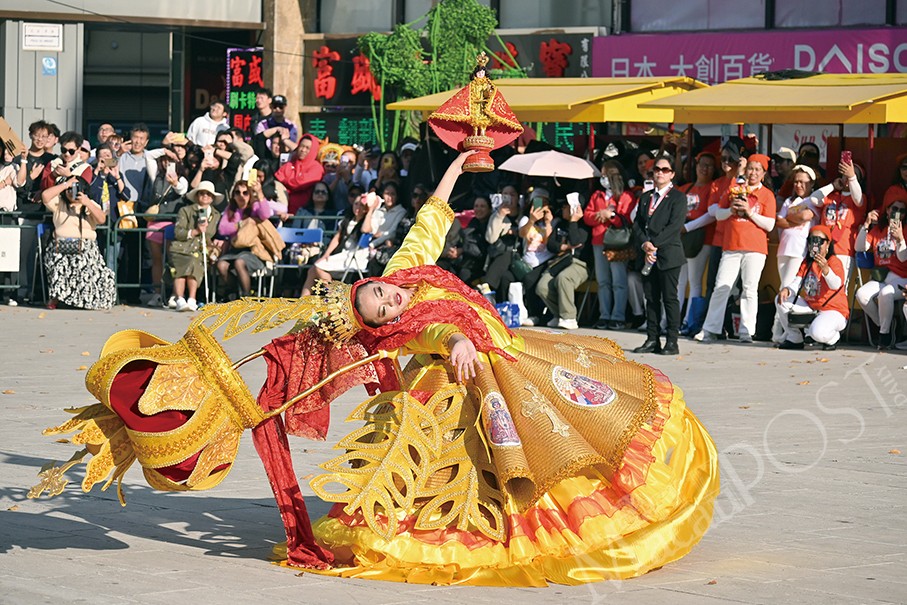
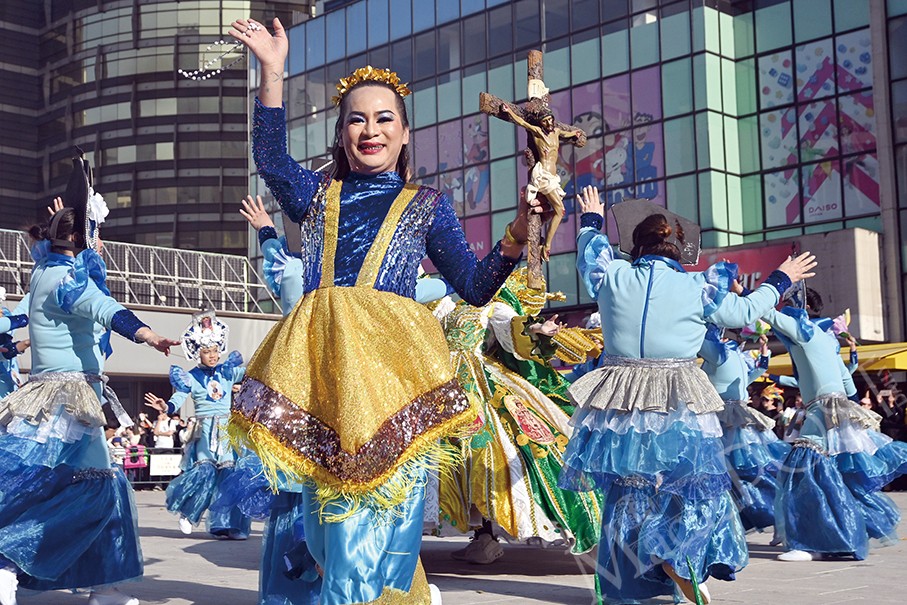
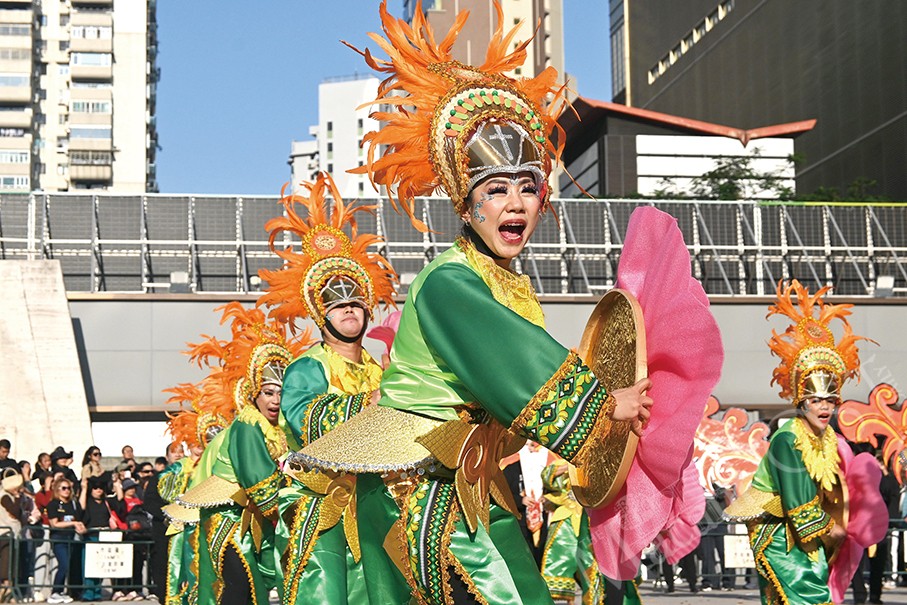
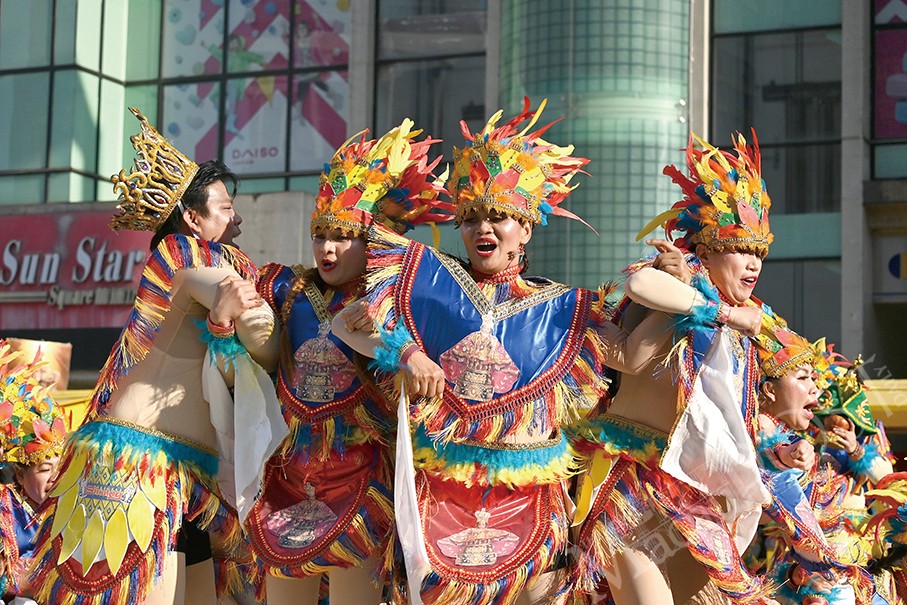
Members of Macau’s Filipino community danced in the sun in colourful self-made garb in honour of the child Jesus (Santo Niño) yesterday afternoon, swaying to the beat of drums and proudly proclaiming “Viva pit Señor! [Hail the Lord, Holy Child, listen to our prayers!*]” as the Sinulog Macau Festival 2026 took place.
The annual festival is organised by the Santo Niño de Cebu in Macau Association, with the parade, the event highlight, seeing groups again dancing from Praça da Amizade (colloquially known as Sintra Square) to Avenida Panorâmica do Lago Nam Van before returning to the square for the ritual competition, which this year featured three groups. The celebration had started earlier in the morning with dozens of devotees and participants swaying and dancing to the unmistakable sounds of the Sinulog** beats after a solemn eucharistic mass at São Lourenço Church (聖老楞佐堂).
The Sinulog Festival, a major annual event observed in Cebu, has been held in Macau since 2003 but has been celebrated in the city for a total of 26 years. It is one of the most important events for Macau’s Filipino community, which make up the second largest group of non-resident workers in the city, totalling 16,370, according to the latest available data from the Labour Affairs Bureau (DSAL), while there are those who are also Macau residents.
Santo Niño de Cebu in Macau Association President Violeta Duran told the Post during an interview with the local English-language media that she was elated to see the event continue for as long as it has and are keeping up what they have been doing from the start – bringing the celebration and a bit of home to Macau’s Filipinos.
“We have a gathering like this so that we can feel the Philippines, so that we can minimise our homesickness while here”, Duran, whose family started the local celebration in the city, pointed out.
She also noted that many Filipinos are non-resident workers who are dealing with their own problems and tribulations, whether that’s here in Macau or back home, along with life in the city being all about work. The event therefore not only attempts to reduce homesickness, but also to lessen their problems and stress for at least a short period of time. “It also gives hope to those who feel hopeless”, Duran told the Post.
Duran also spoke to reporters about the intentions behind this year’s festival, highlighting the current issues and problems that the Philippines is facing. The Sinulog is a dance that expresses not only thanksgiving, but wishes, love, healing and peace, with the latter together with prayers being among what they hope to convey back home the most, according to Duran.
She also continued to highlight to the Post the concept of the Sinulog dance and how they tie it to the realities that the world is going through, asking questions like “What is the world going through now?” and “How do we make it a little bit better for the people?”, with the event providing some vibrance and unity as we continue to navigate challenges.
This year’s festival drew around 600 revellers, including more tourists and many curious onlookers, Duran estimated. She continued to highlight that the festival is made possible through the collective work of the association in conjunction with other Filipino associations in Macau, altogether working as a larger team.
*According to online sources, the phrase combines Spanish “Viva” (“long live”) and “Señor” (“The Lord”) with the Cebuano “Pit” (from sangpit, meaning to call out or appeal from afar), expressing a fervent, humble prayer to the Santo Niño (Child Jesus).
**The Sinulog Festival is a major event annually celebrated in Cebu, southern Philippines, and held on the third Sunday of January. “Sinulog”, meanwhile, is derived from the Cebuano word “Sulog”, which means water current movement. It refers to the ritual prayer dance honouring Santo Niño (“Holy Child”) and is reminiscent of the water current movement, according to a report by the Post last year. It is done to the drumming of Sinulog beats.
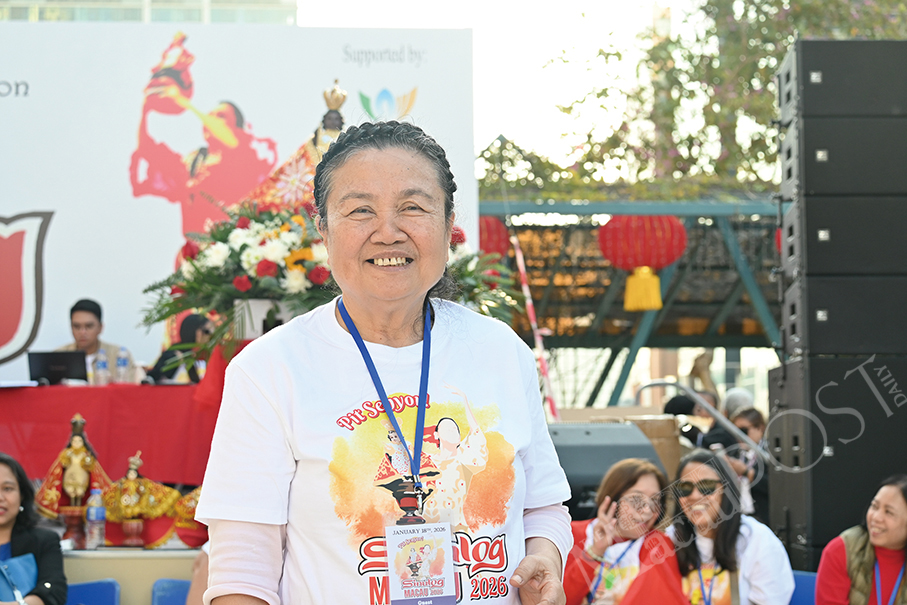
Santo Niño de Cebu in Macau Association President Violeta Duran poses in Praça da Amizade (Sintra Square) yesterday. – Photos: Rui Pastorin