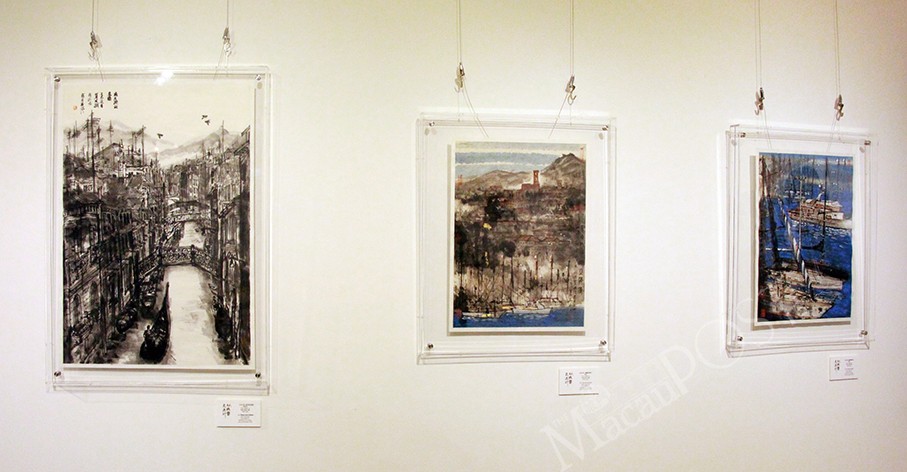
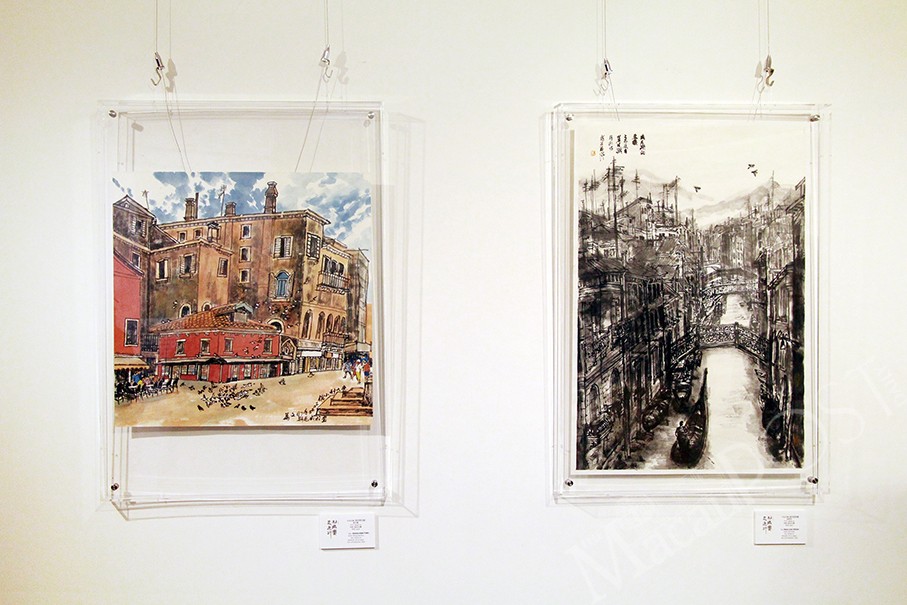
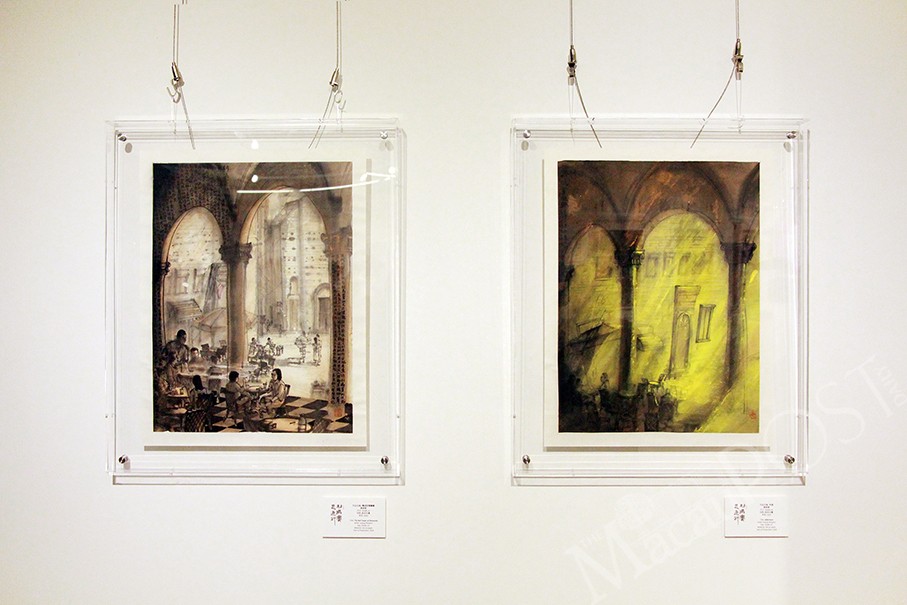
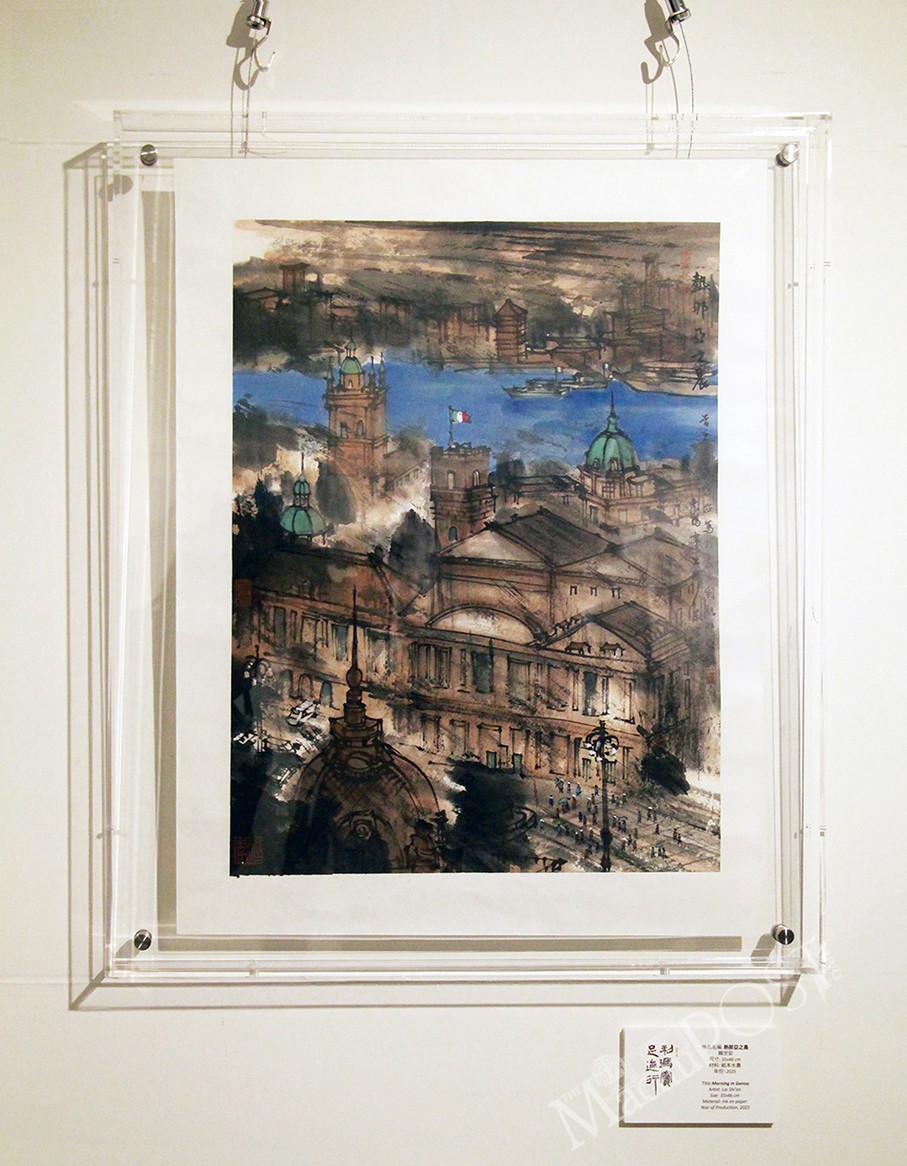
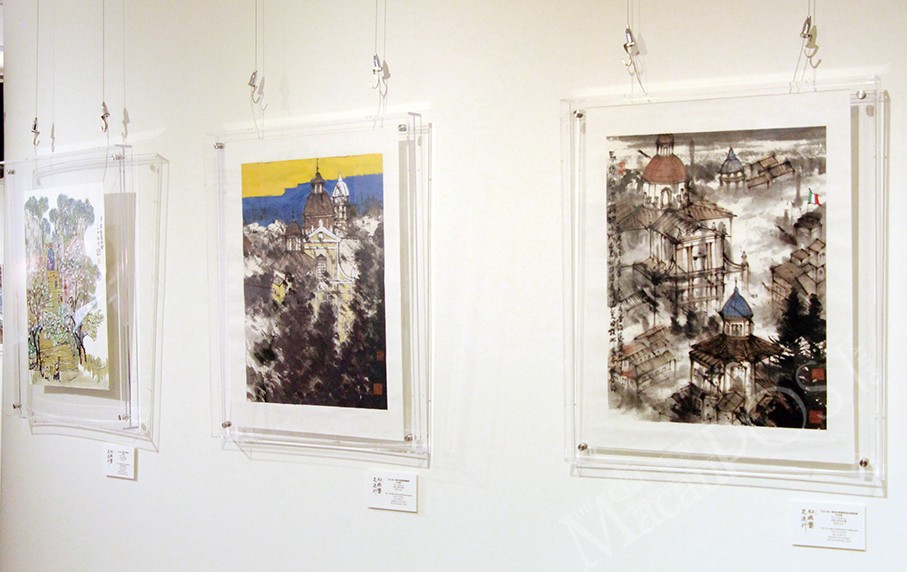
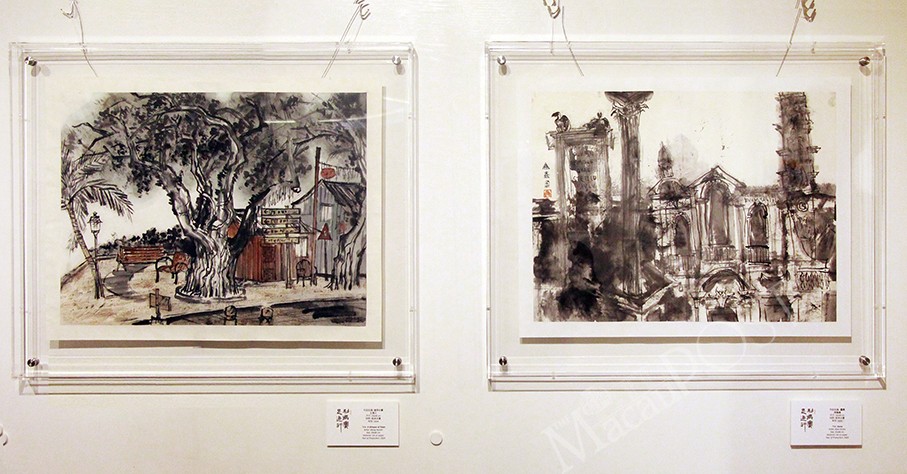
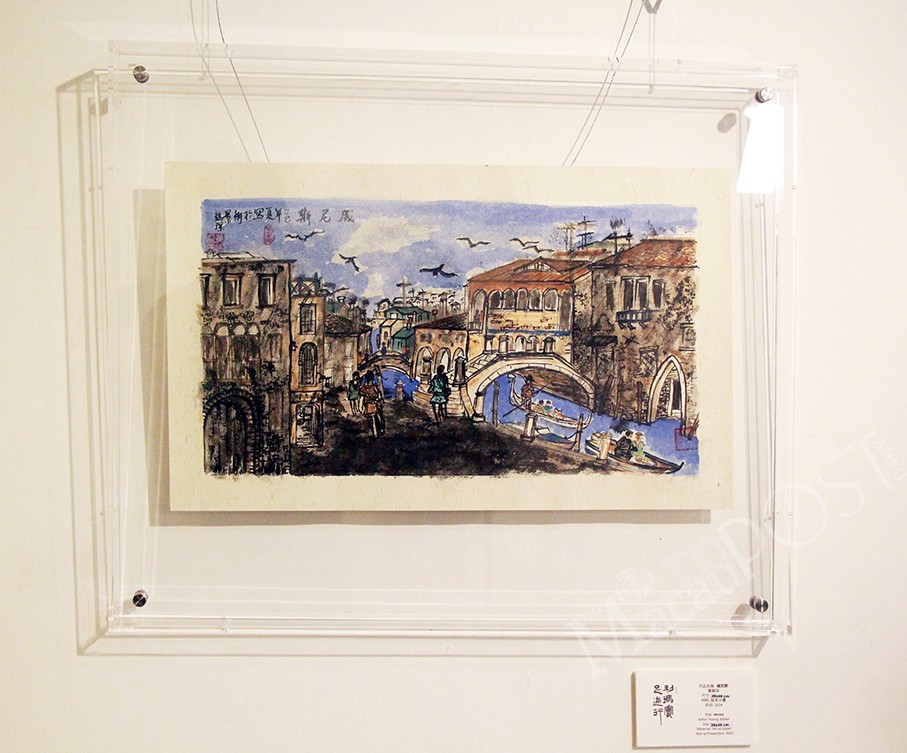
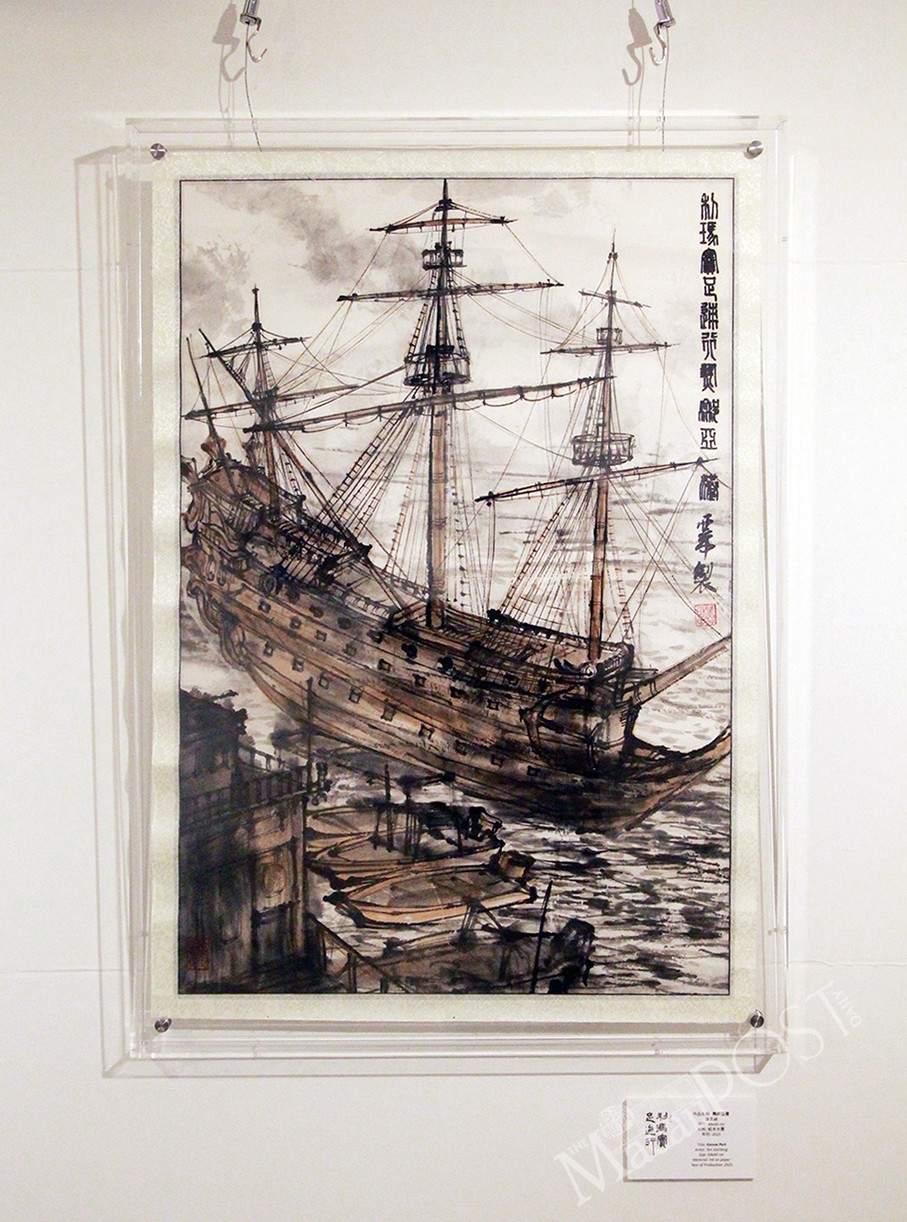
The “Trail of Matteo Ricci” exhibition at the Rui Cunha Foundation (FRC) gallery highlights how contemporary Chinese painting reinterprets Ricci’s (1552-1610) historic journey between Europe and China through on-site artistic practice and cultural reflection.
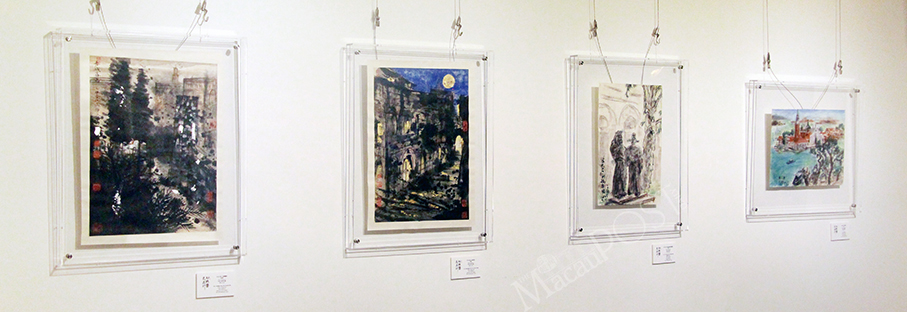
According to an information board at the entrance to the gallery, the project, initiated by Prof. Zhang Yan, director of the Centre for Chinese History and Culture (CCHC) at the University of Macau (UM), and curated by Li Ranqing and Lei Meihang, brings together 18 artists who retraced the Jesuit priest’s route from Italy to China.
His journey covered Macau, Guangzhou, Zhaoqing and Shaoguan, before continuing to Rome, Macerata, Genoa, Venice, Milan and Florence. Li noted in the message that the artists used “the brush and ink of traditional Chinese painting as our historical pen” to complete a cross-temporal exploration rooted in Ricci’s 400-year-old path of cultural exchange.
The 33 works on display were created during field trips, aiming to preserve what Li described as the works’ “on-site temperature,” from wind-formed cracks on Xuan paper* to traces of street dust on pastel edges. These elements, Li noted, are not flaws but extensions of the Chinese painting philosophy of “observing things through inner vision” in a contemporary context.
The message continued that Macau was chosen as the exhibition venue not only because it marked the starting point of Ricci’s journey**, but also because it serves as the project’s “spiritual anchor”.
Li added that each work embodies the artists’ hesitation, transformation and resonance experienced during on-site creation, transforming landscapes into expressions of dialogue between civilisations.
Through traditional Chinese painting, the exhibition seeks to continue Ricci’s legacy of cultural translation, turning a historic route across mountains and seas into an ongoing artistic dialogue between China and the West.
With free admission, the works can be viewed until January 24, with exhibitiongoers able to visit the gallery at 749 Avenida da Praia Grande, Luen Pong Building. The gallery is open from Monday to Friday from 10 a.m. to 7 p.m. and 3 p.m. to 7 p.m. on Saturdays.
*Xuan paper (宣纸) is a traditional hand-crafted paper originating from Xuanzhou (in present-day Anhui Province). It is renowned worldwide as the premier paper for Chinese calligraphy and brush painting. It is a high-quality, durable paper made primarily from the bark of the blue sandalwood (Pteroceltis tatarinowii) tree and rice straw, using a meticulous, multi-step process that can take over a year. In 2009, the art of Xuan paper making was inscribed on UNESCO’s Representative List of the Intangible Cultural Heritage of Humanity. It is considered an indispensable carrier of Chinese classical art and culture. – DeepSeek
**Ricci arrived in Macau on August 7, 1582, and stayed here for about nine months before proceeding to the Chinese mainland. Ricci was based in Macau from August 1582 to May 1583. This period was foundational for his later groundbreaking work in cultural exchange, mapmaking, and bridging Chinese and Western science and philosophy during the Ming Dynasty. – DeepSeek
Photos by Khalel Vallo